




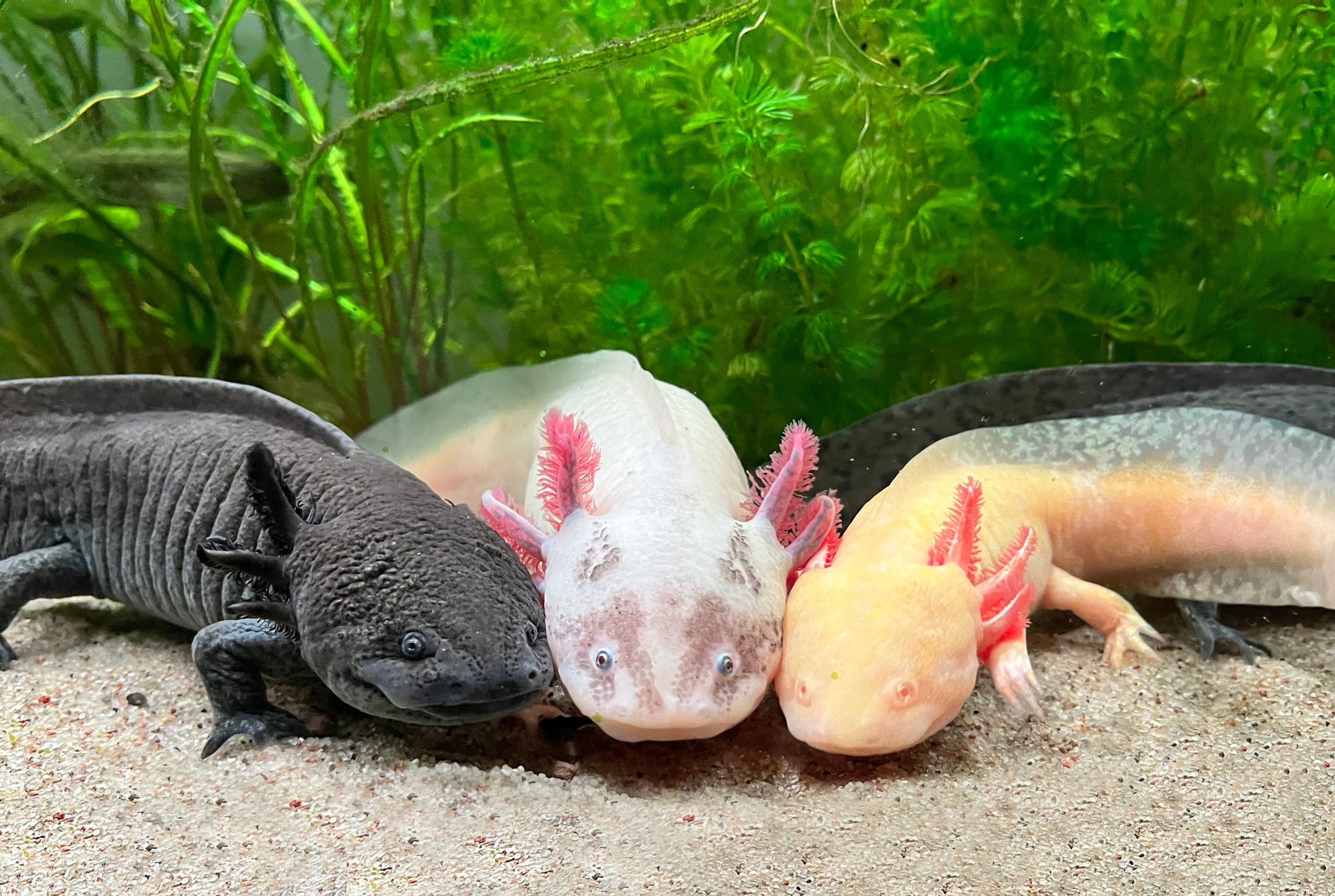
Axolotl regeneration is one of the most remarkable abilities in the animal kingdom. In Minecraft, the axolotl appears as a cute aquatic creature. It is passive and helps players in underwater battles. It also has strong regenerative abilities. Yet it is not only a fictional character—the real axolotl quickly captures people’s hearts as well.
The Mexican axolotl (Ambystoma mexicanum) belongs to the class Amphibia, within the order Caudata and the family Ambystomatidae. It is a truly fascinating and almost mystical creature (iNaturalist).
A Mystical Animal: The “Water Dog”
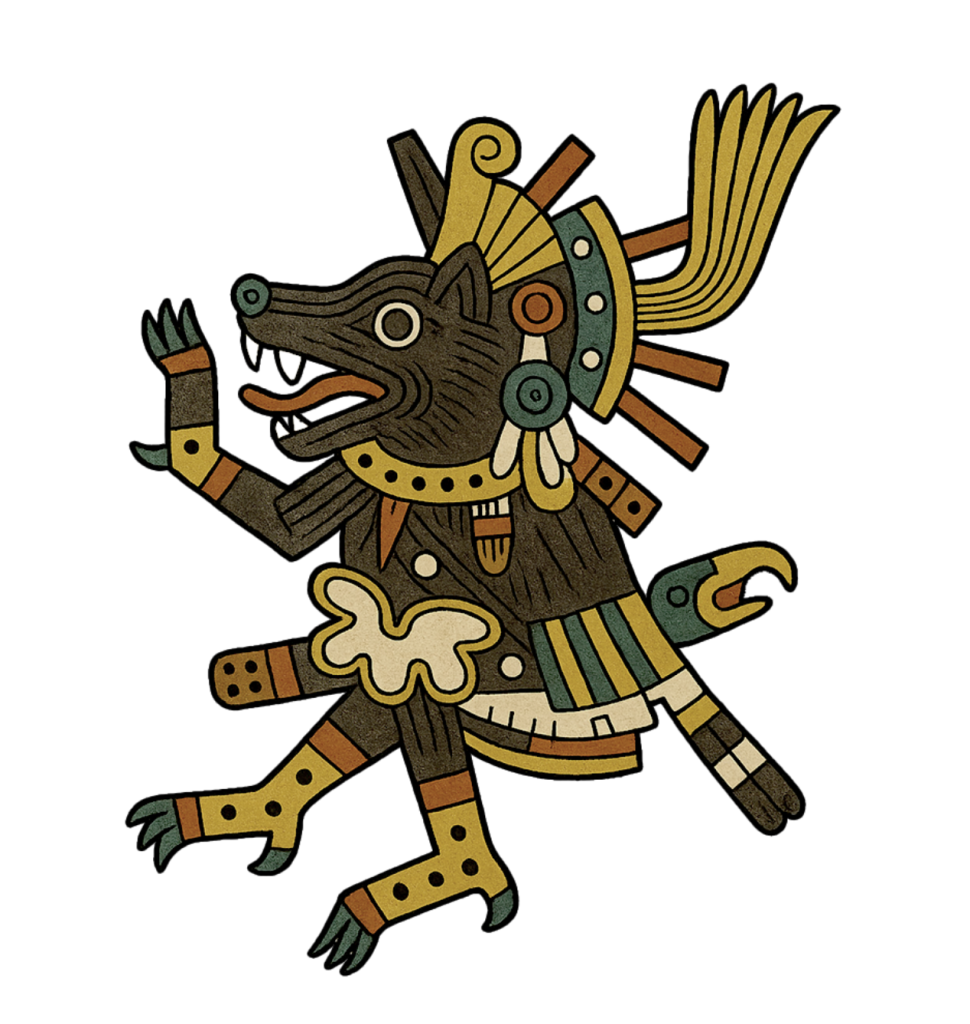
The name “axolotl” means “water dog”, derived from the Nahuatl (Aztec) language (atl = water, xolotl = dog). In Aztec mythology, the species is linked to Xolotl, the dog-headed god of death and rebirth. According to legend, Xolotl brought back the bones of the first humans. The gods had destroyed them, but humanity could then be recreated. The axolotl was therefore considered a sacred animal, although it was also consumed during ceremonial occasions.
Native Habitat
Today, the axolotl’s remaining habitat is found in the canals of Xochimilco. Xochimilco is one of the outer districts of Mexico City, an urbanised area situated approximately 2,250 metres above sea level. The land gradually rises towards the south, reaching over 3,100 metres at its southernmost point. Its remaining habitats today have muddy bottoms and support a rich variety of plant and animal life. The water is cold and rich in oxygen. Its temperature rarely exceeds 20 °C. In winter, it may even fall below 6–7 °C. Rainfall in the area is very unevenly distributed throughout the year. Nearly 75% of the annual precipitation falls between June and September. The axolotl has now disappeared from much of its original range. This includes Lake Texcoco and Lake Zumpango, which were drained because of their seasonal flooding.
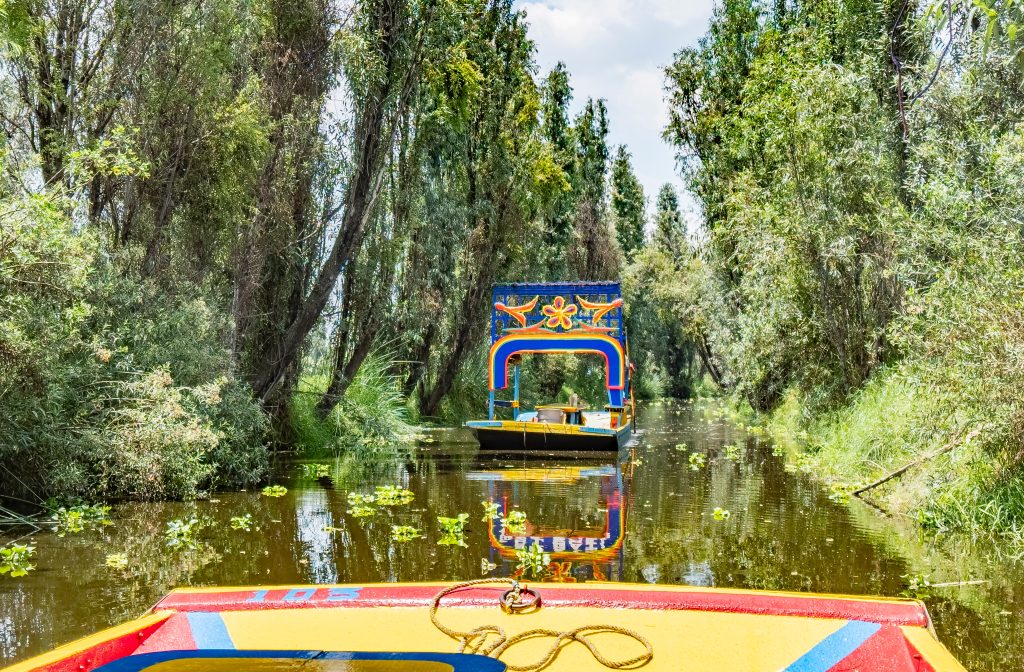
Photo: stock.adobe.com/Cmon
Conservation Status
The IUCN Red List classifies the species as Critically Endangered (IUCN Red List).
Threats to Survival
Habitat loss is not the only threat. The expansion of Mexico City and poor water quality also reduce the species’ chances of survival. Although efforts have been made to improve water quality, they have not met expectations. Its population has declined further due to introduced fish species. These fish feed on it as a primary food source. Another threat to the species is that it is considered a delicacy by local people. It is still illegally sold for consumption in local markets today. Due to its regenerative abilities, it is also used in various laboratory experiments.
As a result of these factors, its population has declined dramatically.
In 2006, the IUCN classified the species as Critically Endangered. Its illegal trade is therefore strictly punishable.
How Can You Legally Own an Axolotl?
The axolotl is listed in Appendix II of CITES (CITES species database). It is also included in Annex B under European Union legislation. This means it is a protected species. Its trade is subject to strict regulations in Hungary and across the EU.
Trade in Annex B species is generally permitted; however, it is subject to notification and documentation requirements under CITES and the relevant EU regulations governing the international trade of wild fauna and flora.
Proof of Origin
An axolotl should only be purchased from a registered, licensed breeder or dealer. They must be authorised to issue the necessary documentation and trade in the species.
For every axolotl sold, the buyer must receive a document certifying its legal origin. This is commonly referred to as an “EU certificate” or proof of origin document. This document confirms that the animal was bred and raised in captivity and was not taken from the wild.
If you would like to keep an axolotl as a pet, always make sure to request proof of its origin.
Colour Variants
The wild axolotl is dark grey or brown with black spots. However, through captive breeding, numerous colour variants have developed, partly as a result of crossbreeding with tiger salamanders. The most common variants in Hungary include:
- wild type – dark grey or brown with black spots
- albino – light pink or golden, with red eyes
- leucistic – light pink, with bluish-black eyes
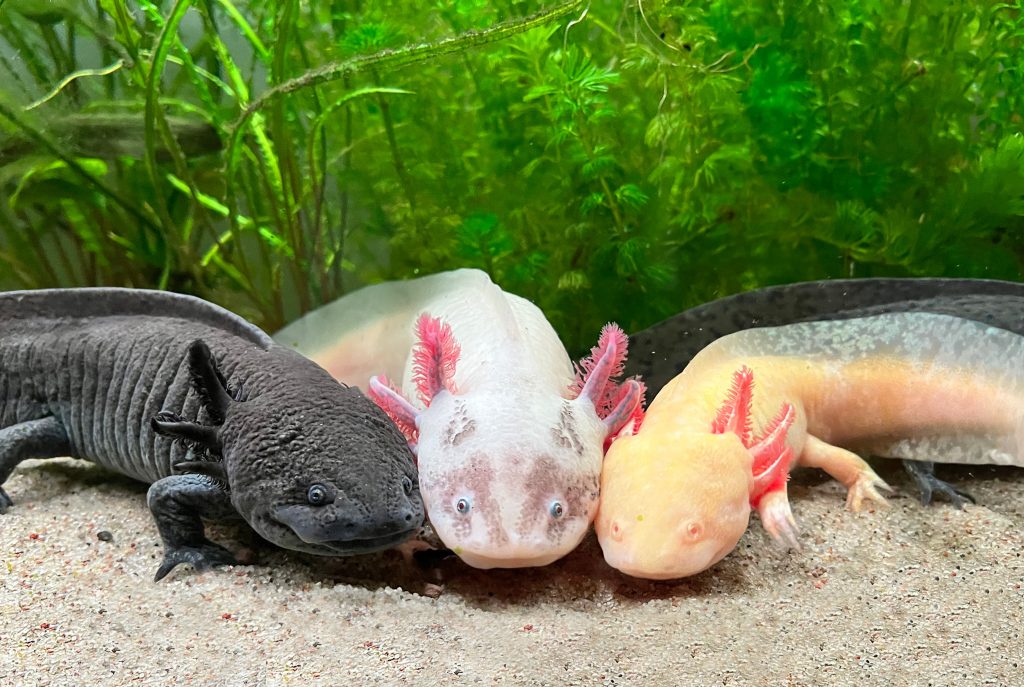
Photo: stock.adobe.com/Micha
Appearance
An adult axolotl typically reaches a length of 25–30 cm, although it can grow up to 45 cm. Its body is stocky, with a strong, laterally flattened tail. The head is broad and flat, and its eyelidless eyes are set far apart. Its limbs are short but strong; the forelimbs have four digits, while the hind limbs have five.
Its teeth are located around the entrance to the stomach. It captures prey by sucking it in with a vacuum-like motion. The sexes can be distinguished by their cloaca: the female’s is flatter, while the male’s is more prominent.
It is capable of breathing through its gills, skin and lungs.
A distinctive feature is the multiple pairs of gills on either side of its broad head. These remain even in adulthood, after the animal reaches sexual maturity. The gills are lost only if its habitat ceases to exist. In such cases, the gills regress, and the animal switches to lung-based respiration. It is this characteristic that defines it as a neotenic species.
Neoteny
Neoteny means that these animals retain the characteristics of their larval stage even after reaching sexual maturity. As a result, they continue to live an aquatic lifestyle and breathe through gills. Metamorphosis does not occur.
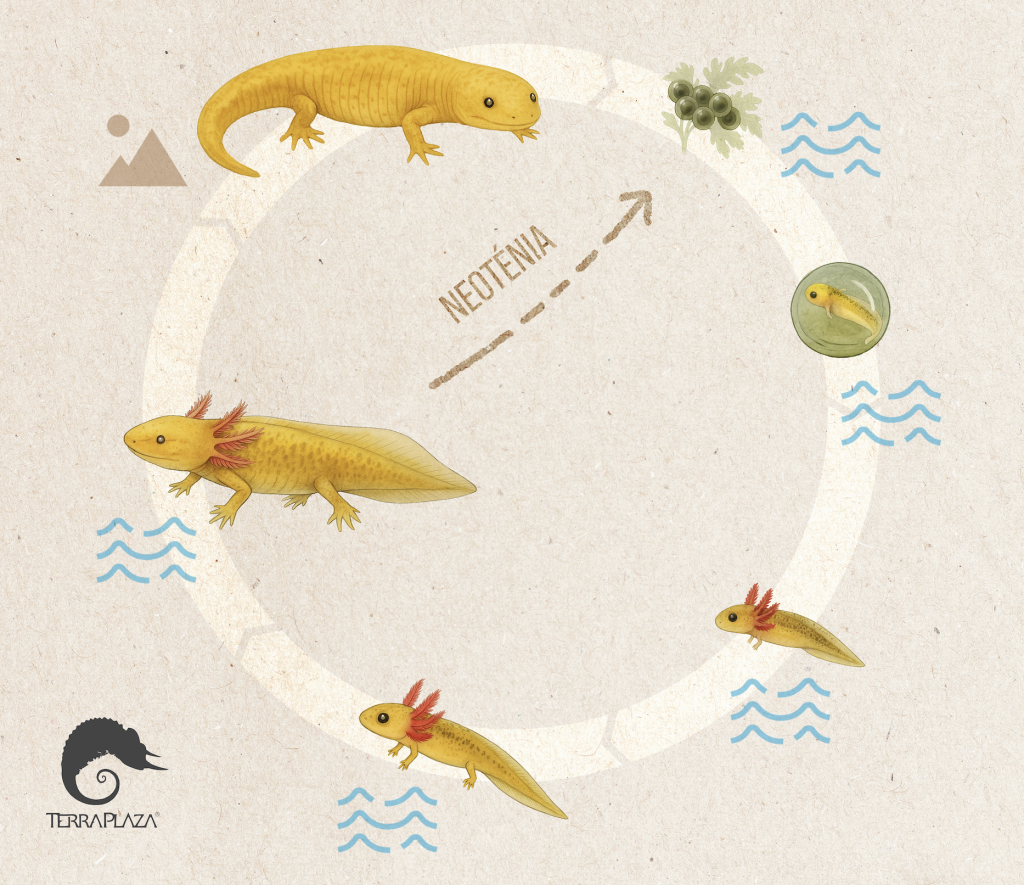
Illustration: Péter Kárpáthegyi
The neotenic state is a characteristic of the axolotl and a few closely related amphibian species. It is typically found in amphibians that live in harsh environments. These may include large bodies of water with dangerous shorelines, mountainous or hilly regions, and areas with limited food. Such habitats are often low in iodine. In these conditions, it can be advantageous for salamander species not to reach their fully developed adult form. This allows them to survive on less food and on food of lower quality.
The larval stage persists because the thyroid gland does not produce the hormones needed for metamorphosis. As a result, metamorphosis does not occur. In these amphibians, this is not a disadvantage. The aquatic habitats they depend on rarely disappear. However, if this does happen, they are capable of transforming into terrestrial amphibians that breathe using lungs.
Regeneration
The axolotl is capable of regenerating its limbs, tail, several internal organs, and even parts of its heart and brain. The regenerated organs and body parts are fully intact and functional. Following an injury, the wound epidermis stimulates the development of the underlying tissues. Within a few days, the regenerative bud becomes visible, from which the lost body part regrows.
Due to its remarkable regenerative ability, the species has been intensively studied. For a long time, it was believed that cells from damaged tissues reverted to omnipotent stem cells. These cells were thought to be capable of developing into any type of tissue. However, more recent research suggests that the resulting stem cells are only pluripotent. This means they can develop into specific types of tissue. Regeneration follows a predetermined, well-organised sequence.
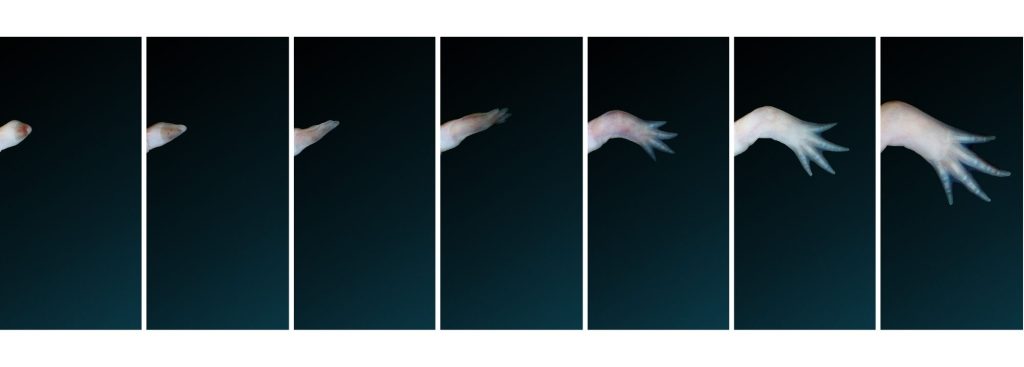
Photo: Péter Kárpáthegyi
If your axolotl is injured at home, the regeneration process should be supported under aquarium conditions. Always use cooler, clean water. Cooler water promotes regeneration, while also slowing down metabolism and the spread of infections. It is very important not to feed the animal for at least 2–3 days before lowering the temperature. Otherwise, it may regurgitate its food. In worse cases, partially digested food may begin to decompose inside its body. This can lead to the build-up of toxins. The axolotl should also be protected from unnecessary stress. This includes strong water movement, excessively warm water, and handling with a net.
The lifespan of axolotls is approximately 15–25 years.
Feeding
Diet and Feeding Behaviour
Axolotls are most active at dusk and at night. It is best to feed them in the evening. They are predatory animals, feeding on crustaceans, small fish, insects and amphibians. They locate their prey using their sense of smell and then draw it into their mouths with a vacuum-like suction. Based on experience, if multiple individuals are kept together, feeding should always be carried out carefully. The animals should be fed in separate locations to avoid potential injuries.
They can be fed small fish (including frozen), snails, insects, insect larvae, bloodworms, earthworms, and even chicken heart or liver. In my experience, young axolotls are particularly fond of bloodworms. They also readily hunt insects that fall onto the water surface during reptile feeding. A varied diet is essential, along with continuous observation of their physical condition. To maintain their health, avoid feeding low-quality or overly fatty, oily fish too frequently. As an emergency option, prepared foods such as JBL NovoLotl can also be kept at home. Juveniles should be fed daily, while adult individuals can be fed every 2–3 days.
Keeping and Housing
Axolotls have cannibalistic tendencies. Therefore, they should not be kept with smaller conspecifics, fish or shrimp in a shared aquarium. Predatory fish may also cause them harm.
Aquarium Size
For a single adult, an aquarium with a large base area is recommended. The minimum size should be 60 × 40 × 40 cm, although larger is always better. If the living space is too small, the animal may become stressed or lethargic. If this continues for a long time, it can even lead to death. When keeping multiple individuals together, the base area of the aquarium should be increased. More furnishings should also be provided.
Aquarium Furnishings
The interior of the aquarium is best arranged using wood and stones, with a preference for natural materials. Substrate should never consist of gravel smaller than the axolotl’s head, as it may be swallowed and prove fatal. Instead, use larger, rounded, smooth stones or gravel. Although there have been cases where swallowed stones were regurgitated, safety should always come first.
Hiding Places and Plants
Axolotls spend most of their time on the bottom. This should be considered when setting up the aquarium. It is advisable to provide several hiding places where the animal can retreat during the day. The aquarium can be planted with aquatic vegetation, which is not only decorative but also creates a more natural environment. Choose plants with strong root systems that can tolerate low light conditions. Axolotls often avoid light, as they lack eyelids, so additional aquarium lighting is not essential.
Water Quality
Water quality is of utmost importance. The use of a filter is strongly recommended, as described in specialised care guides (Caudata Culture). The inflow of water should not be too strong, as axolotls are sensitive to currents. A pH range of 6.5–8.5 is ideal. Regular partial water changes of 20–30% are essential. During water changes, tap water that has been left to stand for at least 24 hours can be used. Axolotls are sensitive to chlorine and other chemicals.
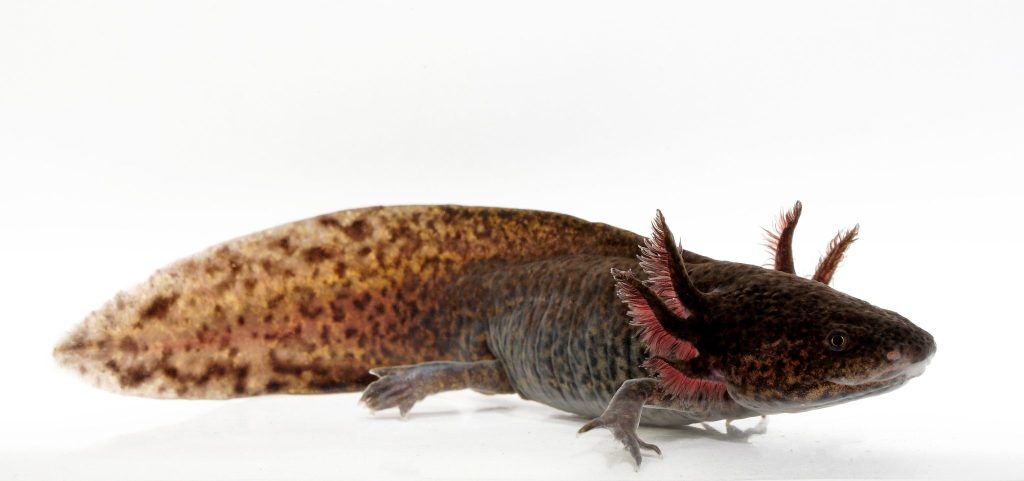
Photo: stock.adobe.com/bennytrapp
Water Temperature
Under home conditions, the ideal water temperature is 16–20 °C.
This should be monitored continuously with a thermometer. If the temperature suddenly drops below this range, the animal may become lethargic and lose its appetite. In severe cases, this can lead to death. At higher temperatures, the immune system weakens. This makes the axolotl more vulnerable to fungal and bacterial infections. It may also suffer from heat stress.
Temperature Changes
As an ectothermic animal, cooler water slows its metabolism. Excessively warm water causes stress and increases its need for food. There is no need to simulate winter conditions. However, in the case of illness, axolotls often recover more quickly in cooler water. Although they tolerate some fluctuation in temperature, they should not be exposed to sudden or prolonged changes. If the water cools during the winter months, feeding should be reduced. During hot summer periods, optimal water temperature should be maintained through more frequent water changes. Continuous monitoring of water temperature is essential. It is often the key factor when an axolotl appears inactive or unwell.
Handling
The Mexican axolotl should preferably be lifted out of the aquarium by hand rather than with a net, if necessary. This should be done with clean hands and should not take long. Its body is covered with protective mucus, which can be damaged in a dry environment.
It is often said that axolotls are undemanding. In my opinion, however, there is no such thing as an undemanding animal, and no two aquariums or keepers are the same. If we pay attention to the factors mentioned above and provide a suitable environment, peace and appropriate food, we can have a contented, “smiling” little axolotl in a beautiful aquarium.
Sources
https://www.inaturalist.org/taxa/26777-Ambystoma-mexicanum
https://www.iucnredlist.org/ja/species/1095/53947343
https://www.caudata.org/cc/species/Ambystoma/A_mexicanum.shtml
