




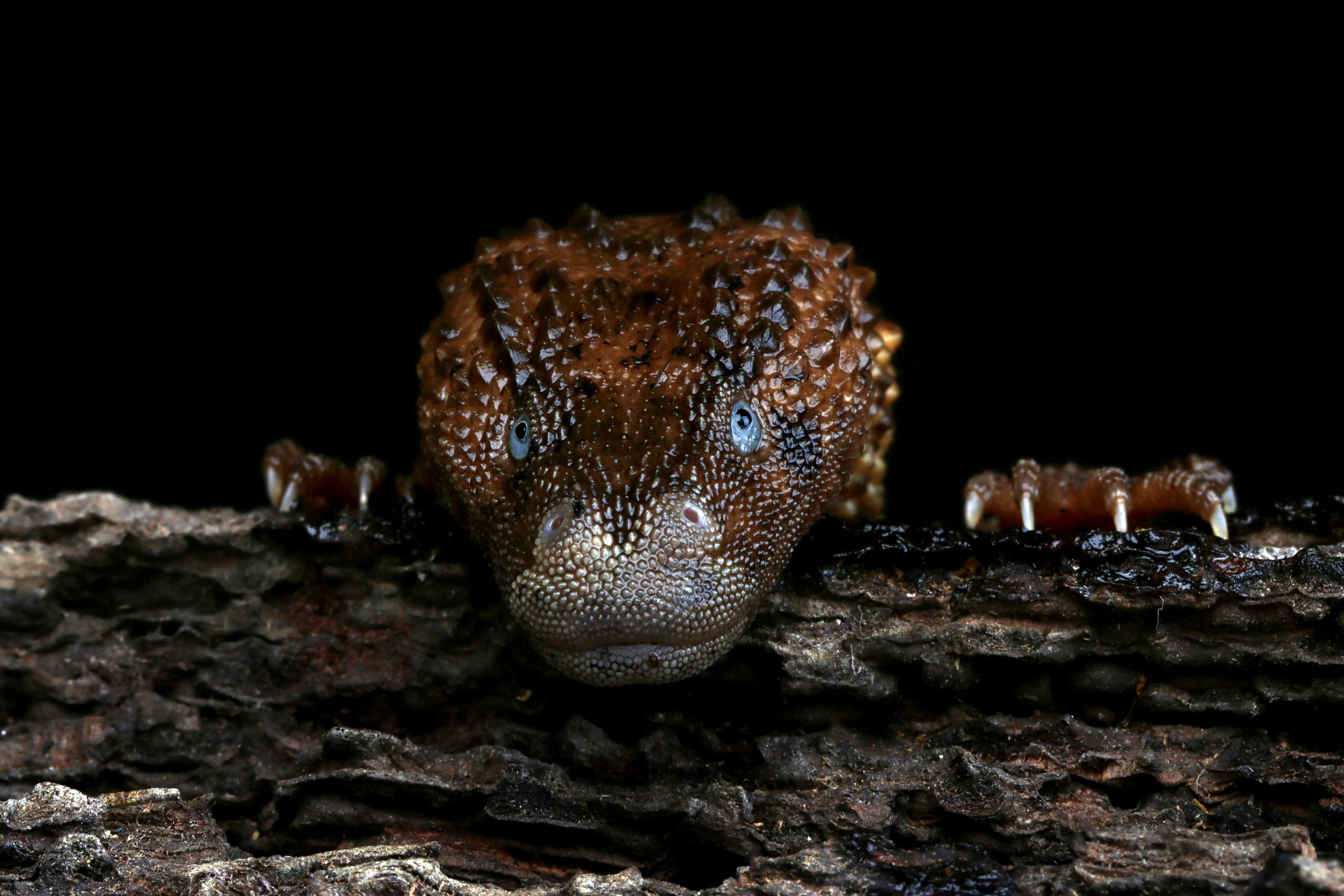
The earless monitor lizard, scientifically known as Lanthanotus borneensis, is one of the most unusual and least-known species in the reptile world. With its ancient-looking, armored appearance, secretive lifestyle and rarity, it is often regarded as a true herpetological curiosity. At first glance, it may look like a tiny waterside dragon. In reality, it represents a remarkable evolutionary lineage.
The species is native to the island of Borneo and is the only living member of the family Lanthanotidae. This alone makes it exceptional: rather than being one familiar species within a large group of related animals, it represents the last surviving species of an independent evolutionary line. For this reason, it is of great scientific and conservation importance.
A “Hidden-eared” lizard
The name earless monitor lizard can be misleading at first. It does not mean that the animal is completely deaf. Instead, it refers to the lack of an externally visible ear opening. The genus name Lanthanotus also refers to this feature and can be translated roughly as “hidden ear”. The species name borneensis refers to Borneo, the animal’s natural range.
It can detect sounds and vibrations, but its body lacks the external ear structures we are used to seeing in many other lizards. This characteristic contributes to its unusual appearance and mysterious reputation.
A special place among reptiles
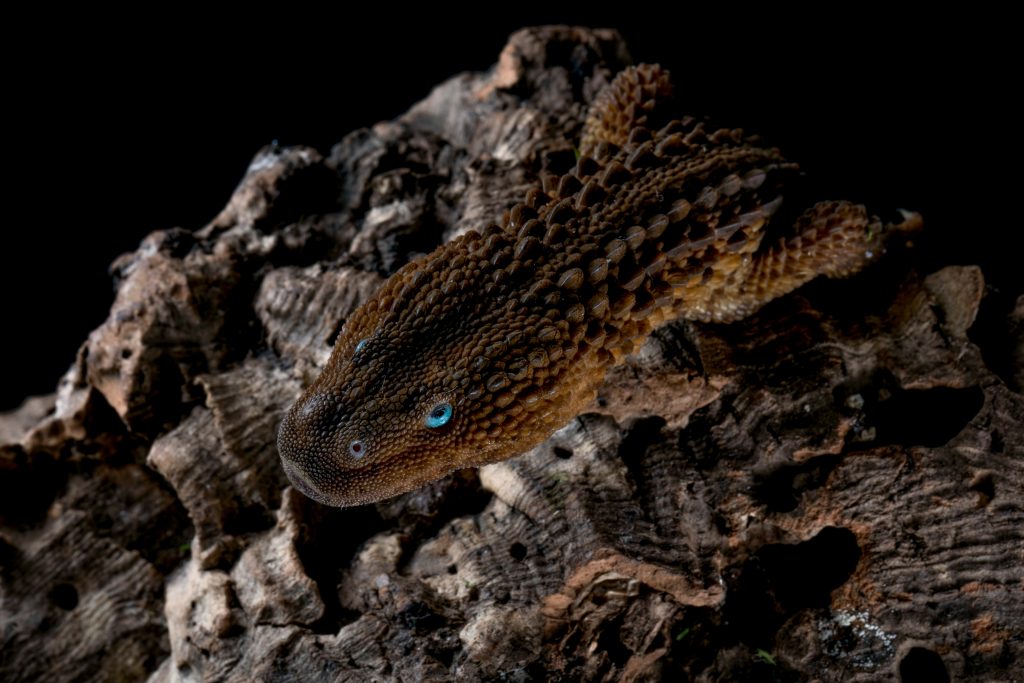
The species was described in 1878 by Franz Steindachner. Even at the time of its discovery, it was clear that it did not fit easily into the better-known groups of lizards. Because of certain anatomical similarities, it was once compared with other reptile groups. Modern studies, however, indicate that its closest living relatives are the true monitor lizards.
Even so, the earless monitor lizard represents such a distinct evolutionary lineage that most specialists continue to treat it as belonging to its own separate family. This is why it is often referred to as a “living fossil”. This does not mean that the species has remained unchanged over time, but rather that it is the only living representative of an ancient evolutionary branch.
A hidden inhabitant of Borneo
The earless monitor lizard is found only on the island of Borneo. Its known habitats are associated with the northern part of the island, including Sarawak, parts of Kalimantan and the area of Brunei. Because of its secretive lifestyle, it was long considered extremely rare, and even today it is difficult to gain an accurate picture of the size of its wild populations.

It mainly occurs in lowland, humid tropical habitats. Clear streams with rocky or stony beds, marshy areas and waterside environments are especially important for it. Dense vegetation, stones, decaying logs and waterside burrows all help this secretive reptile remain hidden and protected during the day.
Although it is primarily associated with natural rainforest habitats, some observations suggest that it may also occur near modified environments, provided that streams, cover and suitable microhabitats remain available. However, this does not mean that habitat destruction is not a serious threat to the species.
A miniature waterside “Dragon”
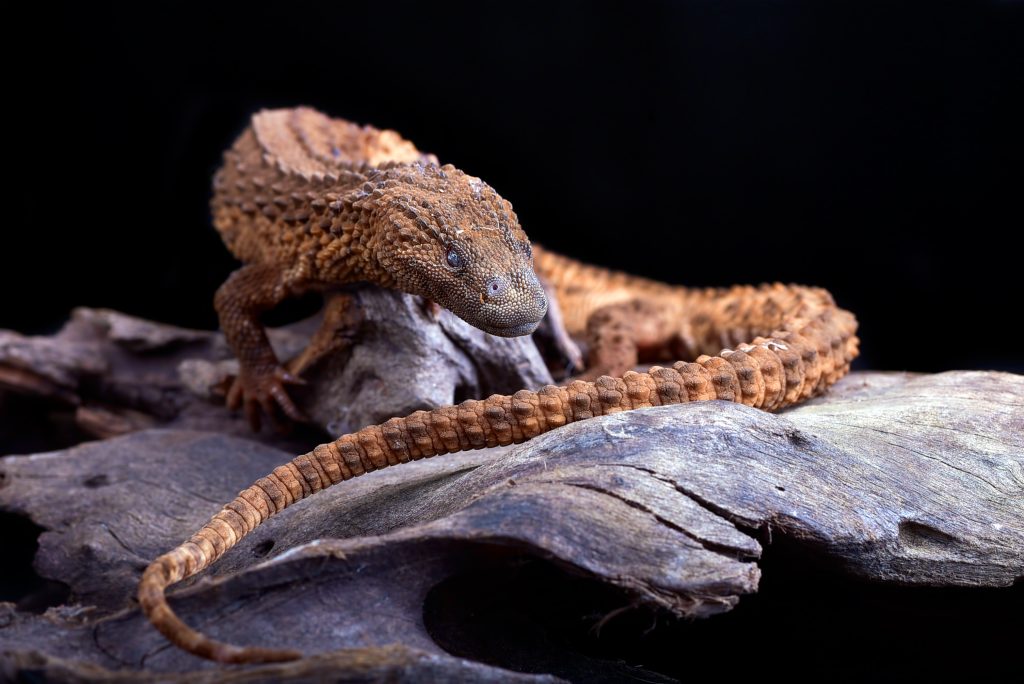
The earless monitor lizard has a striking appearance. Its body is 20–30 centimetres long, cylindrical and elongated, with a relatively long neck and short but strong limbs. In water and on land, it moves with a sinuous, wave-like motion rather than running like many other lizards.
Its body is covered with strongly keeled scales arranged in longitudinal rows. These give the species an armored, somewhat crocodile-like appearance, which is why many people see it as an ancient-looking animal. Its skin also contains bony plates called osteoderms, further enhancing this distinctive impression.
Its eyes are small, and the lower eyelid is semi-transparent. This can be interpreted as an adaptation to its aquatic lifestyle, as the animal may spend considerable time near or under water. Its tail may also help it grip underwater objects, allowing it to anchor itself to roots, stones or other submerged structures in flowing streams.
Nocturnal and secretive lifestyle
The earless monitor lizard is mainly active at night. During the day, it usually hides in burrows, under stones, near decaying logs or among waterside vegetation. This hidden lifestyle explains why the species is rarely seen in the wild. For a long time, only a few observations were available.
It is a semi-aquatic reptile: it may move both along the water’s edge and in the water itself. Observations suggest that it can remain underwater for extended periods, occasionally raising only its nose above the surface to breathe. This behavior further highlights its uniqueness, as it is not simply a lizard that lives near water, but a species whose lifestyle is closely shaped by the aquatic environment.
What does the earless monitor lizard eat?
The species’ diet is closely connected to its humid, waterside habitats. In nature, it may feed on earthworms, small fish, crustaceans and other aquatic or semi-aquatic prey. One particularly interesting feature is that the earless monitor lizard is able to swallow prey underwater. This is unusual among lizards and clearly shows how strongly the species is adapted to aquatic surroundings.
An endangered rarity

The earless monitor lizard is listed as Endangered on the IUCN Red List. This means that the species may face a serious risk of extinction if current threats continue. The species is mainly threatened by two factors: habitat transformation and illegal wildlife trade.
A significant part of Borneo’s rainforests has been replaced by agricultural land, especially oil palm plantations. This can lead to the disappearance and fragmentation of waterside habitats that are essential for the species. Although the earless monitor lizard may be able to adapt to modified environments to some extent, the long-term loss of clear streams, waterside cover and forest microhabitats poses a serious threat.
Assessing the species’ true conservation status is made more difficult by its secretive lifestyle. Its populations are harder to survey than those of many more easily observed animals, which makes the planning of effective conservation measures especially challenging.
In addition, because of its rarity and unusual appearance, the species is sought after on the exotic reptile market and appears from time to time in illegal trade, despite the fact that capturing wild individuals is prohibited. The case of the earless monitor lizard clearly shows how interest in a rare species can contribute to the decline of wild populations if it is not accompanied by proper awareness.
Before purchasing any exotic animal, it is always worth learning about the conservation status of the species and the origin of the individual animal. A responsible decision can only be made if we know where the animal comes from, whether it entered the trade legally, and whether it was taken from the wild. Whenever possible, verified captive-bred individuals from reliable sources should be preferred.
More than an exotic rarity
The earless monitor lizard is one of the most fascinating rarities of the reptile world. As the only living representative of its family, its ancient-looking appearance reflects a long evolutionary history. Because of its semi-aquatic, nocturnal and secretive lifestyle, the species is difficult to observe in nature. For a long time, it seemed almost mythical even to specialists.
Its story, however, is not only about the uniqueness of the species, but also about the vulnerability of rare reptiles. The example of the earless monitor lizard shows clearly that interest in exotic animals comes with responsibility.
