


Close Menu
TerraPlaza magazin
  • Reptiles
    • Lizards
      • Geckos
      • Chameleons
      • Skinks
      • Agamids
      • Monitors
  • Amphibians
  • Arthropods
  • Fun facts
  • English
    • English
    • Magyar

Subscribe to Updates

Get the latest creative news from FooBar about art, design and business.

What's Hot

African pygmy hedgehog habitat: African savannas

2026.11.17.

Red-Footed Tortoise Habitat: Forests and Savannas

2026.11.17.

Bristlenose catfish: A helpful aquarium resident from South America

2026.11.17.
Facebook X (Twitter) Instagram
TerraPlaza magazin
  • Reptiles
    1. Lizards
    2. Geckos
    3. Chameleons
    4. Skinks
    5. Agamids
    6. Monitors
    7. View All

    Small geckos with poison dart frogs: Which species can share a terrarium?

    2026.11.17.

    Hidden in plain sight: A new gecko species discovered in Borneo

    2026.11.06.

    Asian Water Dragon (Physignathus cocincinus): Life between water and trees

    2026.11.06.

    Treetop acrobats: The extraordinary world of anole lizards

    2026.11.06.

    Small geckos with poison dart frogs: Which species can share a terrarium?

    2026.11.17.

    Hidden in plain sight: A new gecko species discovered in Borneo

    2026.11.06.

    The giant Madagascar day gecko (Phelsuma grandis)

    2026.07.26.

    Veiled chameleon in the terrarium: how to create a suitable environment for it

    2026.08.25.

    Fire skink: The secretive lizard of the West African forests

    2026.06.17.

    Crocodile skinks as companion animals

    2026.01.07.

    Asian Water Dragon (Physignathus cocincinus): Life between water and trees

    2026.11.06.

    Earless monitor lizard – A mysterious rarity of the reptile world

    2026.07.09.

    Small geckos with poison dart frogs: Which species can share a terrarium?

    2026.11.17.

    Hidden in plain sight: A new gecko species discovered in Borneo

    2026.11.06.

    Asian Water Dragon (Physignathus cocincinus): Life between water and trees

    2026.11.06.

    Built for the night: When life begins after dark

    2026.11.06.
  • Amphibians

    Small geckos with poison dart frogs: Which species can share a terrarium?

    2026.11.17.

    Built for the night: When life begins after dark

    2026.11.06.

    Pacman frogs: enormous mouths and lightning‑fast strikes

    2026.09.14.

    Axolotl: The Creature That Never Grows Up – Regeneration, Myths and Survival

    2026.05.04.
  • Arthropods

    Tarantula invasion in Austria? What’s really behind hundreds of spider sightings?

    2026.11.17.

    Phidippus regius ‘Bahamas’ – A tiny hunter with remarkable abilities

    2026.11.06.

    Disguised as flowers, leaves, or twigs: the many faces of praying mantises

    2026.08.18.

    Habitats and ecological adaptations of arthropods

    2026.08.10.

    Are Springtails the Most Common Terrarium Animals?

    2021.01.12.
  • Fun facts

    African pygmy hedgehog habitat: African savannas

    2026.11.17.

    Red-Footed Tortoise Habitat: Forests and Savannas

    2026.11.17.

    Bristlenose catfish: A helpful aquarium resident from South America

    2026.11.17.

    Ball python size: How big can this snake grow?

    2026.11.17.

    Red-Spotted toad habitat: Life in dry environments

    2026.11.17.
  • English
    • English
    • Magyar
Facebook Instagram YouTube
TerraPlaza magazin
Home»Fun facts
Fun facts

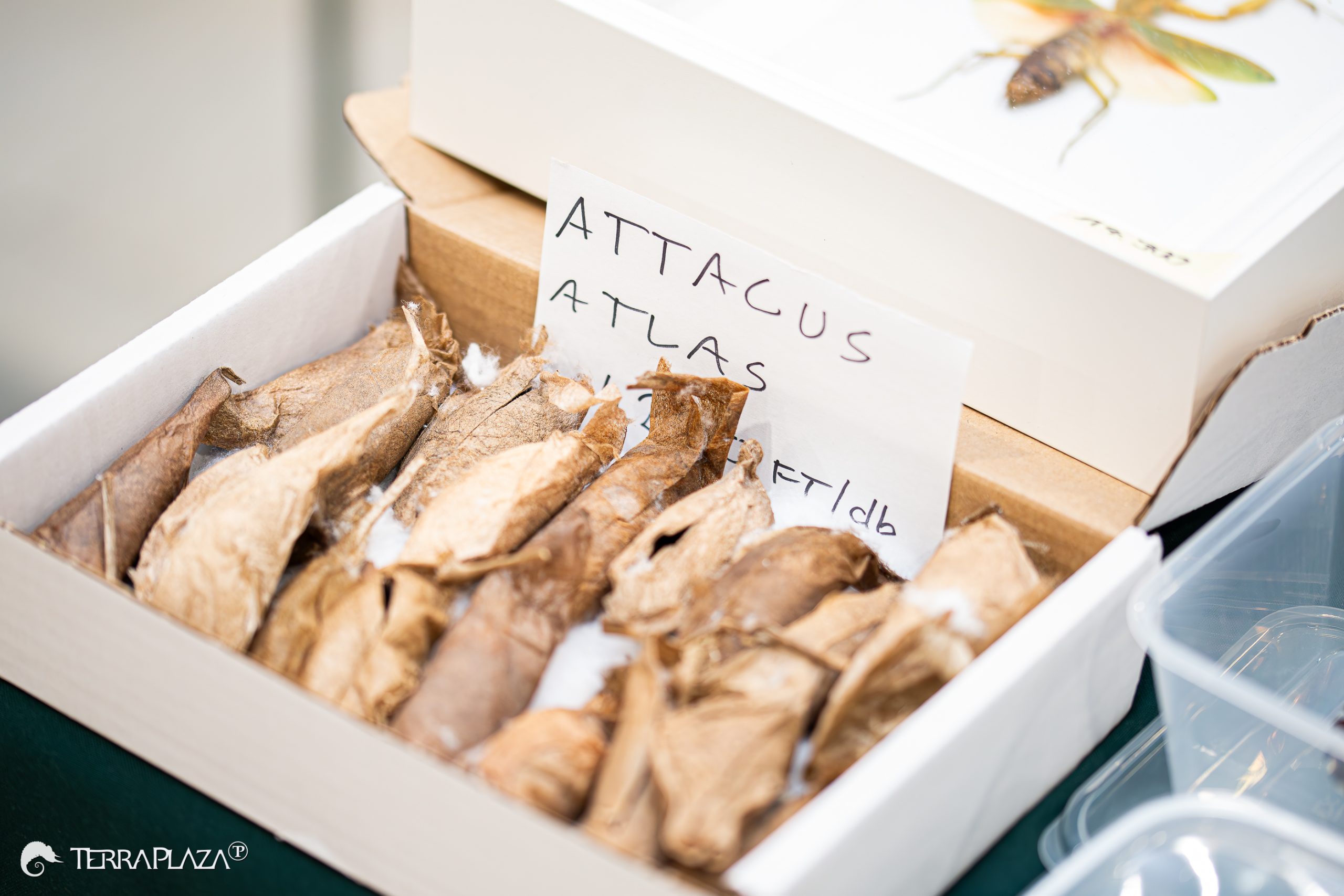
A silent masterpiece: the transformation of the atlas moth

Farkas M. VivienBy Farkas M. Vivien2026.06.30.No Comments1 Min Read
Atlaszlepke, Attacus atlas átalakulása gubóban
Share
Facebook Twitter LinkedIn Pinterest Email

The atlas moth (Attacus atlas) caterpillar produces a strong, brown, broken-strand silk known as fagara silk. When the time comes to pupate, it uses this special material to create its cocoon. The pupal stage usually lasts 3–5 weeks. After this quiet transformation, the adult moth, also called the imago, emerges from the cocoon. This is how the caterpillar becomes the spectacular and unique atlas moth.

atlas moth Attacus atlas butterflies and moths caterpillar cocoon exotic animals insects moth facts pupal stage
Share. Facebook Email
Previous ArticleHeatwave in the terrarium: What to watch out for if you keep a bearded dragon
Next Article Tiny hatchlings after a long wait
Farkas M. Vivien
Farkas M. Vivien

Related Posts

African pygmy hedgehog habitat: African savannas

2026.11.17.

Red-Footed Tortoise Habitat: Forests and Savannas

2026.11.17.

Bristlenose catfish: A helpful aquarium resident from South America

2026.11.17.

Ball python size: How big can this snake grow?

2026.11.17.

Comments are closed.


TerraPlaza Expo
picks
Ezt már olvastad?
Fun facts

African pygmy hedgehog habitat: African savannas

By Farkas M. Vivien2026.11.17.

The African pygmy hedgehog lives in African savannas and grasslands, where it prefers open, relatively dry habitats.

Red-Footed Tortoise Habitat: Forests and Savannas

2026.11.17.

Bristlenose catfish: A helpful aquarium resident from South America

2026.11.17.

Ball python size: How big can this snake grow?

2026.11.17.
Rólunk

Természetszeretet és felelős állattartás naprakész információkkal – terrarisztika és akvarisztika szakportál. Hogy kedvenceidnek minél boldogabb élete legyen.

Email: info@terraplaza.hu
Tel: +36 20 4757271

 
    TerraPlaza magazin
    Facebook Instagram YouTube Discord
    Copyright © 2026 TerraPlaza ®

    Type above and press Enter to search. Press Esc to cancel.

    A jobb felhasználói élmény érdekében az oldalon cookie-kat használunk. Oldalunk használatával, Ön elfogadja a cookie-k használatát.