




When the sun goes down, many animals are only just beginning their active period. Nocturnal life can offer several advantages. For example, animals may avoid the heat of the day and reduce encounters with predators or competitors. They can also take advantage of food sources that become available after dark.
However, darkness presents a different set of challenges. As a result, nocturnal animals have evolved remarkable adaptations. These include highly light-sensitive eyes, well-developed senses of smell and hearing, heat detection and a refined sense of touch. Together, these adaptations help them navigate their surroundings and locate prey.
In this article, we explore how animals familiar to terrarium enthusiasts cope with life in the dark. We also examine the specialised senses, physical features and behaviours that make their nocturnal lifestyles possible.
Seeing when there is barely any light
One of the keys to night vision is making effective use of very little available light. The ability of the pupil to dilate widely plays an important role. A wider pupil allows more light to enter the eye and reach the retina. As a result, vision can improve in dim conditions.
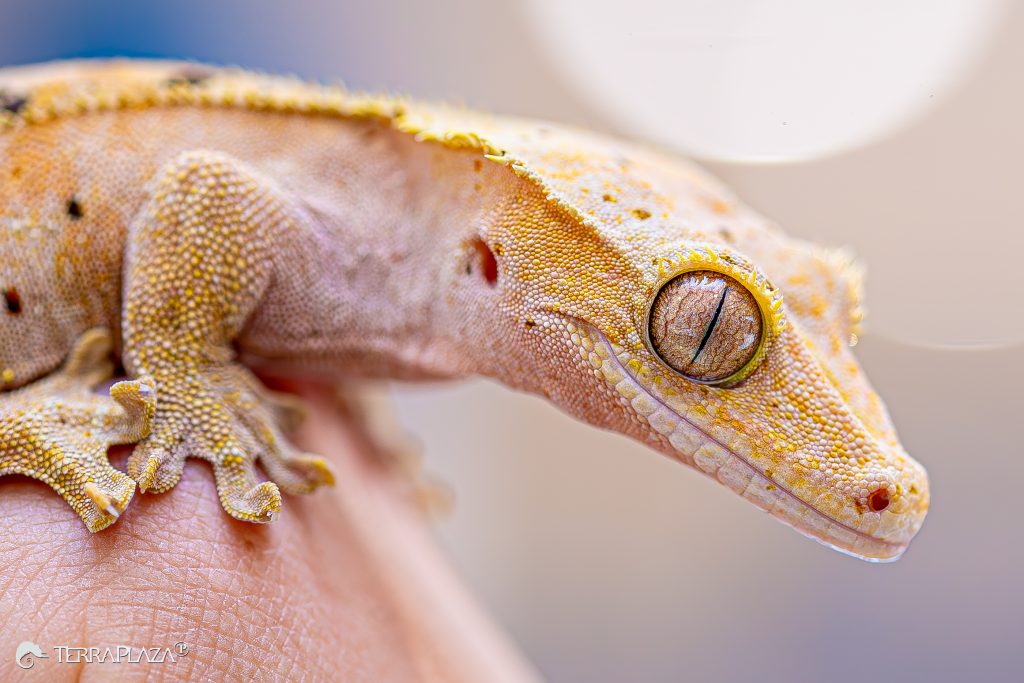
The crested gecko (Correlophus ciliatus) is mainly active at dusk and during the night. Its large eyes and pupils, which dilate considerably in darkness, help it navigate and search for food in low light.
Following scent trails
In darkness, chemical sensing can be particularly important alongside vision. Snakes use their forked tongues to collect tiny scent molecules from the air and surrounding surfaces. They then transfer these chemical samples to Jacobson’s organ, also known as the vomeronasal organ, in the roof of the mouth. This allows them to follow prey trails, detect other members of their species and navigate their surroundings.
The green tree python (Morelia viridis) is a good example. It is mainly active at night. While resting on branches, it regularly flicks its tongue to gather chemical information from the environment. Thanks to its forked tongue and Jacobson’s organ, it can detect chemical traces indicating nearby prey without relying on sight. This ability is especially useful in darkness.
Detecting prey through body heat
Some pythons can also sense the infrared radiation, or heat, emitted by their prey during nocturnal hunting. They have heat-sensitive pits along the labial scales of their heads. These specialised sensory structures help them locate nearby warm bodies, even in very low light.
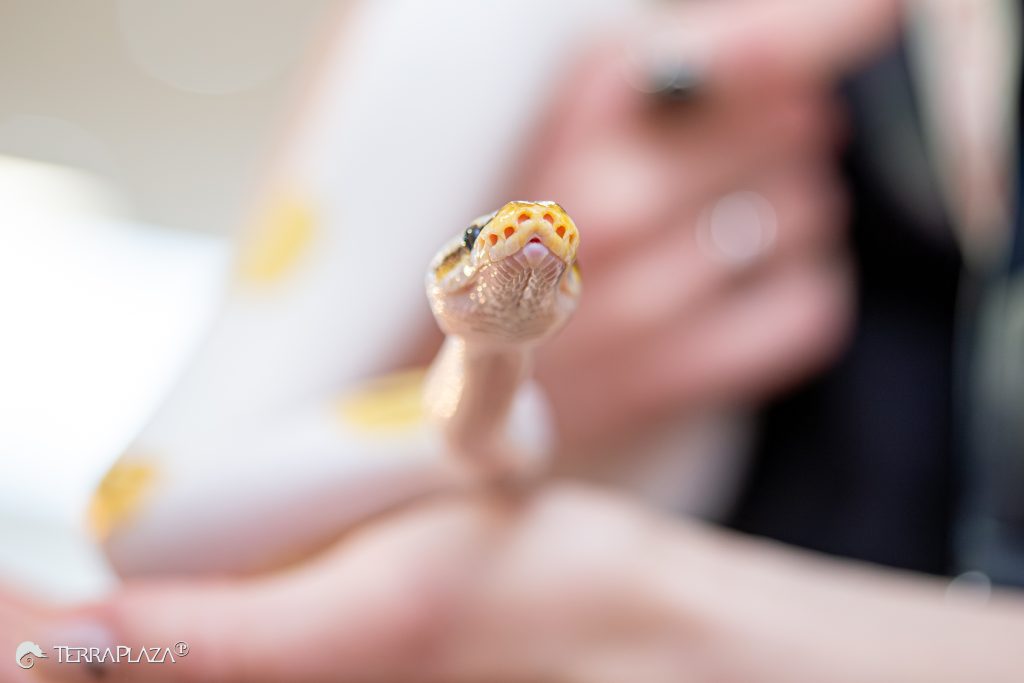
The royal python (Python regius), a species well known in reptile keeping, also possesses these heat-sensitive pits. Located along its labial scales, these sensory organs help it determine the position of warm-blooded prey more accurately in darkness. For example, this ability is particularly useful when the snake waits near its hiding place. It also helps the snake detect prey while lying in ambush, ready to strike.
Reading vibrations
Nocturnal animals do not always need to see or hear to detect what is happening around them. Many arthropods are extremely sensitive to tiny vibrations travelling through the ground and air. As a result, they can detect approaching prey or danger even in darkness.
The Mexican red-knee tarantula (Brachypelma hamorii) is a familiar species among terrarium keepers. Its body and legs are covered in numerous sensory hairs. These allow it to detect subtle air movements and vibrations that may indicate an insect moving nearby. Therefore, the spider does not rely exclusively on its eyesight when hunting at night.
Silent movement, precise strikes
Successful nocturnal hunting involves more than simply detecting prey. For this reason, approaching without being noticed is equally important. By moving slowly and cautiously, many nocturnal predators increase their chances of success. Others remain motionless and wait in ambush.
The leopard gecko (Eublepharis macularius) is an insect-eating lizard mainly active at dusk and during the night. While hunting, it often approaches its chosen insect slowly. Then, at the right moment, it strikes with a sudden, rapid movement. By combining patient stalking with a swift attack, the gecko gives its prey less time to escape.
Camouflage: Blending into the surroundings
Darkness alone does not guarantee safety. Many nocturnal animals must also remain hidden during the day, when predators can spot them more easily. Camouflage and body patterns help animals blend into their natural surroundings. For example, their colours may resemble tree bark, rocks or fallen leaves.
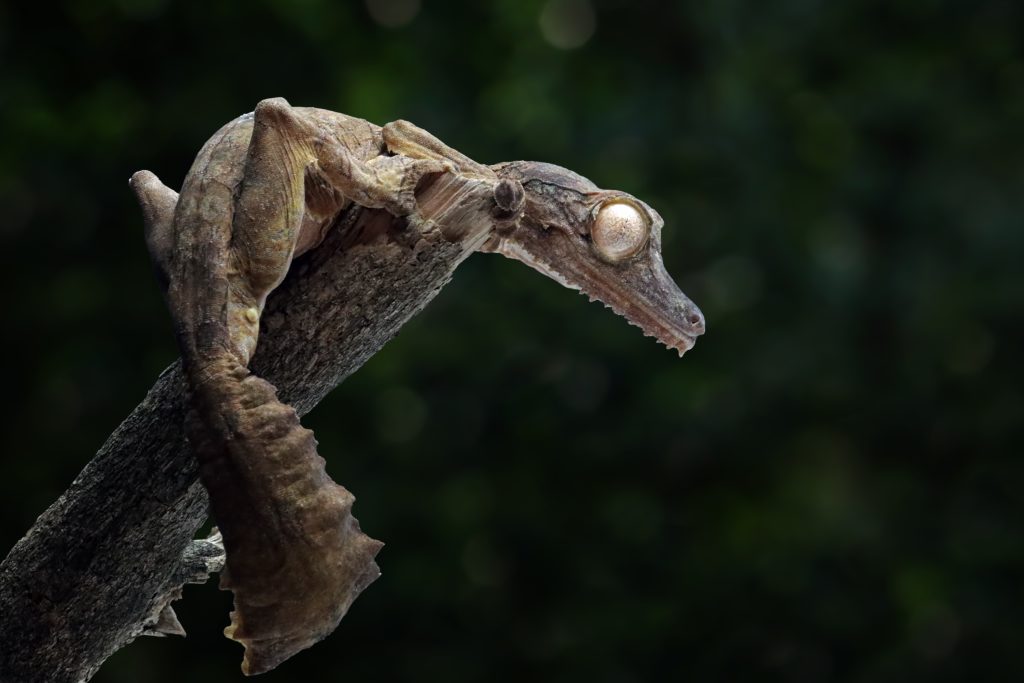
Henkel’s leaf-tailed gecko (Uroplatus henkeli) is a remarkable master of camouflage. This species inhabits the forests of Madagascar and is mainly active at night. Its brownish-grey colouration and irregular patterns resemble tree bark. As a result, the gecko can become almost invisible against tree trunks. In addition, folds of skin run along the edges of its body. When pressed against a surface, these folds break up the gecko’s outline and reduce the shadow it casts. During the day, it often rests motionless against a tree trunk. Its unusual body structure and camouflage therefore help it avoid the attention of predators.
Communicating through sound in the dark
In nocturnal life, sound-based communication can be just as important as sight and smell. Different calls allow animals to communicate even when darkness makes it difficult to see others of their species. Vocal communication is particularly useful during mate selection and territorial defence.
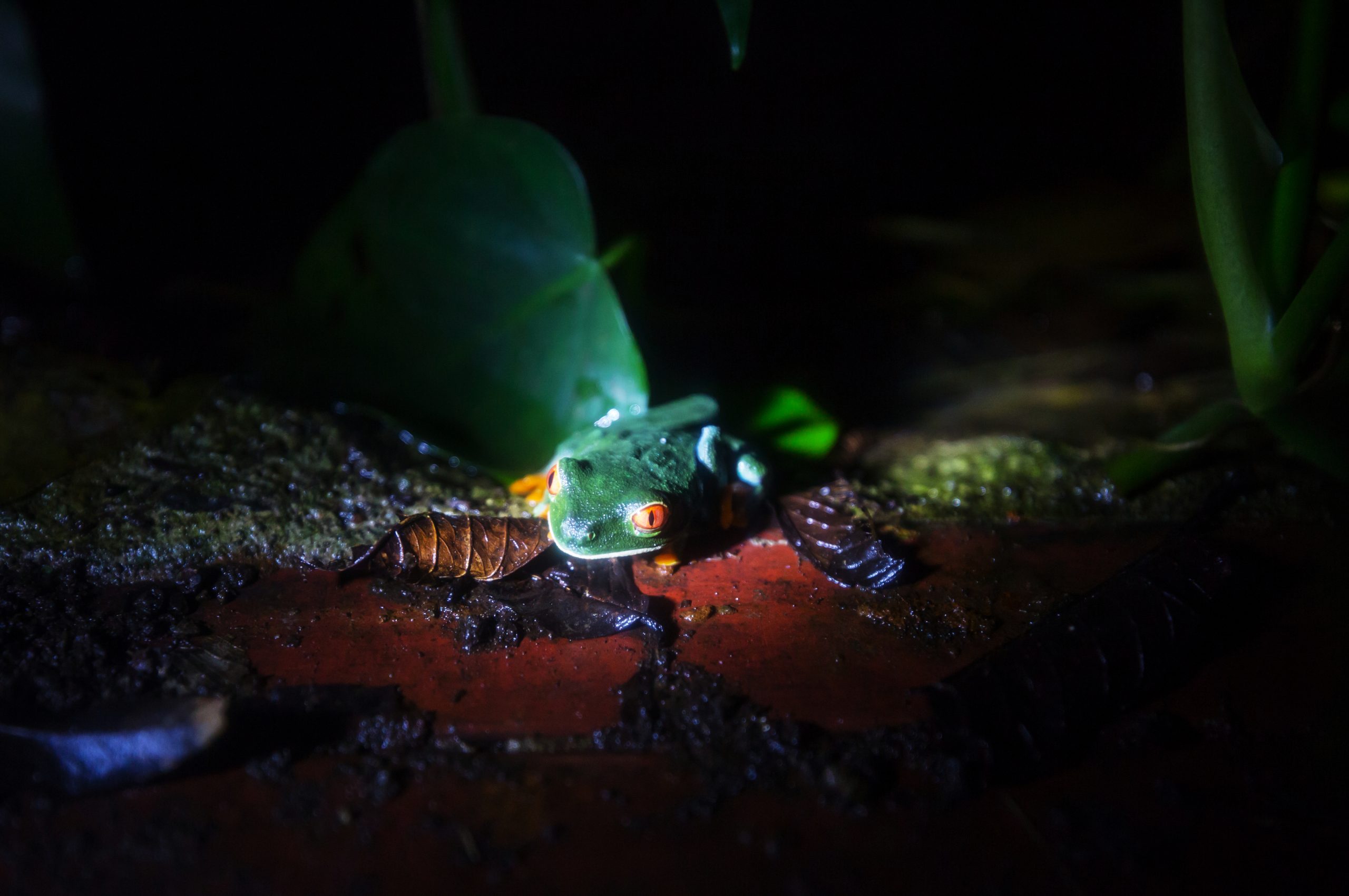
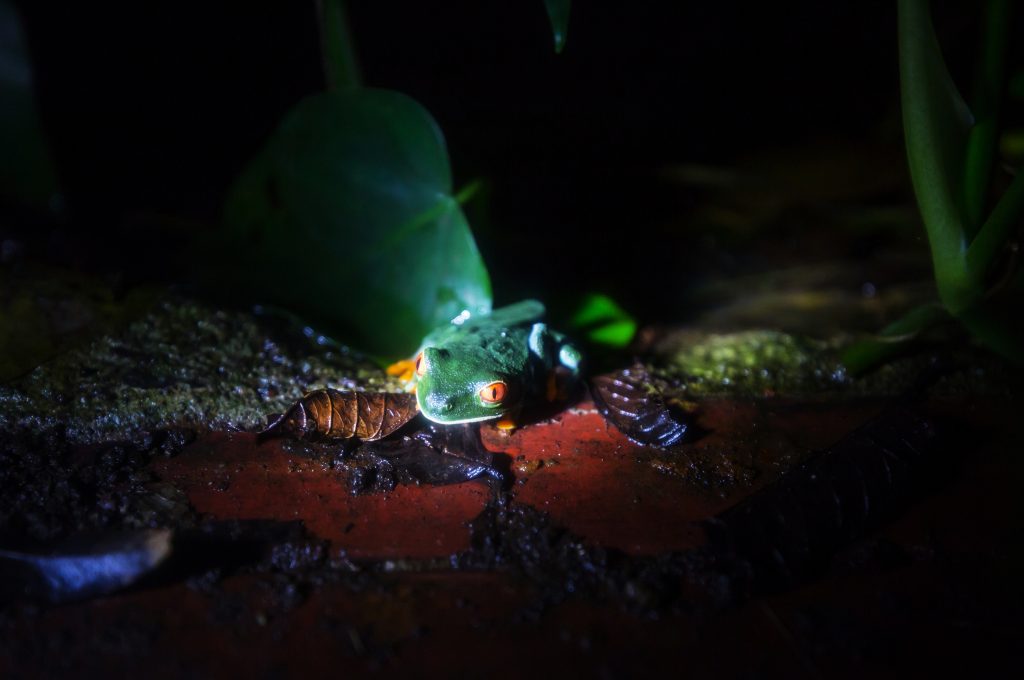
The red-eyed tree frog (Agalychnis callidryas) is a mainly nocturnal amphibian native to the tropical rainforests of Central America. During the breeding season, males produce short, distinctive calls. These attract females and signal their presence to other males. In addition to vocal signals, these frogs may use vibrations transmitted through vegetation during territorial disputes. They can therefore communicate in several ways, even in darkness.
A different world in the darkness
Adaptations to nocturnal life can take many forms. From light-sensitive eyes and heat detection to sensing subtle vibrations and using camouflage, animals have evolved remarkable ways to cope with darkness.
Observing nocturnal species in terrariums can be particularly fascinating. After all, much of their natural behaviour only becomes apparent once the lights go out. Therefore, suitable hiding places and a natural day–night cycle are essential for their welfare. In addition, each species needs an environment tailored to its specific requirements. Moreover, these conditions allow us to gain a better understanding of the extraordinary world of animals adapted to life after dark.
