


Close Menu
TerraPlaza magazin
  • Reptiles
    • Lizards
      • Geckos
      • Chameleons
      • Skinks
      • Agamids
      • Monitors
  • Amphibians
  • Arthropods
  • Fun facts
  • English
    • English
    • Magyar

Subscribe to Updates

Get the latest creative news from FooBar about art, design and business.

What's Hot

Orchid mantis: A remarkable praying mantis from Southeast Asia

2026.11.11.

Varanus cumingi: A water-associated monitor from the Philippines

2026.11.11.

Butterfly pupa transformation: What happens inside?

2026.11.11.
Facebook X (Twitter) Instagram
TerraPlaza magazin
  • Reptiles
    1. Lizards
    2. Geckos
    3. Chameleons
    4. Skinks
    5. Agamids
    6. Monitors
    7. View All

    Hidden in plain sight: A new gecko species discovered in Borneo

    2026.11.06.

    Asian Water Dragon (Physignathus cocincinus): Life between water and trees

    2026.11.06.

    Treetop acrobats: The extraordinary world of anole lizards

    2026.11.06.

    Veiled chameleon in the terrarium: how to create a suitable environment for it

    2026.08.25.

    Hidden in plain sight: A new gecko species discovered in Borneo

    2026.11.06.

    The giant Madagascar day gecko (Phelsuma grandis)

    2026.07.26.

    Veiled chameleon in the terrarium: how to create a suitable environment for it

    2026.08.25.

    Fire skink: The secretive lizard of the West African forests

    2026.06.17.

    Crocodile skinks as companion animals

    2026.01.07.

    Asian Water Dragon (Physignathus cocincinus): Life between water and trees

    2026.11.06.

    Earless monitor lizard – A mysterious rarity of the reptile world

    2026.07.09.

    Hidden in plain sight: A new gecko species discovered in Borneo

    2026.11.06.

    Asian Water Dragon (Physignathus cocincinus): Life between water and trees

    2026.11.06.

    Built for the night: When life begins after dark

    2026.11.06.

    Treetop acrobats: The extraordinary world of anole lizards

    2026.11.06.
  • Amphibians

    Built for the night: When life begins after dark

    2026.11.06.

    Pacman frogs: enormous mouths and lightning‑fast strikes

    2026.09.14.

    Axolotl: The Creature That Never Grows Up – Regeneration, Myths and Survival

    2026.05.04.
  • Arthropods

    Phidippus regius ‘Bahamas’ – A tiny hunter with remarkable abilities

    2026.11.06.

    Disguised as flowers, leaves, or twigs: the many faces of praying mantises

    2026.08.18.

    Habitats and ecological adaptations of arthropods

    2026.08.10.

    Are Springtails the Most Common Terrarium Animals?

    2021.01.12.
  • Fun facts

    Orchid mantis: A remarkable praying mantis from Southeast Asia

    2026.11.11.

    Varanus cumingi: A water-associated monitor from the Philippines

    2026.11.11.

    Butterfly pupa transformation: What happens inside?

    2026.11.11.

    Viper gecko: Distinctive tail and snake-like appearance

    2026.11.11.

    Angelfish tank mates: Which fish are good companions?

    2026.11.11.
  • English
    • English
    • Magyar
Facebook Instagram YouTube
TerraPlaza magazin
Home»Fun facts
Fun facts

Catappa Leaf: Natural Support for Shrimp Aquariums

Farkas M. VivienBy Farkas M. Vivien2026.11.04.No Comments1 Min Read
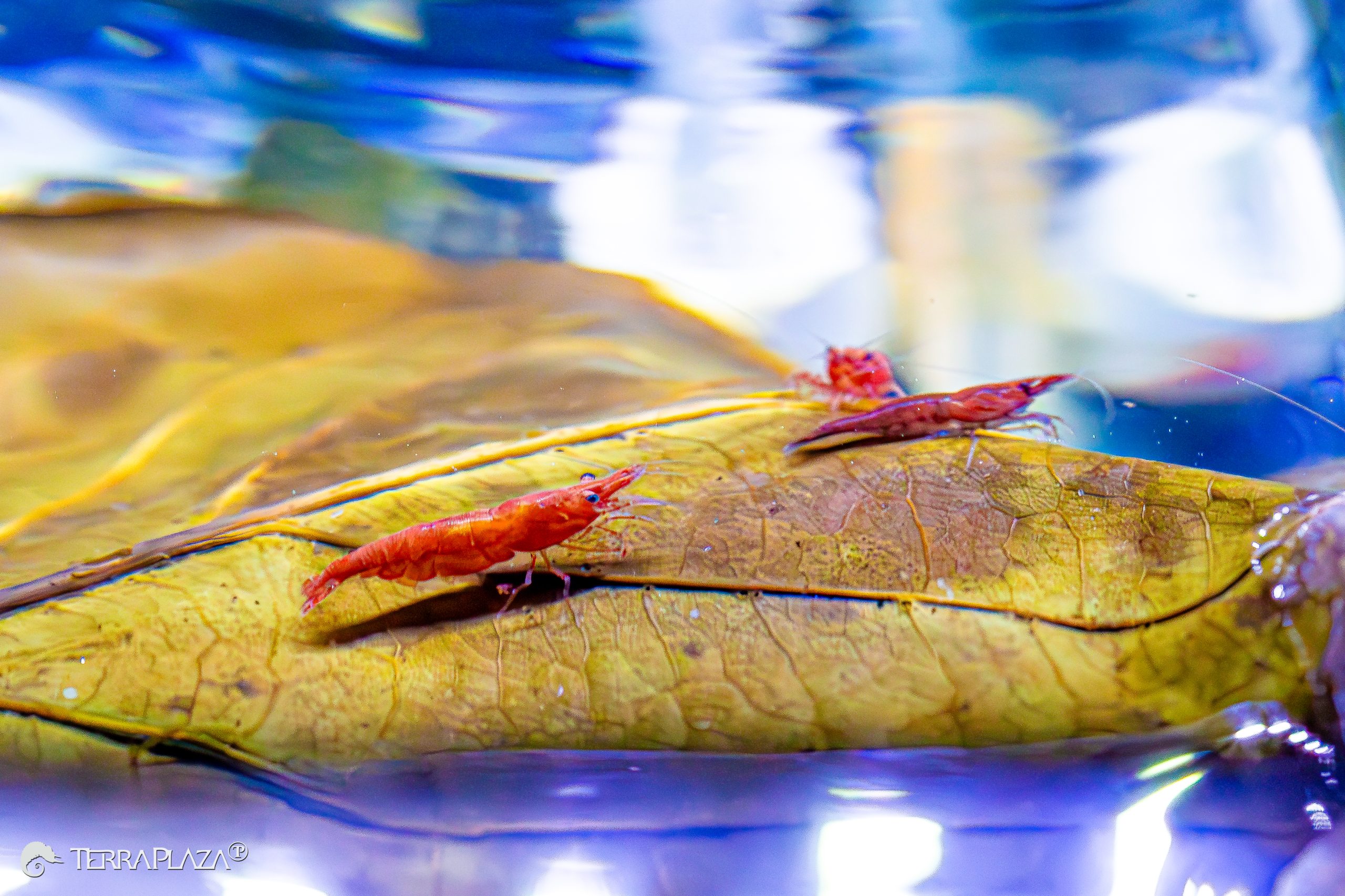
Catappa leaf in a shrimp aquarium
Share
Facebook Twitter LinkedIn Pinterest Email

The catappa leaf, or dried leaf of the Indian almond tree (Terminalia catappa), is a popular natural addition to aquariums. As it decomposes, it releases tannins and other plant compounds into the water. These can mildly lower the pH and give the water a characteristic brownish tint.

Over time, biofilm develops on the leaf surface, which shrimp readily graze on. The leaf also provides natural shelter, making it especially useful for young shrimp.

Terminalia catappa leaves are also commonly used for their antibacterial and antifungal properties. However, they do not replace proper water quality or any necessary treatment.

aquarium biofilm catappa leaf Indian almond leaf natural aquarium care shrimp tannins Terminalia catappa TerraPlaza
Share. Facebook Email
Previous ArticleFire skink: Size and sexual differences
Next Article Whiptail catfish habitat: sandy bottoms and natural hiding places
Farkas M. Vivien
Farkas M. Vivien

Related Posts

Orchid mantis: A remarkable praying mantis from Southeast Asia

2026.11.11.

Varanus cumingi: A water-associated monitor from the Philippines

2026.11.11.

Butterfly pupa transformation: What happens inside?

2026.11.11.

Viper gecko: Distinctive tail and snake-like appearance

2026.11.11.

Comments are closed.


TerraPlaza Expo
picks
Ezt már olvastad?
Fun facts

Orchid mantis: A remarkable praying mantis from Southeast Asia

By Farkas M. Vivien2026.11.11.

The orchid mantis is a remarkable praying mantis native to tropical regions of South and Southeast Asia.

Varanus cumingi: A water-associated monitor from the Philippines

2026.11.11.

Butterfly pupa transformation: What happens inside?

2026.11.11.

Viper gecko: Distinctive tail and snake-like appearance

2026.11.11.
Rólunk

Természetszeretet és felelős állattartás naprakész információkkal – terrarisztika és akvarisztika szakportál. Hogy kedvenceidnek minél boldogabb élete legyen.

Email: info@terraplaza.hu
Tel: +36 20 4757271

 
    TerraPlaza magazin
    Facebook Instagram YouTube Discord
    Copyright © 2026 TerraPlaza ®

    Type above and press Enter to search. Press Esc to cancel.

    A jobb felhasználói élmény érdekében az oldalon cookie-kat használunk. Oldalunk használatával, Ön elfogadja a cookie-k használatát.