




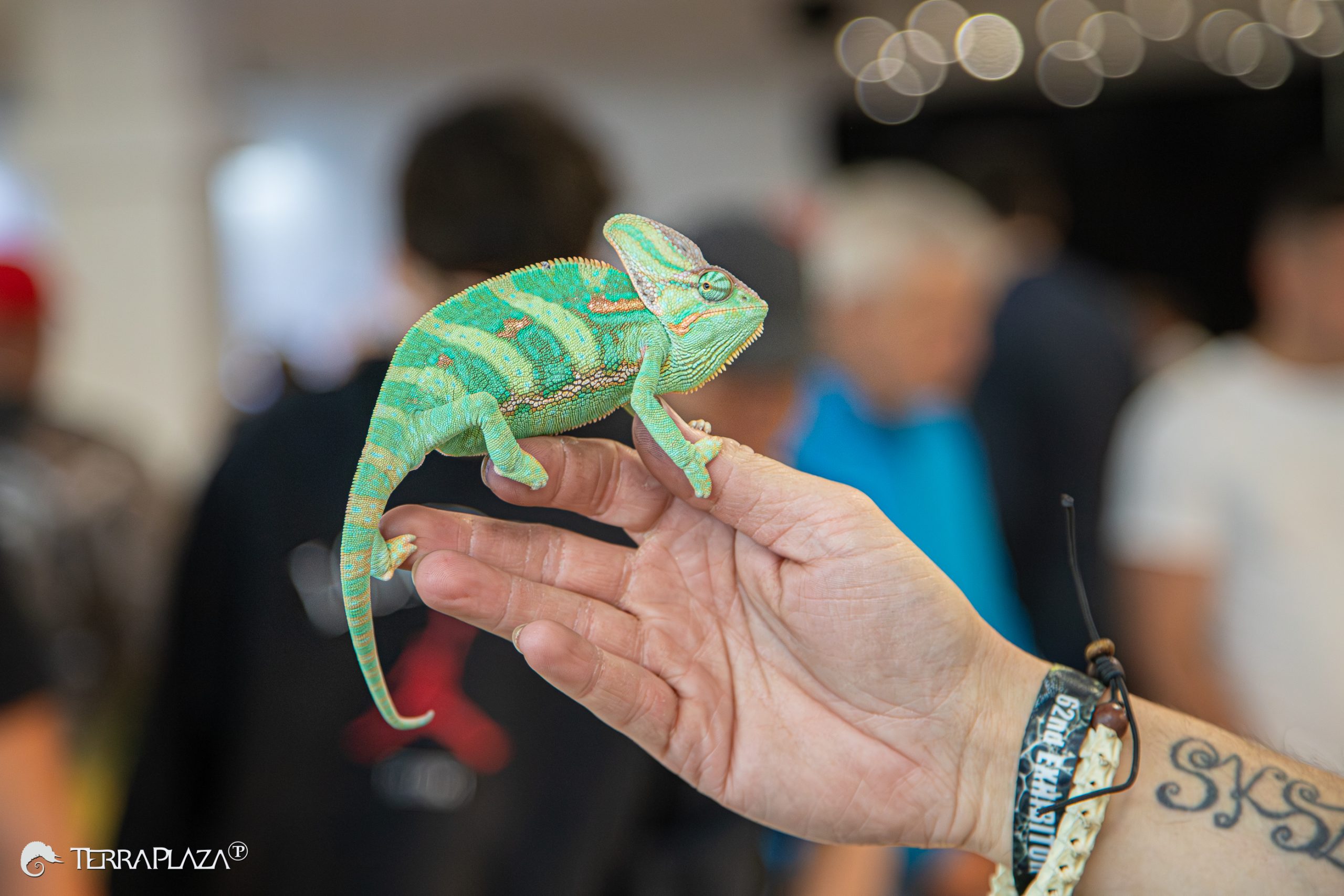
With its tall, helmet‑like crest, vivid green‑yellow patterning, and impressive size, the veiled chameleon (Chamaeleo calyptratus) is hard to confuse with any other species. Native to the drier yet vegetation‑rich regions of Yemen and Saudi Arabia, its striking appearance immediately captures the attention of many terrarium keepers. Behind this spectacular look, however, lie highly specific husbandry requirements that should be considered right from the moment the terrarium is designed.
The natural habitat of the veiled chameleon
The veiled chameleon’s natural range lies in the southwestern part of the Arabian Peninsula, primarily in Yemen and the southwestern regions of Saudi Arabia. Although one might imagine its habitat as exclusively hot and arid, the species in fact occurs in a wide variety of environments: it can be found in drier, shrub‑covered areas as well as in regions with denser vegetation.
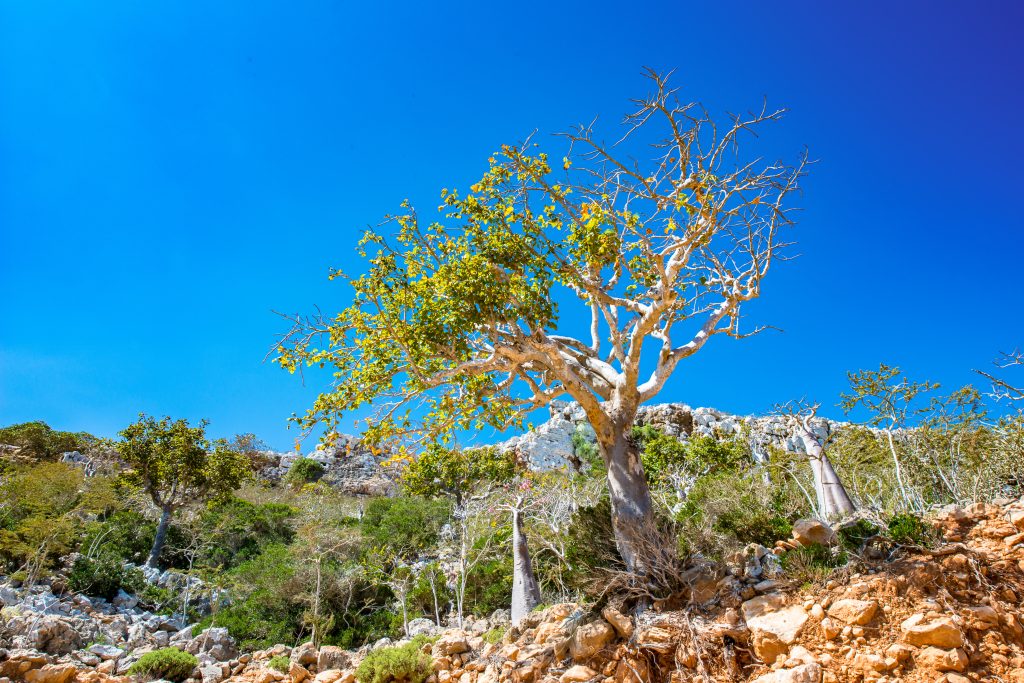
It spends most of its life on bushes, shrubs, and tree branches, where the vegetation provides routes for movement, resting places, and cover. This arboreal lifestyle later becomes a defining factor in terrarium design as well: for a veiled chameleon, not only the floor area but also the vertically usable space and dense vegetation are essential.
The habitat of the veiled chameleon is far more diverse than the label “desert‑origin species” would suggest. It is adapted to environments where sunlight, warmth, vegetation, and the shifting microclimate throughout the day all influence where it chooses to stay.
Colour change serves more than camouflage
Visual communication plays a prominent role in the behaviour of the veiled chameleon. It can signal to conspecifics through its posture, by flattening or inflating its body, and by changing its colours.
Its current coloration may depend on its level of arousal, social context, and reproductive state, and it can also contribute to thermoregulation. Different patterns may appear during rivalry, courtship, or stress. This can be particularly striking when two males encounter one another: they may make themselves appear larger and adopt brighter or more contrasting colours in an attempt to deter their rival without necessarily engaging in physical combat. The coloration of females, meanwhile, can indicate their reproductive condition.
A darker body colour can help absorb heat from sunlight, while under other circumstances a lighter coloration may appear. The colours of the veiled chameleon therefore convey information about the animal’s state while also aiding its adaptation to the environment.
Body structure and sexual dimorphism
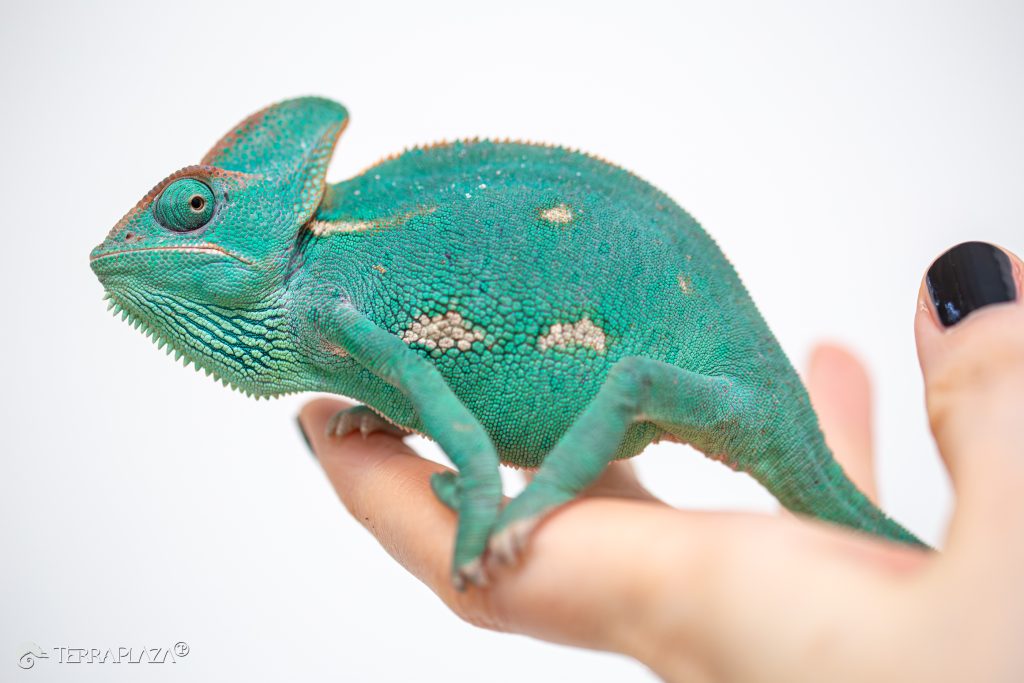
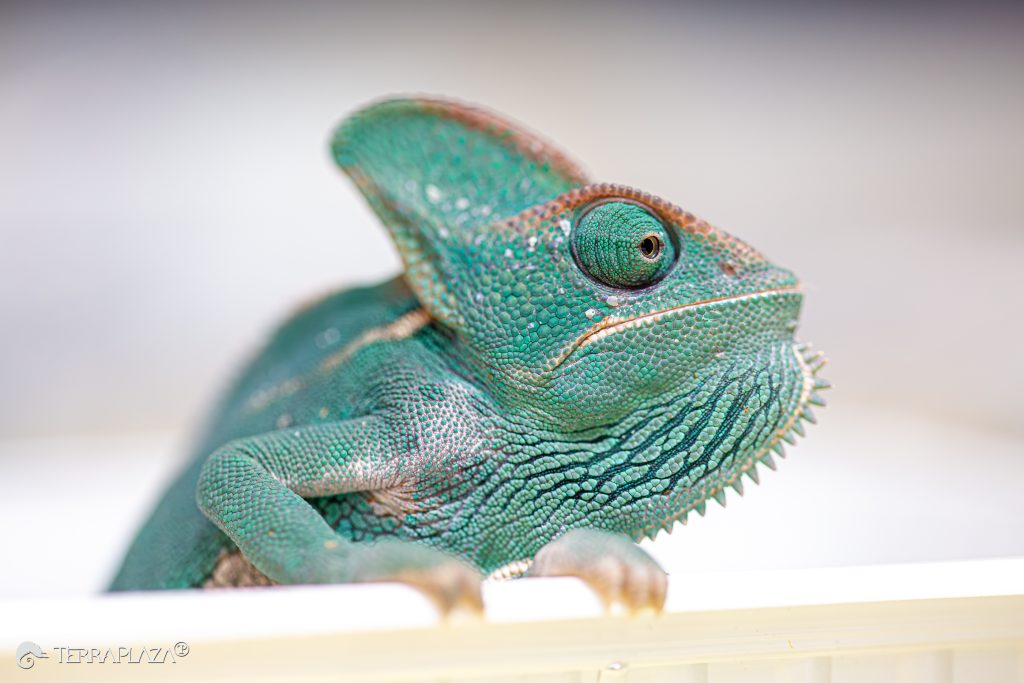
The veiled chameleon is named after its most distinctive feature: the prominent, helmet‑like casque rising from its head. This is especially striking in adult males, where its height can reach up to 8 centimetres. Males are generally larger as well, with a total body length of 35–50 centimetres, while females typically measure 25–35 centimetres. The two sexes can be distinguished even at a young age, as males possess a characteristic tarsal spur on their hind feet. Their expected lifespan also differs: under proper husbandry conditions, males usually live 6–8 years, whereas females typically live 4–6 years.
Its body structure is well adapted to life among vegetation. The toes are fused in a 3–2 arrangement, forming grasping bundles suited for securely holding onto thin branches. The tail also functions as an additional gripping tool, further aiding movement through dense foliage.
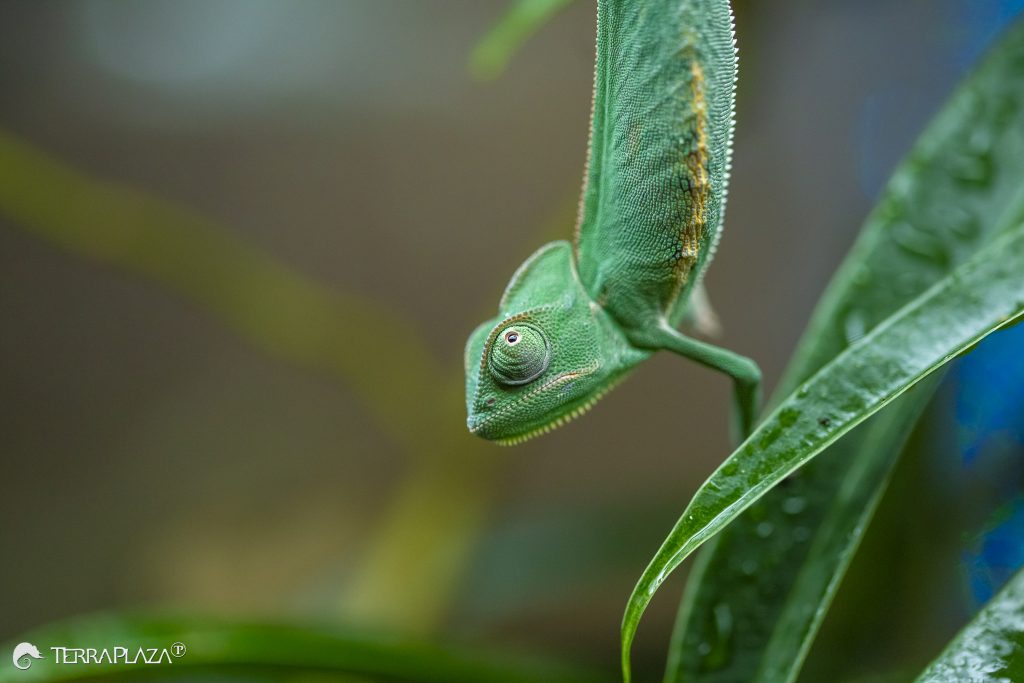
One of the chameleons’ most remarkable traits is their eyes: the two eyes can move largely independently of one another, allowing the animal to monitor several directions at the same time. When it spots prey, however, it directs both eyes toward the same target to precisely assess its position. It then shoots out its long tongue at lightning speed. The tongue’s widening, club‑like, adhesive tip grabs the insect, which the chameleon pulls back into its mouth with a single swift motion.
Designing a suitable terrarium
The veiled chameleon is fundamentally solitary and often perceives the presence of conspecifics as a threat. Males are particularly territorial, but keeping females together long‑term is not ideal either. Under terrarium conditions, individuals should therefore be housed separately, each in its own living space.
Size and furnishing
As an arboreal species, the veiled chameleon primarily makes use of vertical space, which means that height is especially important when designing its terrarium. For an adult animal, a terrarium of at least 60 × 60 × 120 centimetres is recommended, though providing a larger living area is advisable whenever possible. The interior should be structured with branches of various thicknesses, securely fixed in place, as well as with plants, allowing the animal to move easily between different levels of the enclosure. Branches should offer both horizontal and diagonal pathways, while denser vegetation can provide cover and quieter resting spots. Because veiled chameleons may occasionally nibble on leaves or flowers, only live, non‑toxic, chemical‑free plants should be placed in the terrarium.
A natural soil mixture is recommended for the bottom of the terrarium. It helps maintain an appropriate microclimate and provides a suitable medium for live plants. It is important that the substrate does not remain persistently waterlogged.
Proper ventilation is also essential. Good air exchange helps prevent chronically damp, stagnant air, while the terrarium must still maintain the humidity levels appropriate for the species.
Light, temperature, and humidity
The veiled chameleon is a diurnal species, so adequate lighting is a fundamental part of its husbandry. The terrarium must include a UVB light source as well as a basking spot created with a heat lamp. UVB radiation is indispensable for the synthesis of vitamin D₃ and thus for proper calcium utilization; without it, severe metabolic and skeletal problems can develop over time. In practice, a 5.0 UVB source is recommended, placed at an appropriate distance and replaced according to the manufacturer’s specified interval.
A thermal gradient must be established within the terrarium so the animal can choose the area with the temperature it prefers. The basking spot should be around 28-32 °C, while the lower part of the enclosure should offer a daytime temperature of roughly 23-26 °C. At night, significant cooling is natural and desirable; modern husbandry guidelines consider even 18-22 °C to be suitable nighttime temperatures.
Humidity should not remain constant throughout the day. In the veiled chameleon’s natural environment, drier daytime conditions alternate with more humid nights. A daytime relative humidity of around 50-60 % is appropriate, while at night – in cooler conditions and with proper air movement – it may rise to 70-90 %. It is important that the terrarium surfaces can dry out during the day. High humidity should not be accompanied by stagnant air.
Drinking and misting
When providing water for a veiled chameleon, it is not advisable to rely solely on a water dish. It is far more natural for the animal to drink from droplets that collect on leaves and other surfaces. It makes regular misting an essential part of its husbandry. Morning and evening misting can simultaneously supply drinking water and help maintain appropriate humidity levels.
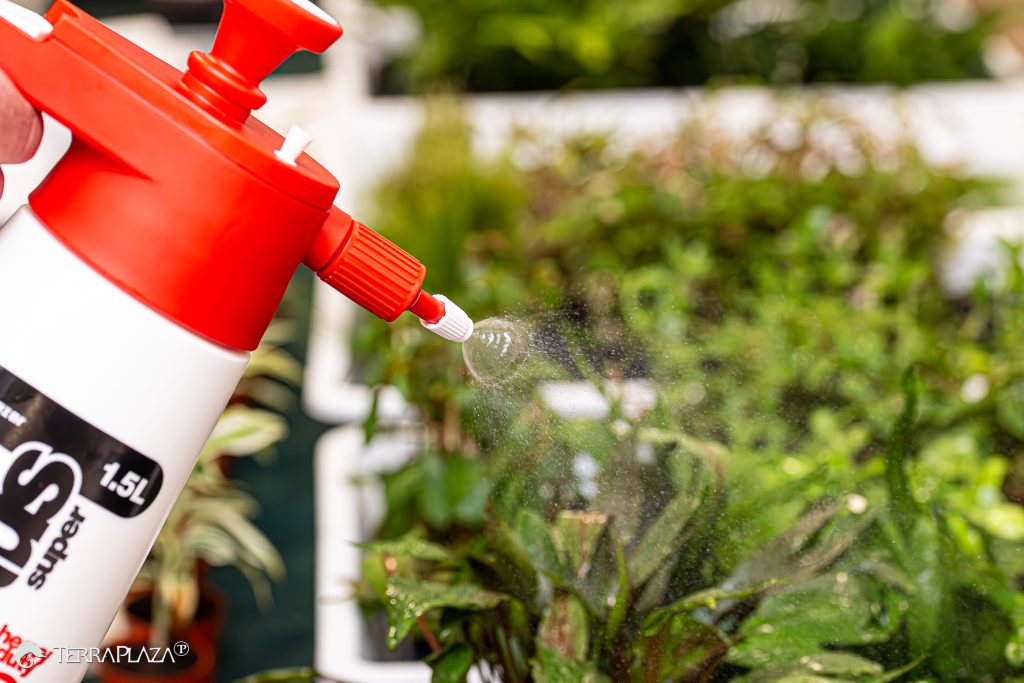
As an additional option, a dripper system can be used. It slowly releases water onto plant leaves, allowing the chameleon to access fresh droplets throughout the day. It is important, however, that the terrarium can dry out between misting sessions, so good ventilation and proper drainage of excess water are essential.
Feeding and supplementation
The veiled chameleon’s diet is primarily composed of live insects, though it may occasionally consume plant matter such as leaves or flowers. Plant food, however, plays only a supplementary role. The main portion of the diet should consist of appropriately nourished feeder insects. Offering a variety of prey species – such as crickets, locusts, roaches, black soldier fly larvae, or silkworms – helps ensure a more balanced nutrient intake.
It is not only the type of insect that matters, but also what the feeder insects were fed beforehand. Before offering them to the chameleon, feeder insects should be “gut‑loaded” with nutrient‑rich food. The nutrients consumed by the insects are then indirectly passed on to the chameleon.
In addition to a proper diet, calcium and vitamin supplementation is necessary. Feeder insects can be lightly dusted with a suitable reptile supplement. The exact frequency depends on the animal’s age, the UVB lighting used, and the composition of the product. Calcium intake is particularly important, as it is closely linked to adequate UVB exposure and sufficient vitamin D₃ levels.
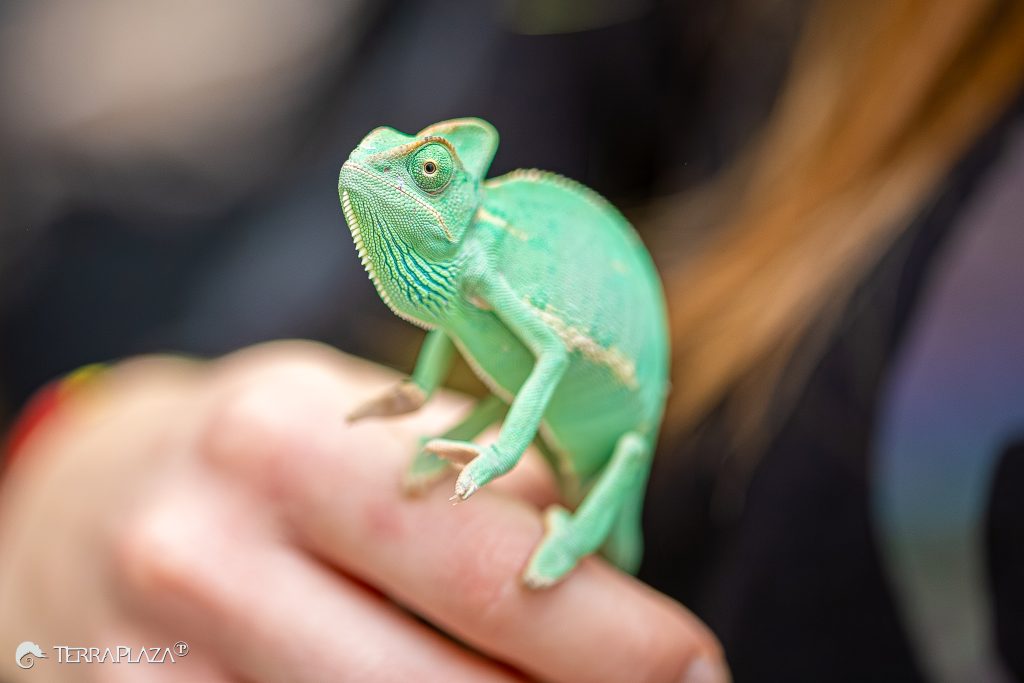
Feeding frequency depends primarily on the animal’s age and condition. Growing juveniles can be fed daily, while adult veiled chameleons should transition to a more moderate feeding schedule. For adults, offering a few appropriately sized feeder insects every other day is generally sufficient. The quantity should not be tied rigidly to a single number. The animal’s body size, activity level, and overall condition should also be taken into account.
What to consider when purchasing
The veiled chameleon is listed under Appendix II of the Washington Convention (CITES). Within the European Union, the species is included in Annex B of the wildlife trade regulation system. For this reason, it is essential to choose an animal of demonstrably legal origin, bred in captivity. It is advisable to buy from a reputable seller or breeder who can clearly explain the animal’s provenance. They should also provide the necessary documentation or certificates confirming its legal origin.
The veiled chameleon, with its unique appearance and behaviour, is a truly fascinating terrarium animal. If its needs are met, it can become a striking and remarkable companion in a well‑designed environment.
