




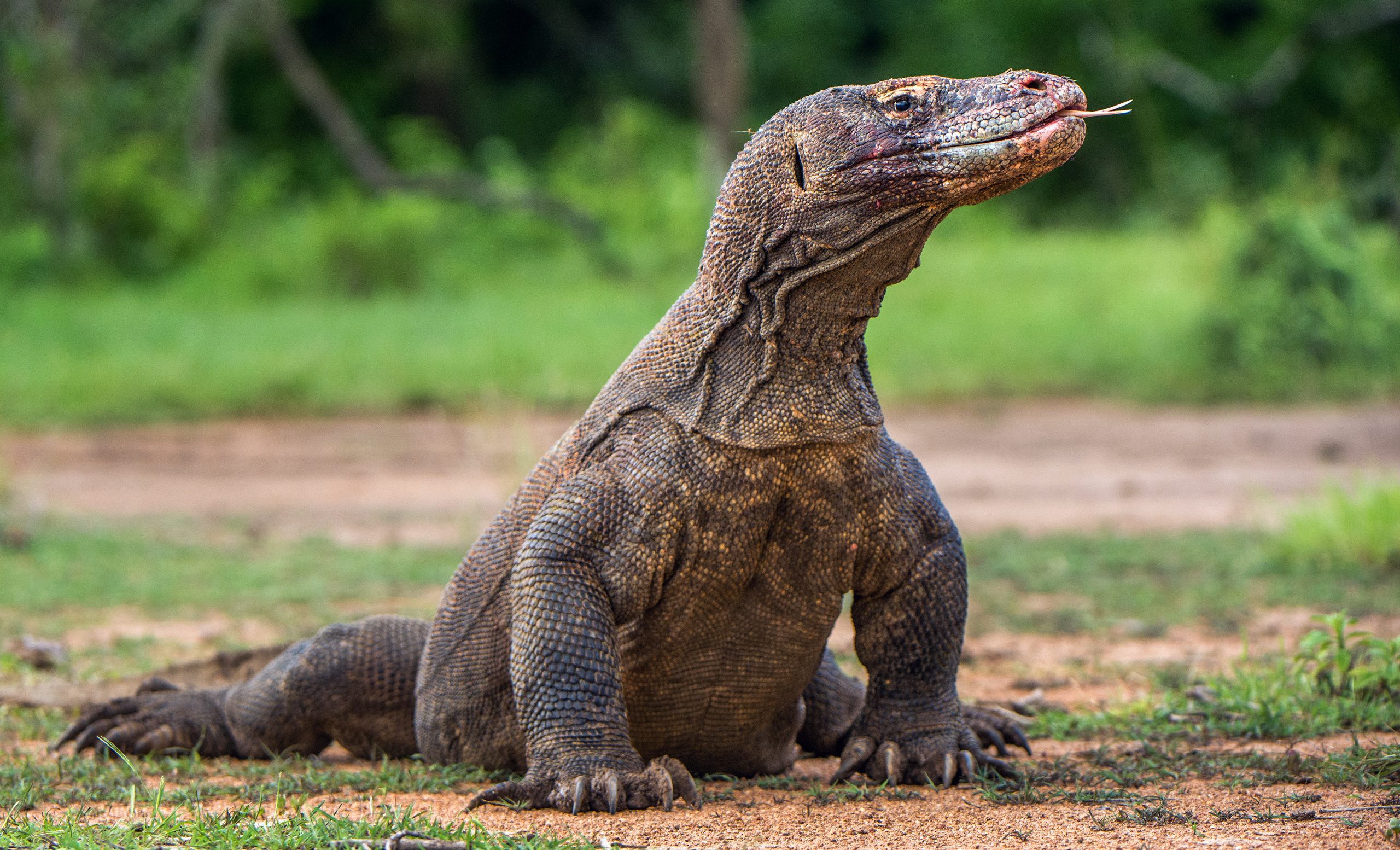
A tiny gecko on a wall, a green lizard basking on a sunlit rock, a colour‑changing chameleon, or a three‑metre‑long Komodo dragon – at first glance, it is hard to believe that all of them belong to the same vast and remarkably diverse group of animals. Perhaps it is precisely this diversity that has always made lizards particularly fascinating to me.
On 14 August, World Lizard Day, it is worth taking a closer look at them: today we know of more than eight thousand lizard species, and their role in nature is far more important than we often assume.
But what exactly counts as a lizard?
At first glance, the question seems simple: a lizard is a scaly animal, usually running around on four legs, that we see on a sunlit rock or in the garden. In reality, however, the group is far larger and more diverse. Lizards belong to the vertebrates, specifically to the reptiles, and are members of the order of squamates (Squamata).
In fact, the word “lizard” encompasses a multitude of squamate reptiles of extremely varied appearance and lifestyle (excluding snakes): from tiny geckos to multi‑metre‑long monitor lizards, we find species with fundamentally different body plans among them.
Their geographical distribution is just as remarkable
Lizards occur in almost all terrestrial regions of the Earth and are present on nearly every continent. According to global reptile‑distribution databases, members of the group range from tropical rainforests through deserts and Mediterranean landscapes all the way to the cooler areas of the temperate zone; the only continent where no native lizard species live today is Antarctica.
Their ways of life are similarly diverse. Some species run on the ground, live among rocks, move through forest canopies, burrow into sand or soil, or even lead partly aquatic lives. Certain species are specialists of hot, arid environments, others inhabit humid tropical forests, while many thrive close to humans – which is why geckos can often be seen on the walls and ceilings of houses.
More than eight thousand different lizards
The size of this group is well illustrated by the numbers. According to the June 2026 summary of the Reptile Database, 8003 lizard species are currently recognised – and the figure is constantly changing, as new species are described every year.
The higher‑level classification of squamate reptiles (Squamata) has undergone substantial revision due to genetic and phylogenetic research, which is why different sources – especially older and more recent ones – do not always use the same group names. Among the major lineages, however, it is worth distinguishing the geckos and their relatives (Gekkota), the scincoid lizards (Scincoidea), the lacertoid lizards (Lacertoidea), the iguanians (Iguania), and the Anguimorpha, a group that includes legless lizards, monitor lizards, and numerous other distinctive forms. Even a comparison of these few major lineages clearly shows how many different kinds of animals we refer to with the same everyday word: lizard.
Lacertoid lizards: the “classic” lizards familiar to us
The lacertoid lizards (Lacertoidea) include those species that we most commonly encounter in Europe, including Hungary. The family Lacertidae is particularly familiar, as several of its representatives occur in Hungary as well: among them are the European green lizard (Lacerta viridis), the sand lizard (Lacerta agilis), and the common wall lizard (Podarcis muralis).
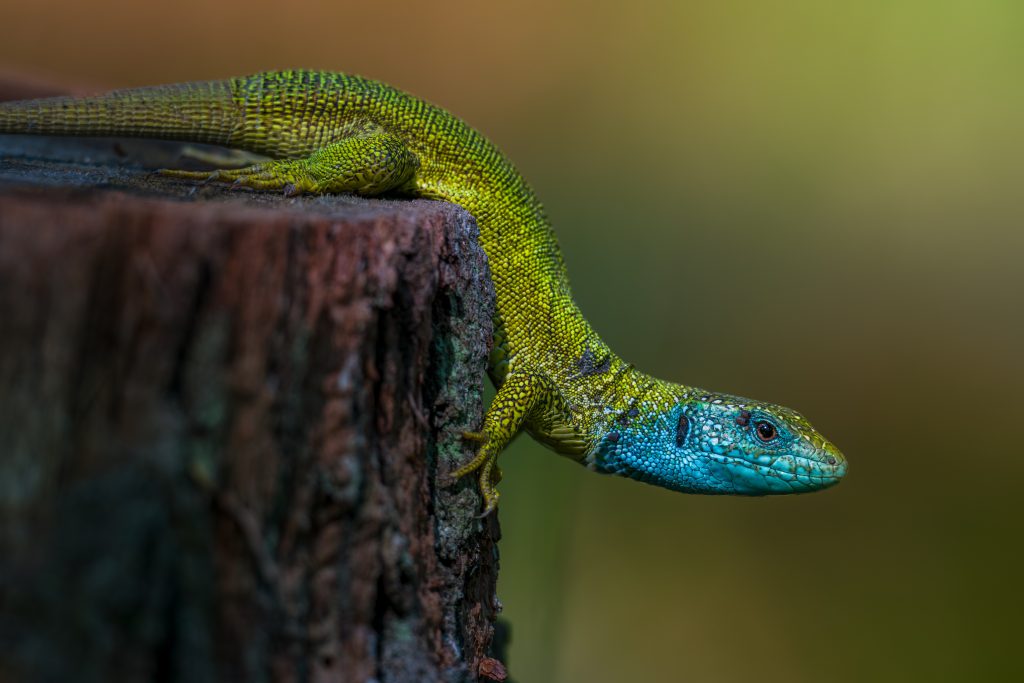
These animals embody what many people think of as the “typical lizard”. Most of them move on or close to the ground, run quickly, and hunt primarily insects, spiders, and other small invertebrates. Yet the family is far from being limited to Europe: its representatives are found across much of Eurasia and Africa.
The Lacertoidea, however, is a far more diverse group than this. It also includes the teiids (Teiidae), which are mainly distributed in the Americas. Among them are the large, robust tegus as well as the more slender, extremely agile whiptail lizards. At first glance, these may seem quite distant from a familiar Hungarian sand lizard, yet they belong to the same broader lineage.
Also part of this group are the gymnophthalmids (Gymnophthalmidae), generally small‑bodied lizards living in the tropical regions of Central and South America. Many species hide in forest leaf litter or close to the ground; among them we find forms with shorter limbs and elongated bodies as well.
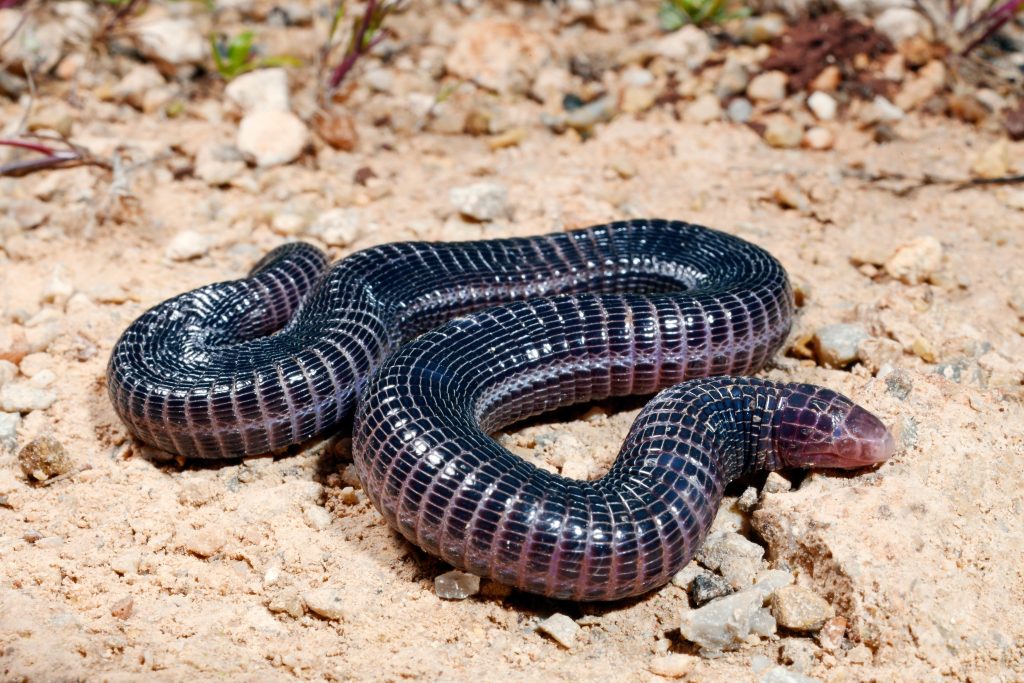
Modern molecular classifications link another, at first sight surprising group to the Lacertoidea: the amphisbaenians (Amphisbaenia). These are elongated, mostly limbless squamate reptiles that live primarily underground and resemble large earthworms far more than swift lizards. For this reason, amphisbaenians are often treated as a separate group, and the Reptile Database has included them in the total lizard species count only since 2024.
Iguanians: from chameleons to anoles
The iguanians (Iguania) include many of the most familiar and visually striking members of the lizard world. Among them are iguanas, agamas, chameleons, anoles, basilisks, and horned lizards.
Within the group, the differences are enormous. Iguanas include large species that feed largely on plant material; agamas feature specialists of desert and rocky habitats; and anoles comprise numerous small, mostly arboreal species found primarily in the Americas. One particularly distinctive agamid is the Australian frilled lizard (Chlamydosaurus kingii), which dramatically flares the skin around its neck when threatened.
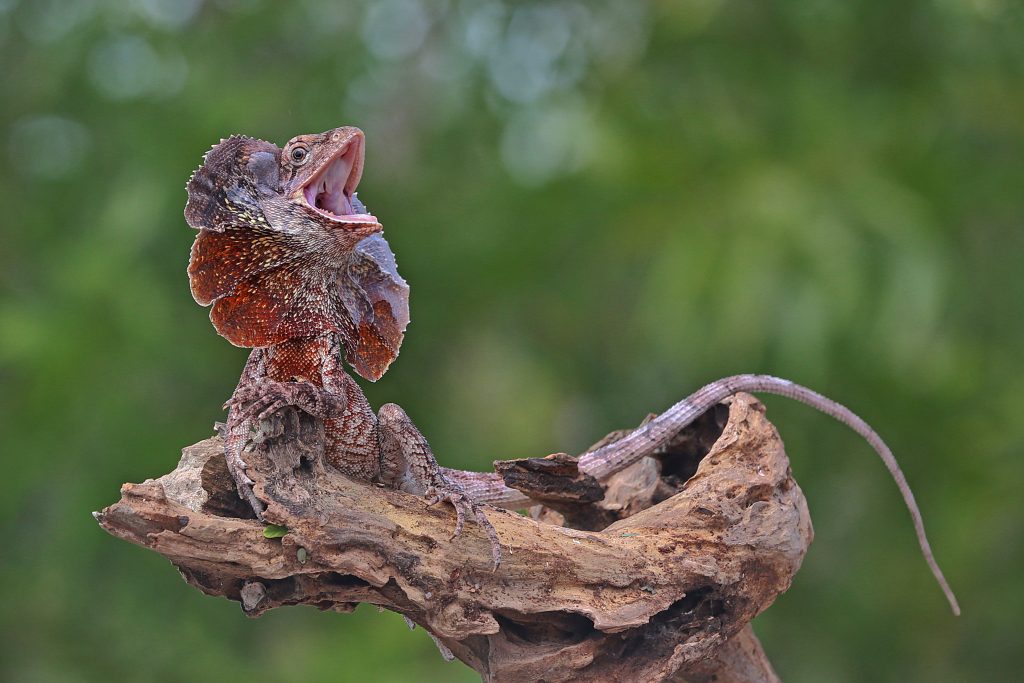
Their visual communication is particularly striking in its diversity. Many species communicate through head‑bobbing, body postures, vivid colours, crests, or extendable throat fans. In anoles, for example, the colourful dewlap can play an important role both in courtship and in signalling to rivals.
Chameleons, meanwhile, represent almost a world of their own with their independently movable eyes, grasping, highly specialised feet, and long, projectile tongues.
Geckos and their relatives: climbers and vocalists
The best‑known representatives of the gecko lineage (Gekkota) are, of course, the geckos themselves, but this group is far more diverse than one might assume based solely on the wall‑climbing species.
Many geckos are nocturnal, and compared with other lizards, a surprising number of them are remarkably “talkative”: they can produce various chirping, clicking, or call‑like sounds. The spotted or tokay gecko (Gekko gecko) of Southeast Asia, for example, gets its name from its distinctive vocalisations.
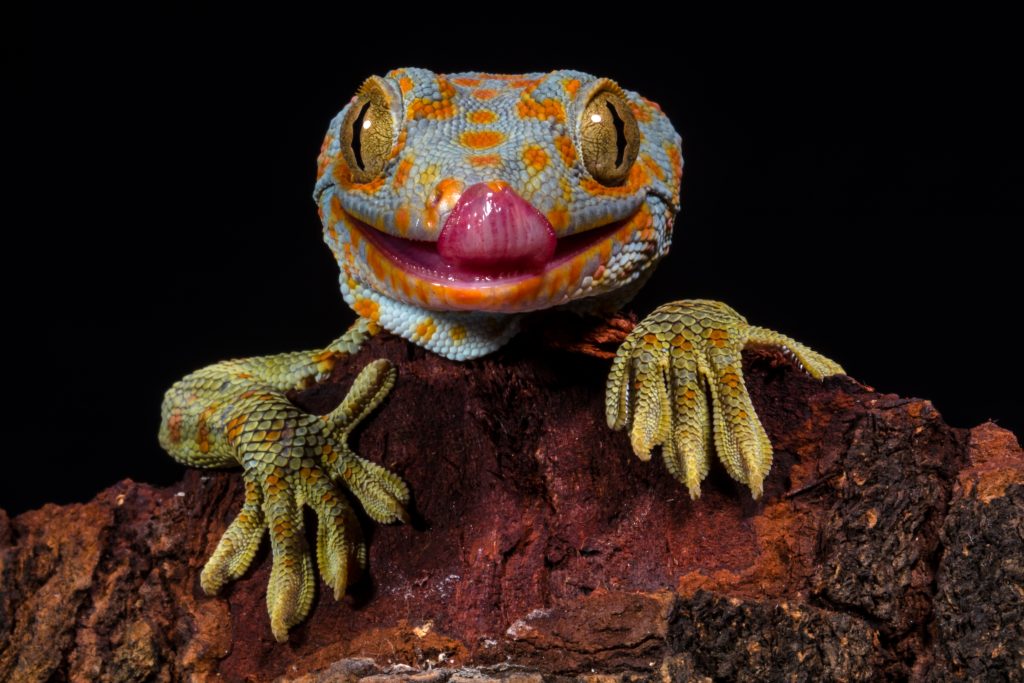
Their most famous ability, however, is undoubtedly climbing. Many species have microscopic adhesive structures on their toes that allow them to move on vertical walls and even on glass. This is not a universal gecko trait, though: numerous ground‑dwelling geckos lack such adhesive pads, and clawed geckos climb primarily with the help of their claws.
Within the group we also find species with truly unusual body plans. These include the legless geckos, or flap-footed lizards (Pygopodidae), of Australia and New Guinea, which, with their elongated bodies and strongly reduced limbs, resemble snakes at first glance, yet still belong to the gecko lineage.
Scincoid lizards: from smooth‑scaled burrowers to armoured rock‑dwellers
The scincoid lizards (Scincoidea) form a highly diverse group. They include, above all, the extremely species‑rich skinks (Scincidae), as well as the girdled lizards (Cordylidae), the plated lizards (Gerrhosauridae), and the night lizards (Xantusiidae).
Older taxonomic works also use the name Scincomorpha. The two terms, however, are not entirely interchangeable Scincomorpha historically referred to a more broadly defined group, whereas modern molecular classifications primarily apply the name Scincoidea to the lineage formed by the four families listed above.
By far the best‑known members are the skinks. At first glance, many of them follow the “classic” lizard body plan, yet the diversity within the family is surprisingly large. One particularly striking species is the red‑eyed crocodile skink (Tribolonotus gracilis), whose robust, spiny scales and reddish eye markings give it the appearance of a tiny dragon. The group also includes long, slender‑bodied species with very small limbs.
Many skinks forage in leaf litter, loose soil or sand, and some are true “sand swimmers”. One striking example is the sandfish skink (Scincus scincus), which can move beneath the surface of loose desert sand as if swimming through it.
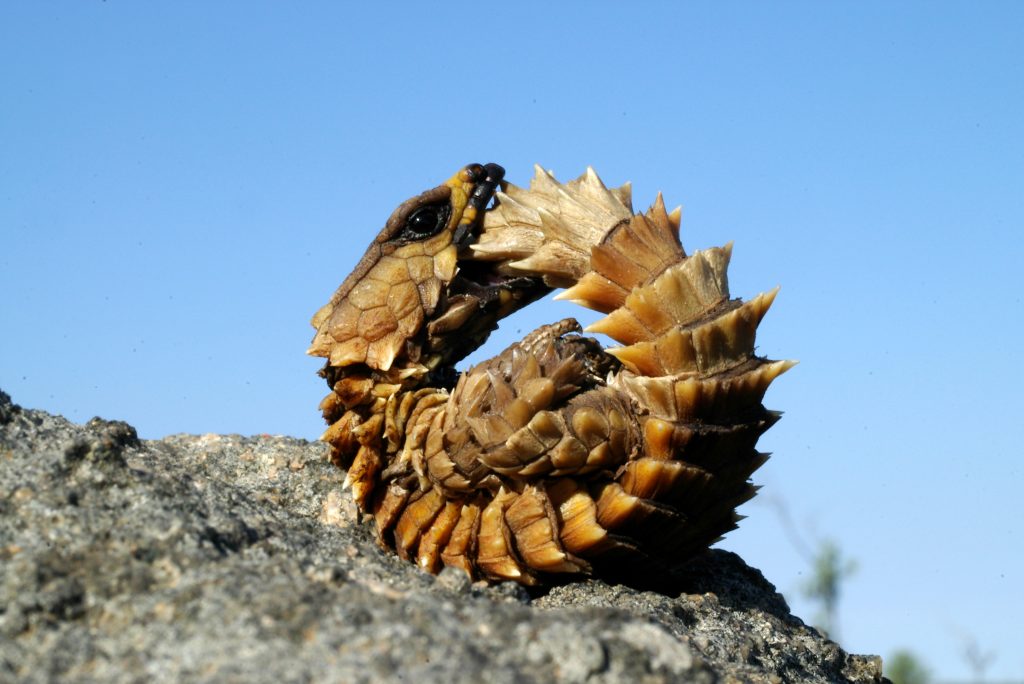
Yet Scincomorpha is far from consisting solely of slender, subterranean burrowers. Among the girdled lizards we find stout, heavily armoured species adapted to life in rock crevices. Perhaps the best‑known of them is the armadillo girdled lizard (Ouroborus cataphractus), which can curl into a ring by biting its own tail when threatened, allowing its spiny scales to form a protective shield around its body.
The plated lizards likewise are robust animals, often with armour‑like scales, while the night lizards are generally small‑bodied, secretive species.
Anguimorpha: legless lizards, venomous lizards, and giant monitor lizards
The Anguimorpha represent one of the most diverse lineages within the lizard world. Among its members we find snake‑like, elongated lizards that have lost their limbs, stout‑bodied venomous lizards, and large, actively hunting monitor lizards. The group includes, among others, the family of legless lizards (Anguidae), the American legless lizards (Anniellidae), the knob‑scaled lizards (Xenosauridae), the venomous lizards (Helodermatidae), the Chinese crocodile lizard (Shinisauridae), the Bornean earless monitor lizard (Lanthanotidae), and the monitor lizards (Varanidae).
The internal classification of Anguimorpha is an excellent example of how lizard taxonomy is constantly changing. Older systems often use the names Diploglossa and Varanoidea, but their usage and precise content vary between classifications. For this reason, in this article these groups are presented within the broader Anguimorpha lineage.
Legless lizards and their relatives – a somewhat misleading name
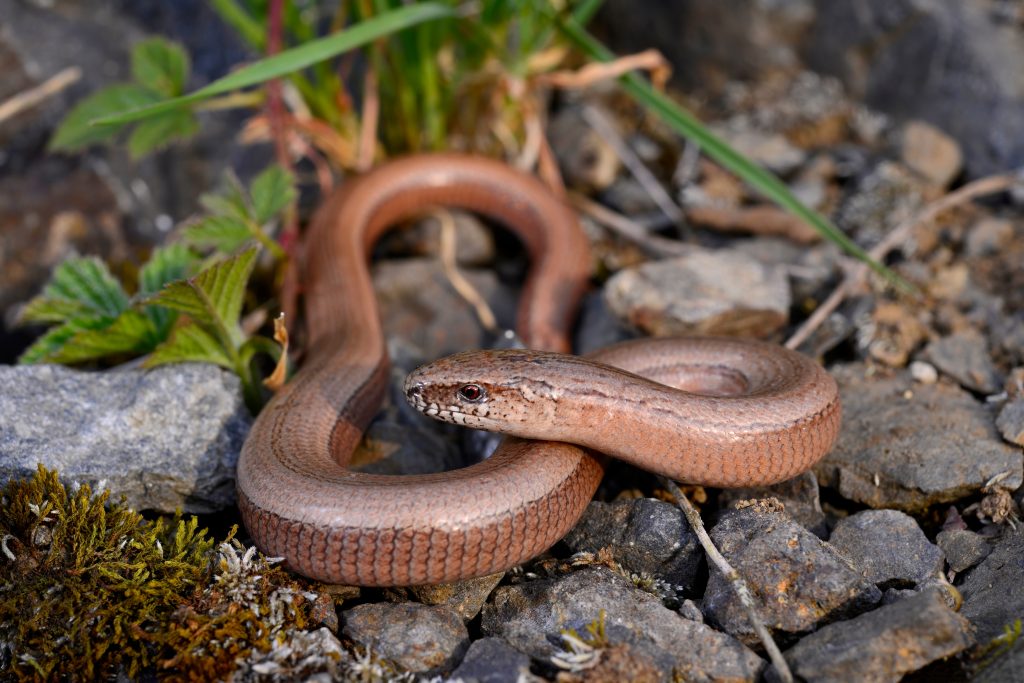
One of the best‑known groups within the lineage traditionally referred to as Diploglossa is the family of legless lizards (Anguidae). Based on their name, one might assume that all of their members are limbless, yet within this part of the Anguimorpha we find both species with fully developed limbs and snake‑like, elongated, legless forms. The group includes the common slow worm (Anguis fragilis), which also occurs in Hungary and is often mistaken for a snake because of its appearance.
Monitor lizards and their relatives – the giants and active hunters of the lizard world
Another striking part of the Anguimorpha is represented by the monitor lizards and their close relatives. In traditional taxonomy, several of these animals were grouped under the name Varanoidea, although the precise meaning of this term varies across different phylogenetic systems.
The best‑known members are undoubtedly the monitor lizards (Varanidae). Most of them are active, wide‑ranging predators that rely on their strong limbs, well‑developed senses, and long, forked tongues to search for prey. Their size varies enormously, but the largest living lizard belongs to this group: the Komodo dragon (Varanus komodoensis).
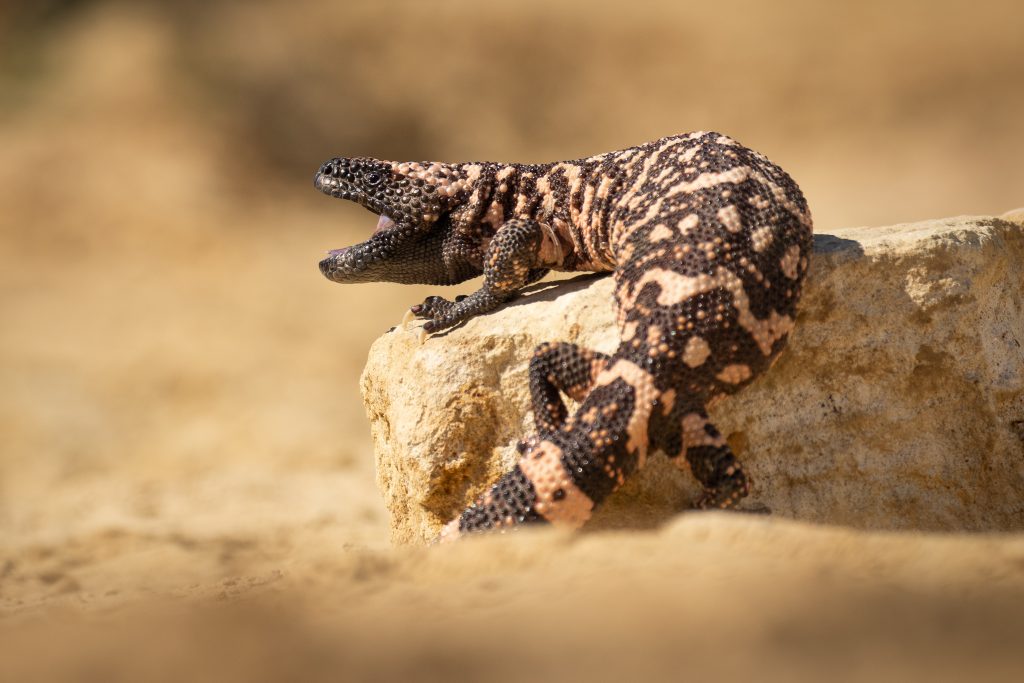
The Anguimorpha also includes the venomous lizards (Helodermatidae), such as the Gila monster (Heloderma suspectum). The Bornean earless monitor lizard (Lanthanotus borneensis) and the Chinese crocodile lizard (Shinisaurus crocodilurus) are further remarkable examples of the wide range of body forms and lifestyles found within this lineage.
They need protection too
Although some lizards have adapted surprisingly well to living near humans – just think of geckos hunting on house walls – the situation of many species is far less favourable. Certain groups are in particularly serious trouble: according to a global conservation assessment, 73.8% of the iguanid species examined and 60% of the knob‑scaled lizards are threatened.
Lizards face numerous pressures, including habitat loss and transformation, agricultural expansion, deforestation, urbanisation, invasive species, and in some cases capture and trade. According to the global assessment, agricultural expansion is the most frequently identified threat to squamate reptiles.
Climate change may pose an additional challenge. A lizard’s body temperature depends heavily on the temperature of its surroundings, so excessive warming can reduce the amount of time during which they can safely emerge, feed, or reproduce. In such conditions, shaded spots, vegetation, rocks, and other refuges become especially important, providing cooler shelter for them.
Eight thousand reasons to see them differently
World Lizard Day is celebrated each year on 14 August.
Perhaps this day offers a good opportunity to look beyond the small creature darting across a wall or the exotic inhabitant of a terrarium.
Their more than eight thousand species represent more than eight thousand different ways of living as a lizard on Earth. Among them are wall‑runners and “sand swimmers”, canopy‑dwellers and underground specialists, tiny insect hunters and sizeable predators, plant‑eaters, four‑legged sprinters, and completely legless forms. In some habitats, their abundance and biomass – as predators, prey, herbivores, seed dispersers, or even pollinators – make them important contributors to ecosystem functioning.
On Lizard Day, therefore, we celebrate not merely an unusual group of animals, but also the diversity through which each species adds something to the workings of nature.
