




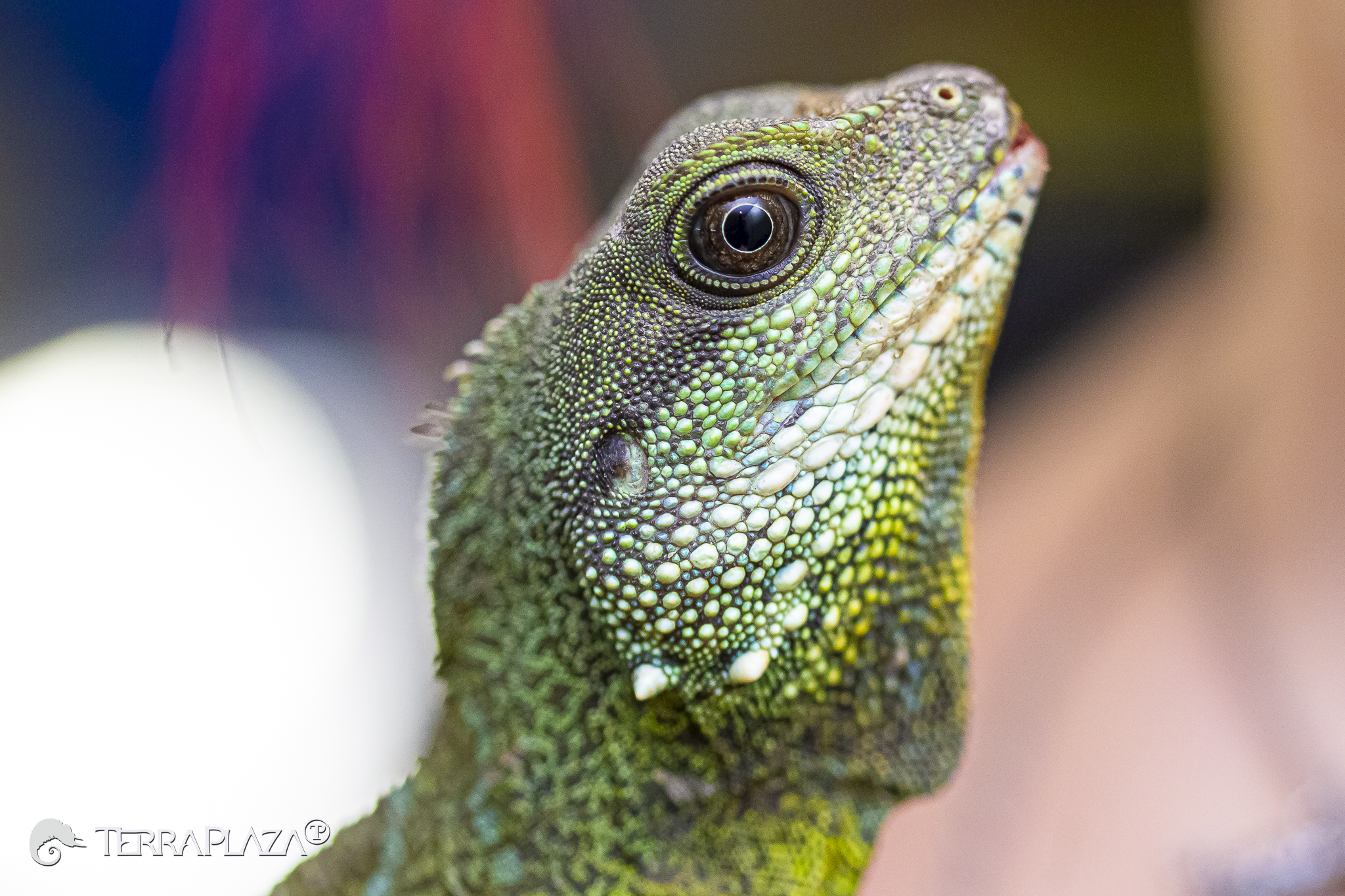
Along the riverbanks of tropical rainforests, some reptiles are equally at home among tree branches and in the water. One of them is the Asian water dragon (Physignathus cocincinus), also known as the Chinese water dragon. With its vivid green colouration, distinctive crest and long tail, it is one of the most striking reptiles in the terrarium hobby.
In the tropical forests of southeast asia
The Asian water dragon (Physignathus cocincinus) is native to mainland Southeast Asia. Its natural range includes Vietnam, Laos, Cambodia, Thailand and southern China. It mainly inhabits forested areas near water, where rivers, streams and surrounding vegetation shape its lifestyle.
However, wild populations face threats from habitat destruction and the collection of animals from the wild. The species is currently listed as Vulnerable on the IUCN Red List, with populations showing a declining trend. Therefore, verifiably captive-bred individuals should be preferred for terrarium keeping.
Between two worlds: In the trees and in the water
The Asian water dragon is an alert, diurnal reptile that observes its surroundings while moving through vegetation. In trees, it does more than simply climb. It can also leap between branches. Both climbing and jumping are therefore important parts of its movement. However, nearby water offers a completely different escape route when danger approaches.
When startled, it may leap directly into the water from overhanging branches. It can then swim away or seek shelter beneath the surface. Water is therefore more than just a way of moving around. It also provides a refuge where the lizard can remain hidden without immediately resurfacing.
If necessary, an Asian water dragon can remain submerged for up to 25 minutes. This allows it to move away from danger and stay concealed for an extended period. Source: Smithsonian’s National Zoo
Its escape behaviour on land can be equally remarkable. While running, the water dragon may rise onto its hind legs and move on two feet. However, this is not its usual way of walking. Instead, it is a form of movement that may help it escape predators. Alongside swimming, it therefore has another unusual means of escape on land. Yet fleeing is not its only defence. The lizard can also deliver whip-like strikes with its tail against an attacker.
Green scales and an impressive appearance
The Asian water dragon’s distinctive body structure is closely linked to its climbing, swimming and defensive behaviour. Its strong limbs and long, sharp claws provide a secure grip on branches. Meanwhile, its muscular hind legs also help with swimming and jumping. Larger individuals may approach one metre in total length. However, much of this length consists of the long, laterally compressed tail.
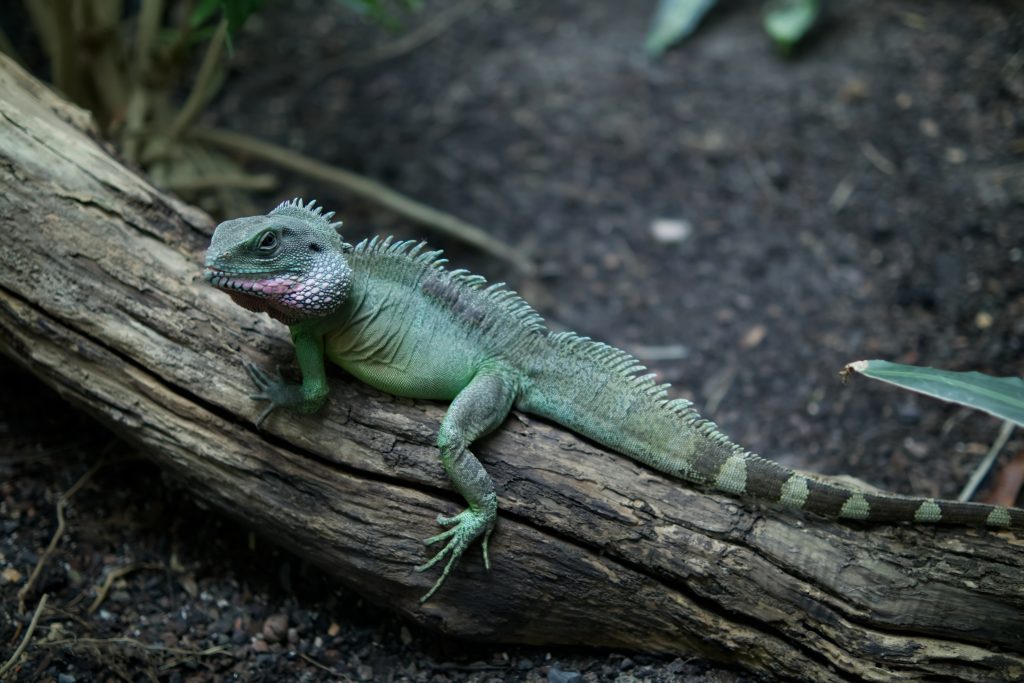
Its colouration can range from dark green to vivid green. The tail also features alternating brownish and green bands. Another characteristic feature is the crest of elongated scales extending from the head along the back to the base of the tail.
Adult males are generally larger than females. They also tend to have broader heads and more developed crests. Yellowish or orange colouration may appear around the throat, while pinkish tones can develop near the jaws. Females, by contrast, are usually smaller and have less prominent crests.
Body language in the reptile world
Asian water dragons communicate with members of their own species through movements and body postures. Their characteristic displays include head bobbing, arm waving and puffing up the throat. These conspicuous movements may occur during conflicts between individuals. Sometimes, they are also accompanied by chasing.
Territorial behaviour is not limited to males. Females may also establish and defend their own territories. However, head bobbing does not always indicate a threat. Males also use this movement during courtship. Therefore, interpreting a signal requires attention to the circumstances and the other animal’s response. For example, the same movement may serve different purposes during an encounter with a rival and when a male approaches a female.
Creating a tropical habitat
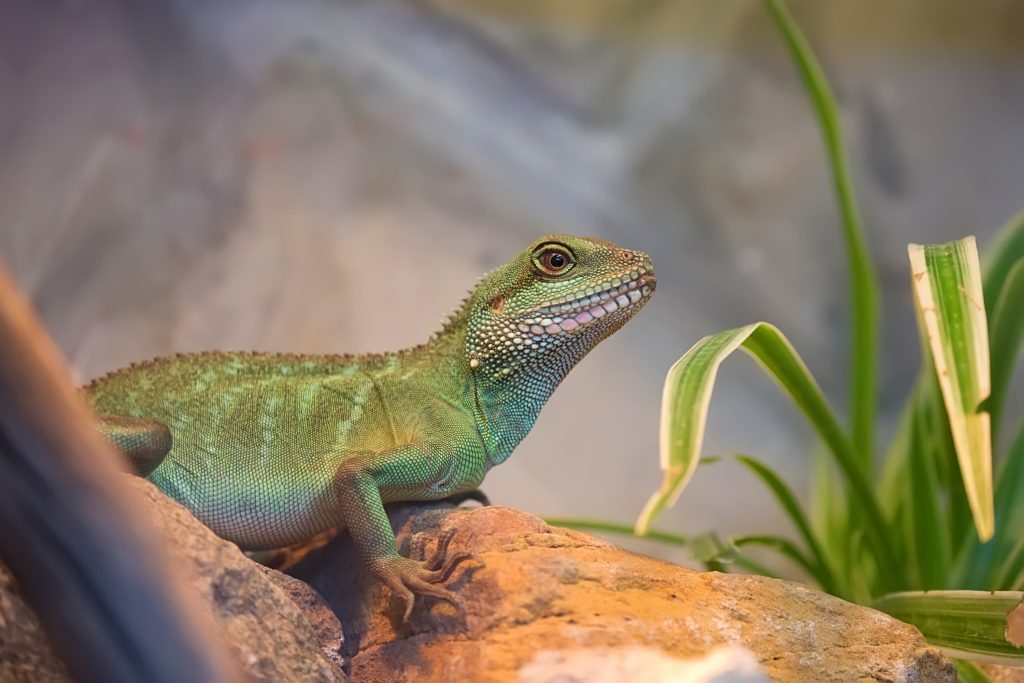
When planning a terrarium, it is essential to consider the substantial space requirements of an adult water dragon. This applies even if the enclosure will initially house a small juvenile. For a single adult, an enclosure measuring approximately 180 × 120 × 180 cm or larger is a suitable starting point. However, height alone is not enough. Alongside climbing surfaces and a water pool, the animal also needs sufficient space to move freely.
The enclosure should contain thick, securely fixed branches and resting platforms at different heights. Arrange these so the lizard can move between them along several routes. Plants and cork bark can provide cover and places to retreat. However, they should not overcrowd the available space.
Live or artificial plants can be placed between the branches to create sheltered areas. When using live plants, choose only species that are safe for the animal and free from pesticide residues. In addition, leave clear climbing routes and open basking areas between the more densely planted sections. The foliage should provide cover without obstructing movement. For the substrate, moisture-retaining forest soil can be used. However, it must be kept clean and should never remain permanently waterlogged.
A small drinking bowl alone is not a substitute for a suitable water pool. The water area must be large enough for the lizard to submerge completely and, ideally, swim. Therefore, the pool should provide sufficient space for these natural behaviours. Gently sloping edges or stable footholds should allow easy entry and exit. The pool must also be accessible for cleaning. Larger water areas may require filtration. However, filtration does not replace regular cleaning and water changes.
Adequate ventilation is just as important as maintaining a humid environment. Lower and upper ventilation openings help create natural airflow throughout the enclosure. Therefore, they should not be blocked by plants or furnishings. Humidity should not be maintained by sealing ventilation openings. Instead, misting and air exchange must be balanced to prevent stagnant air and mould growth.
The enclosure should also be designed to reduce injuries caused by collisions with glass and repeated nose rubbing. Alongside providing sufficient space, partially covering the side panels and positioning visual barriers carefully may help prevent these problems.
The aim is not simply to create an attractive terrarium. Above all, the enclosure should provide a safe environment where the lizard can move freely and retreat when necessary.
Suitable conditions and care
A suitable terrarium should provide different temperature zones. This allows the water dragon to choose between warmer and cooler areas according to its needs. During the day, the warmer air temperature can be maintained at approximately 29–31 °C, with a basking area of 35–38 °C. However, the animal must also have access to a cooler, shaded retreat. At night, the temperature can be reduced to approximately 24–27 °C. Heating should be controlled by a thermostat, and temperatures must be checked at several points. In addition, heat sources should be positioned so the lizard cannot come into direct contact with them.
Alongside suitable temperatures, UVB lighting is essential. It supports vitamin D₃ production, which helps the body use calcium properly and maintain healthy bones. An ordinary light bulb or heat lamp cannot provide this on its own. When choosing and positioning a UVB source, several factors must be considered. These include the type of lamp, its distance from the animal and any reduction in UVB caused by ventilation mesh. Glass or acrylic should not be placed between the UVB source and the lizard. This is because these materials filter out much of the UVB radiation. After approximately 12 hours of daytime lighting, the enclosure should provide a dark resting period overnight.
A relative humidity range of approximately 60–80% provides a suitable starting point. Use a digital hygrometer to monitor actual humidity levels. Then, adjust misting frequency according to the readings. The water pool and moisture-retaining substrate can also help maintain the required humidity.
A varied diet in the wild and in the terrarium
The Asian water dragon’s diet is not limited to insects. It may also eat other invertebrates and small vertebrates, including fish. In addition, it occasionally supplements animal-based food with plant matter. Its sticky tongue and small, pointed teeth help it capture and hold prey.
In captivity, dietary variety and age-appropriate feeding are particularly important. Suitable food items may include crickets, captive-bred feeder cockroaches, locusts and earthworms. These can be supplemented with small amounts of appropriate plant-based food. Young, growing water dragons require more frequent feeding. Adults, however, should receive portions adjusted to their activity levels and body condition.
Properly feeding the prey insects and providing calcium supplementation are also important parts of their care. Before offering insects, feed them a nutrient-rich diet. Then, dust them with a suitable calcium supplement when required. Vitamin and D₃ supplementation should be considered alongside the overall diet and UVB provision. Therefore, it is advisable to establish an appropriate supplementation routine with a reptile-experienced veterinary surgeon.
Behaviour around people
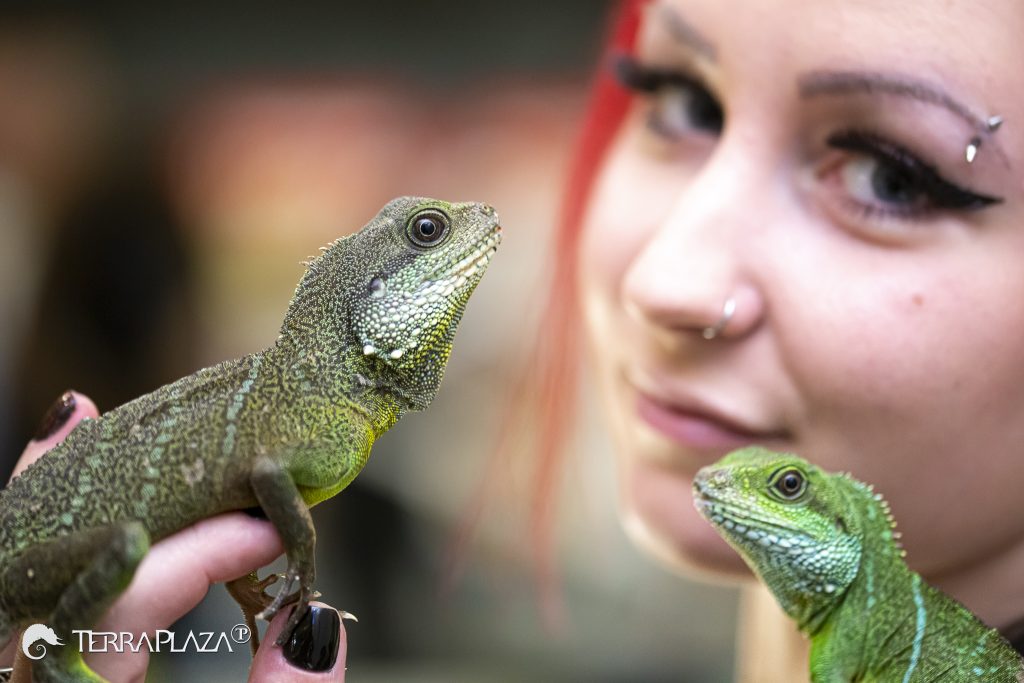
With patience and gradual habituation, an Asian water dragon can become accustomed to its keeper’s presence. However, adjusting to a new environment takes time. After moving into a new enclosure, the lizard should first be allowed to explore without disturbance. Therefore, handling should not be rushed. During routine care, move slowly and predictably. Avoid sudden approaches and loud noises. Offering food can also encourage the animal to approach voluntarily. However, the pace of habituation should always depend on its reactions.
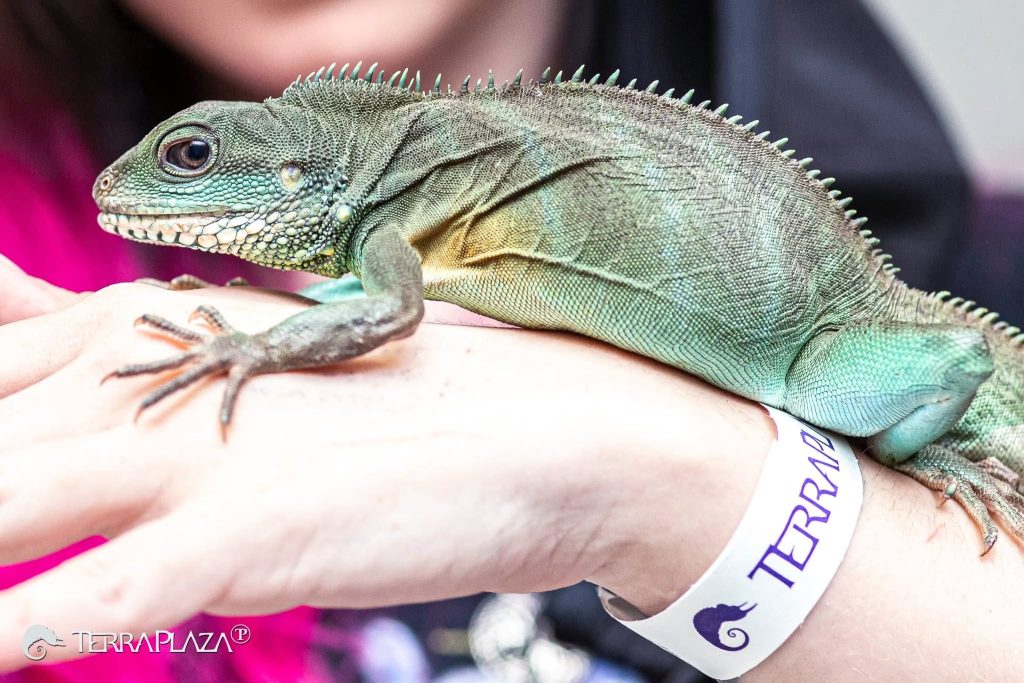
When handling a water dragon, support both its body and limbs. This allows it to rest securely on your hands or forearms. Insecure support may trigger an attempt to escape. Therefore, never leave the animal hanging without a secure grip. Avoid squeezing it, and never lift it by its tail. Handling sessions should remain brief and calm. Meanwhile, continue to observe the lizard’s behaviour throughout the interaction.
It is also important to respect defensive signals. For example, the animal may open its mouth threateningly, lash its tail or struggle vigorously to escape. If these behaviours appear, do not force further contact. Instead, return the lizard safely to its enclosure and allow it to settle. Although some individuals eventually tolerate handling well, frequent contact should never be the main goal. Rather, the priority is to ensure that essential care can be carried out with as little stress as possible.
The Asian water dragon deserves attention not only for its striking appearance but also for its agile movements, varied body language and semi-aquatic lifestyle. However, keeping this species requires careful planning and considerable space. Suitable climbing surfaces, an appropriately sized water pool and properly maintained environmental conditions are all essential. By respecting its needs and providing patient care, we can create an environment where the lizard feels secure. It can then move freely, retreat when necessary and display more of its natural behaviour. At the same time, we gain the opportunity to observe this remarkable reptile more closely.
