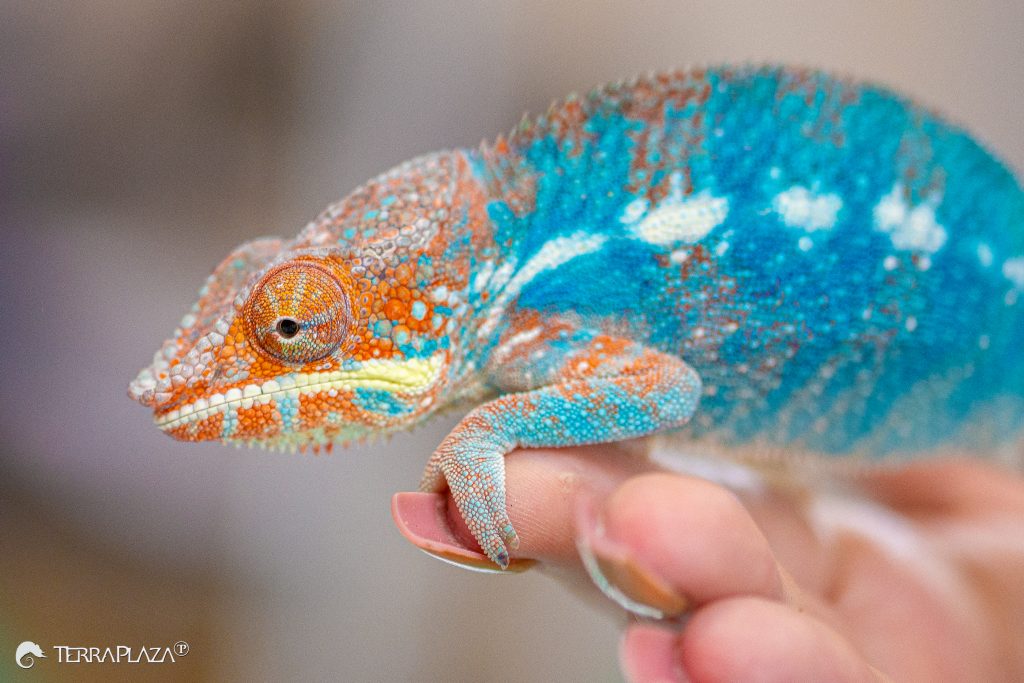




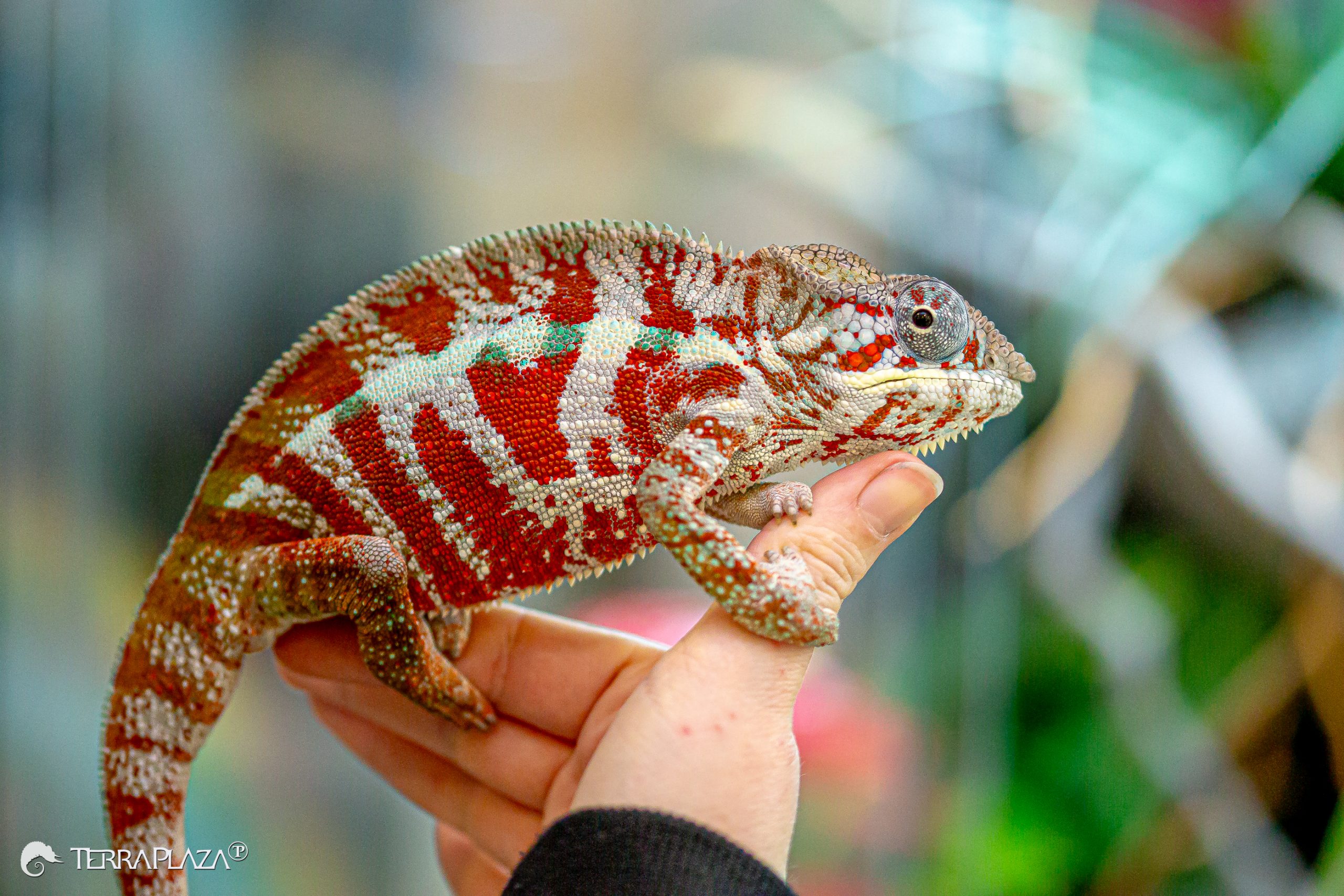
When people think of chameleons, one image often comes to mind: extraordinary reptiles capable of changing their colors to match their surroundings and becoming almost invisible. But is that really why they change color? Scientific research suggests that the answer is far more complex. Chameleon color change serves not only as a means of camouflage but also plays an important role in communication, thermoregulation, and expressing the animals’ current physiological and behavioral states.
The biggest myth: Chameleons always change color to match their surroundings
One of the most widespread misconceptions about chameleon color change is that these animals automatically take on the color of whatever surface they happen to be resting on. In cartoons, chameleons are often depicted turning red when climbing onto a red object or blue when moving onto a blue one. In reality, however, this is not how their color-changing abilities work. Chameleons cannot simply adopt any color or pattern at will.
Their ability to change color is determined by their species-specific skin structure, pigments, and physiological processes.
Nevertheless, camouflage can play an important role in the lives of certain species. A study published in 2008 demonstrated that the dwarf chameleon Bradypodion taeniabronchum can respond to different predators by changing its coloration in different ways. Because birds and snakes have different visual capabilities, the chameleons adjusted their appearance to match their surroundings to varying degrees depending on the predator.
Source: Stuart-Fox, D., Moussalli, A. & Whiting, M. J. (2008): Predator-specific camouflage in chameleons. Biology Letters, 4(4), 326–329.
In 2025, another interesting finding emerged in this field. Researchers studied the flap-necked chameleon (Chamaeleo dilepis) against backgrounds of different colors and patterns. The animals were able to adjust their appearance to more closely match certain background colors, particularly yellow, and also modified their body brightness against dark backgrounds. However, they did not imitate the patterns of their surroundings.
Source: Major, T. et al. (2025): Flap-necked chameleons change colour to match their background. Biology Letters, 21(8), 20250134.
Chameleons can therefore use their color-changing abilities for camouflage, but this ability is far from the unlimited adaptation that many people imagine.
The secret language of colors: How chameleons communicate
One of the most important functions of color change in chameleons is communication with other members of their species.
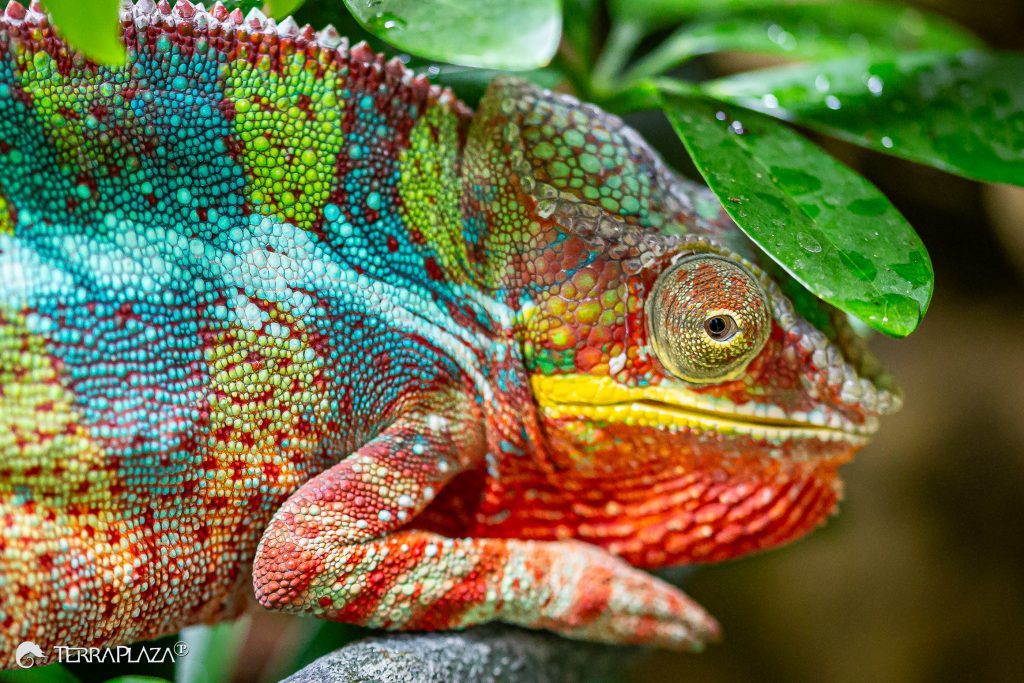
Different colors and patterns can convey information about an animal’s current behavioral state, reproductive receptivity, or response to another chameleon.
This is particularly striking during confrontations between males.
When two male chameleons encounter each other, they may display brighter colors and more contrasting patterns to signal their presence and willingness to compete.
A study conducted in 2013 examined color changes in male veiled chameleons (Chamaeleo calyptratus) during confrontations with other males. The researchers found that brighter stripes along the sides of the body were associated with a greater likelihood of approaching an opponent, while brighter head coloration and the speed of color change were also linked to the outcome of the contest. Color change is therefore much more than a spectacular visual phenomenon; it is an important part of communication between chameleons.
Source: Ligon, R. A. & McGraw, K. J. (2013): Chameleons communicate with complex colour changes during contests: different body regions convey different information. Biology Letters, 9(6), 20130892.
Colors also play a role in mate selection.
In some species, males display striking color patterns during courtship, while females may use their coloration to signal reproductive receptivity or rejection. However, the meaning of particular colors is not the same across all chameleon species. There is no universal rule stating, for example, that red always indicates aggression or green always signifies calmness. A chameleon’s coloration must always be interpreted in the context of its species-specific behavior and the circumstances in which it occurs.
How do chameleons change color?
In the past, this phenomenon was primarily explained by the activity of pigment-containing cells. However, modern research has revealed that a remarkable physical mechanism also plays an important role in certain chameleon species. In 2015, researchers at the University of Geneva made a significant discovery while studying the skin of the panther chameleon (Furcifer pardalis).
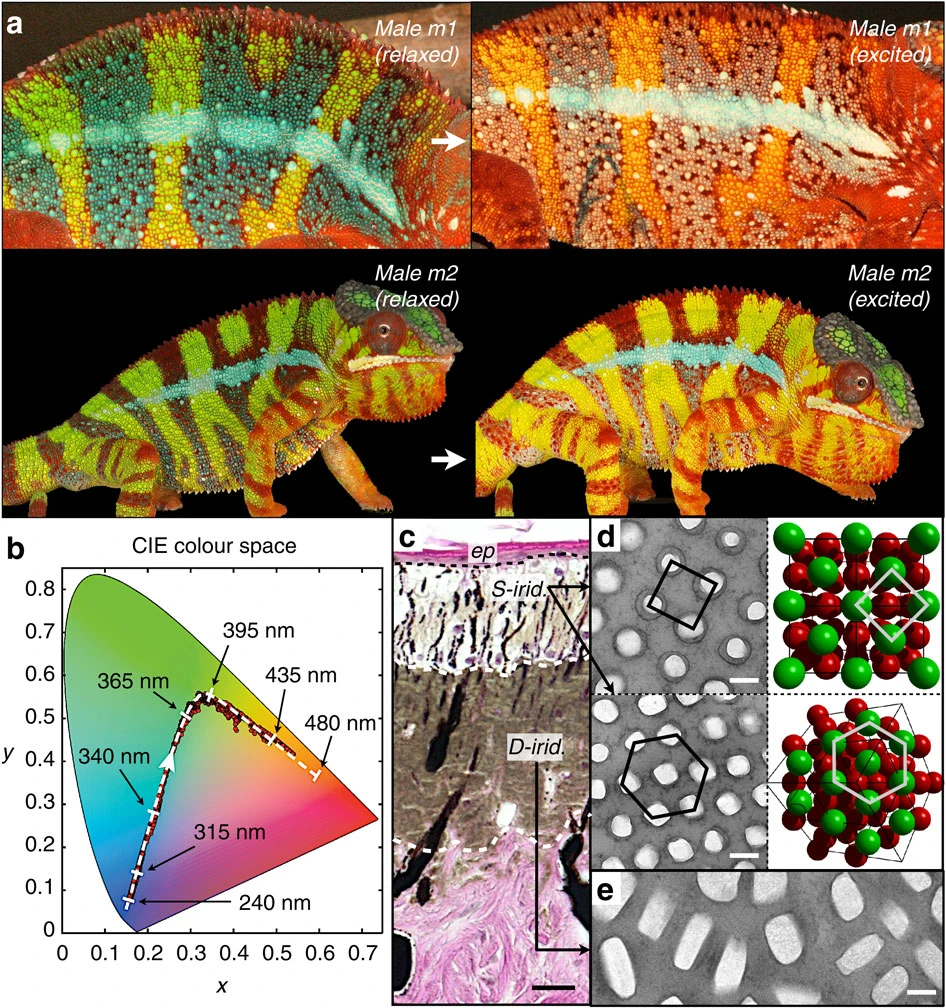
Source: Teyssier, J., Saenko, S. V., van der Marel, D. & Milinkovitch, M. C. (2015): Photonic crystals cause active colour change in chameleons. Nature Communications, 6, 6368.
The researchers demonstrated that the skin of male panther chameleons contains specialized cells called iridophores, which contain tiny guanine crystals and can alter the wavelengths of light reflected by the skin.
Tiny crystals, spectacular colors
The guanine crystals found in chameleon skin form a unique, highly ordered structure. In a relaxed state, the crystals are positioned relatively close together. As a result, they primarily reflect shorter wavelengths of light, particularly blue light. This reflected blue light, combined with the yellow pigments in the skin, can produce a green appearance.
When the animal becomes excited, the spacing between the crystals can change. As a result, the skin reflects different wavelengths of light. This can produce yellow, orange, or reddish hues.
This process is known as structural coloration, because the resulting colors are produced not only by pigments but also by the microscopic structure of the skin and the physical properties of light.
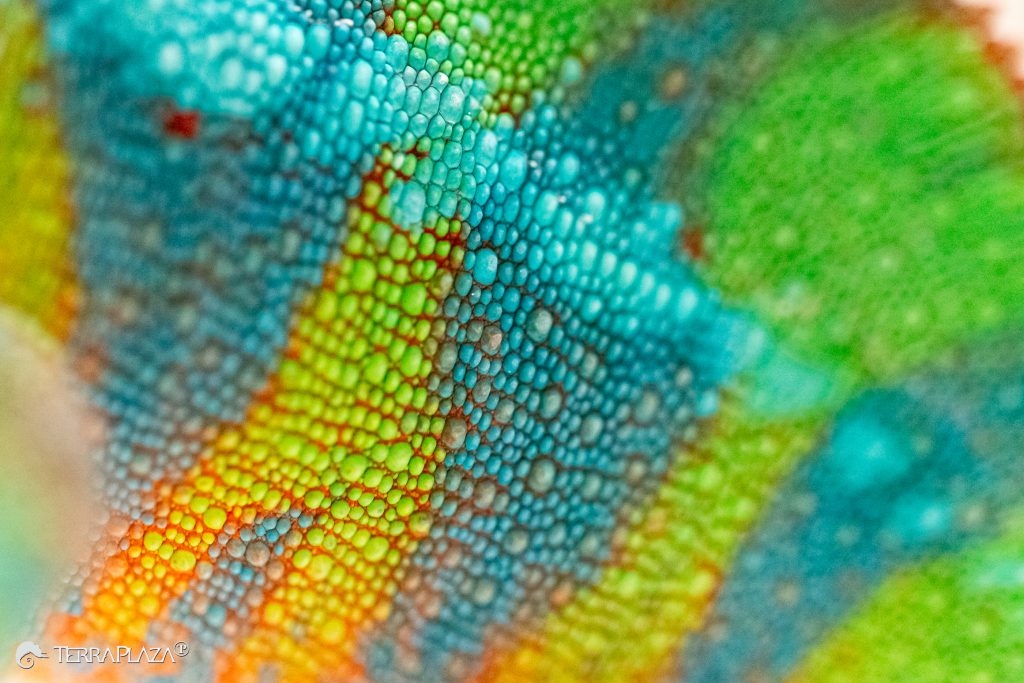
Some male chameleons can dramatically change their coloration in as little as one or two minutes.
Rather than simply producing pigments of different colors, chameleons can also alter their appearance by changing the arrangement of crystals within their skin.
However, it is important to note that the mechanisms and extent of color change can vary among chameleon species. The University of Geneva study specifically investigated the unique skin structure of panther chameleons.
Temperature can also influence chameleon coloration
Chameleons are ectothermic animals, meaning that their body temperature is strongly influenced by their surroundings. Color change can also play a role in thermoregulation.
Under certain conditions, darker coloration can help absorb more energy from sunlight, while lighter coloration may reduce heat absorption.
The structure of the skin may also play an important role in this process. Researchers at the University of Geneva identified a second, deeper layer of iridophore cells in the skin of panther chameleons. The crystals in this layer can reflect a substantial portion of solar radiation, particularly light in the near-infrared spectrum, potentially helping to protect the animals from excessive heating.
Chameleon coloration can therefore serve not only as a means of communicating with other animals but also as a way of adapting to environmental conditions.
Does a color change always mean a chameleon is stressed?
For chameleons kept in terrariums, a common question is what a sudden change in coloration might indicate. In some species, stress, perceived threats, or excitement can cause the animal to become darker or display more pronounced patterns. However, a change in color does not necessarily mean that the animal is distressed. For example, a chameleon’s coloration can be influenced by temperature, lighting, time of day, social interactions, and its physiological state.Therefore, it is essential to consider these factors when interpreting changes in coloration.
For example, a darker-colored chameleon may simply be trying to absorb more heat. However, in another situation, the same coloration could be part of a stress response. Therefore, when keeping chameleons in terrariums, it is important not to judge their well-being solely by their coloration.
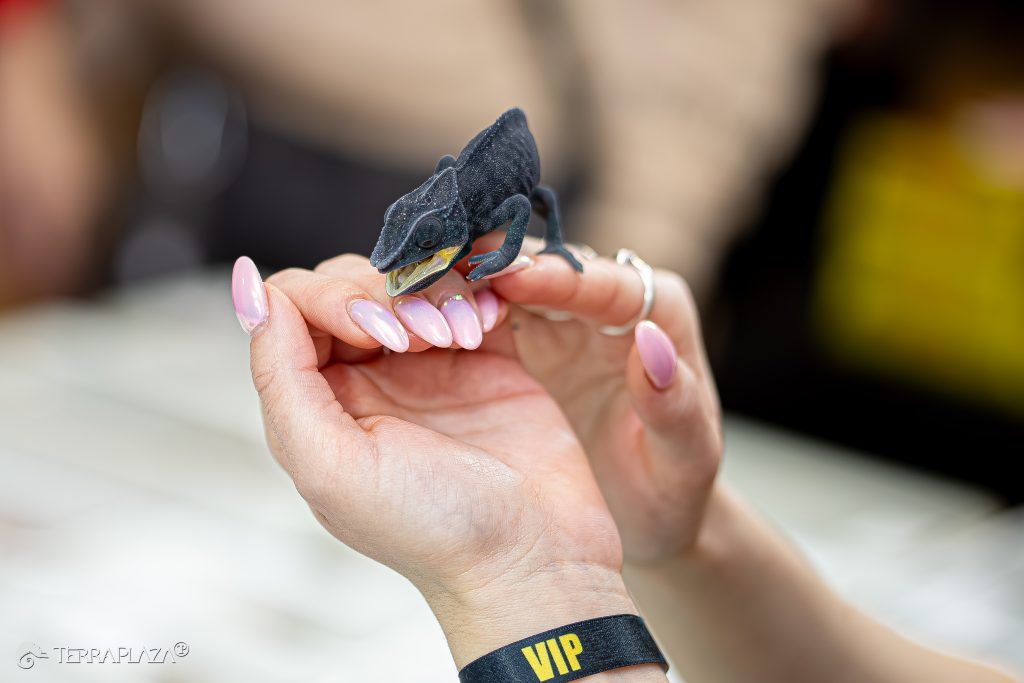
Their posture, activity level, appetite, and any changes in their environment should also be closely monitored.
A chameleon should never be deliberately subjected to stress simply to provoke a dramatic color change.
Not all chameleons are equally colorful
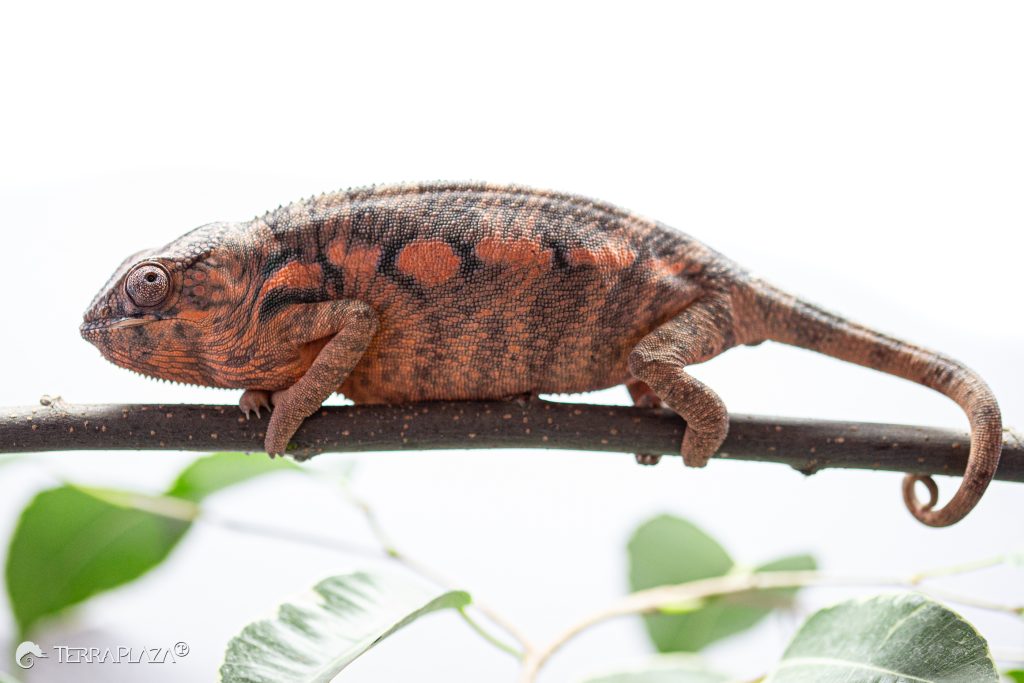
Although chameleons are often imagined as reptiles displaying every color of the rainbow, there are actually considerable differences between species. Male panther chameleons, for example, can exhibit exceptionally vivid coloration, while females and juveniles generally have a more subdued appearance. In other chameleon species, color changes are less dramatic, typically involving shifts in brightness or transitions between different shades of brown and green. The ability to change color therefore varies among species and does not always result in a striking transformation.
Throughout evolution, different chameleon species have adapted to different environmental and social challenges, and these adaptations are reflected in both their coloration and their ability to modify it.
More than camouflage
In fact, chameleon color change is far more complex than simply blending into the surroundings. Through their coloration, chameleons can communicate with members of their own species, respond to environmental changes, and, in certain situations, conceal themselves more effectively from predators.