




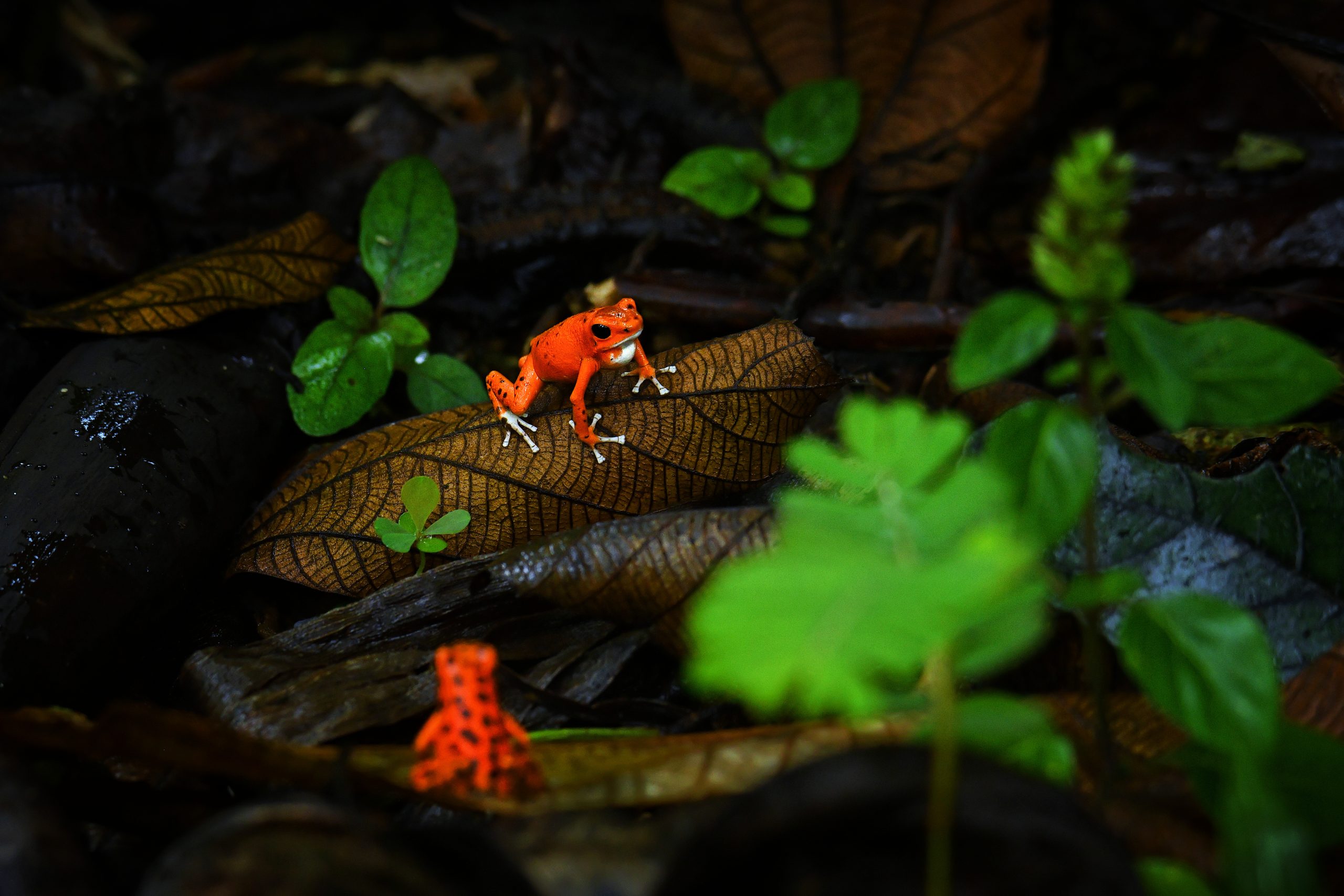
Can geckos live with poison dart frogs? Keeping different species together in a densely planted tropical terrarium can create a fascinating display. Experienced keepers have successfully housed certain small gecko species alongside poison dart frogs. However, which species might be suitable, and what conditions are necessary for safe cohabitation?
A miniature tropical ecosystem in the terrarium
Natural-looking, densely planted terrariums are becoming increasingly popular among reptile and amphibian keepers. Enclosures where different animals use separate areas of the available space can be particularly fascinating. Therefore, many keepers wonder whether small geckos could also share a tropical environment with poison dart frogs.
Certain species combinations can work. However, no gecko species can be considered universally safe to house with all poison dart frogs.
Successful cohabitation depends on several factors. These include the size of the terrarium, the behaviour of the frogs and geckos, environmental conditions and the availability of suitable hiding places.
1. Mourning gecko (Lepidodactylus lugubris) – The best-known terrarium companion
When discussing geckos kept alongside poison dart frogs, the mourning gecko (Lepidodactylus lugubris) is almost certain to be mentioned. Measuring just 8–10 cm in total length, it is one of the best-known inhabitants of mixed-species tropical terrariums.
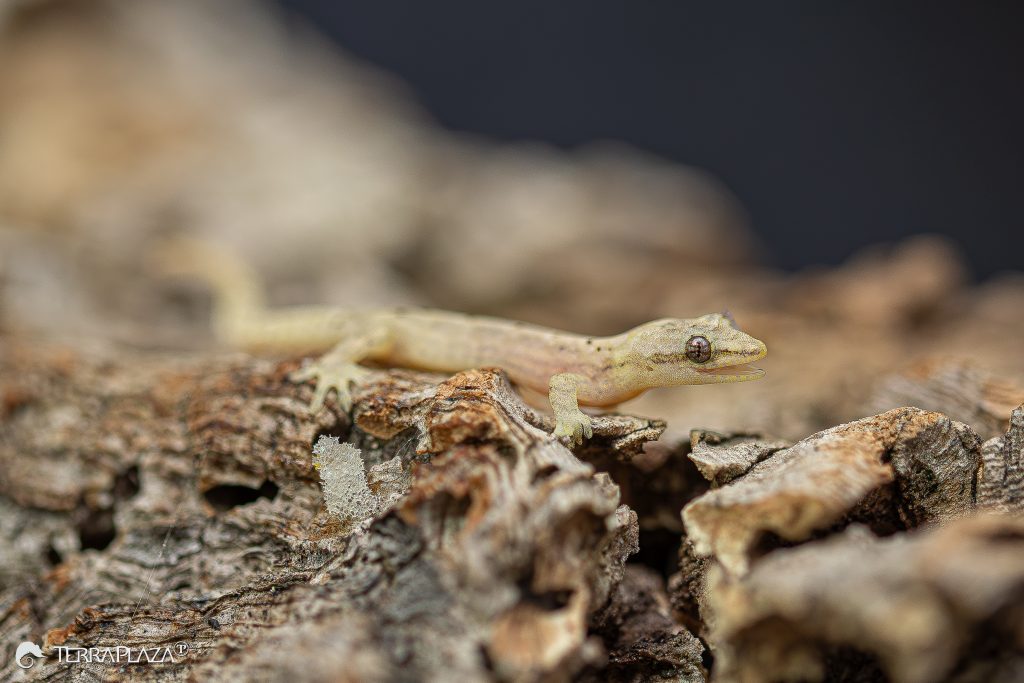
One reason for its popularity is that its environmental requirements partly overlap with those of several poison dart frog species. It thrives in humid, densely planted environments. Moreover, it readily moves along branches, leaves and even the glass walls of a terrarium.
While poison dart frogs often spend much of their time among leaf litter, near the ground or on low vegetation, mourning geckos regularly use the upper sections of the enclosure.
Different activity periods may also favour cohabitation. Most poison dart frogs are active during the day, whereas mourning geckos are primarily nocturnal. As a result, the animals may encounter each other less frequently. However, their living spaces are not completely separate.
A gecko that does not need males to reproduce
One of the mourning gecko’s most remarkable characteristics is parthenogenesis, a form of reproduction that does not require fertilisation. Mourning gecko populations consist almost entirely of females, while males are extremely rare. Although males occasionally occur, females do not need to mate to produce viable offspring. This is particularly important when keeping the species in a terrarium. Under suitable conditions, a small colony of mourning geckos can increase relatively quickly. Therefore, keepers must plan ahead to accommodate the offspring. Newly hatched geckos are also extremely small. Consequently, the risk of injury or predation by larger poison dart frogs cannot be ruled out.
Mourning geckos can therefore be fascinating companions for certain poison dart frog species. However, successful cohabitation requires continuous observation and a carefully designed environment.
2. Yellow-headed gecko (Gonatodes albogularis) – A colourful companion for poison dart frogs
The yellow-headed gecko (Gonatodes albogularis) is a small, diurnal species found in Central America, northern South America and the Caribbean. Adults measure just 8–10 cm in total length, yet their appearance is particularly striking. In the wild, they primarily move along tree trunks, bark and other vertical surfaces. Therefore, they can also make good use of climbing structures in a richly furnished tropical terrarium.
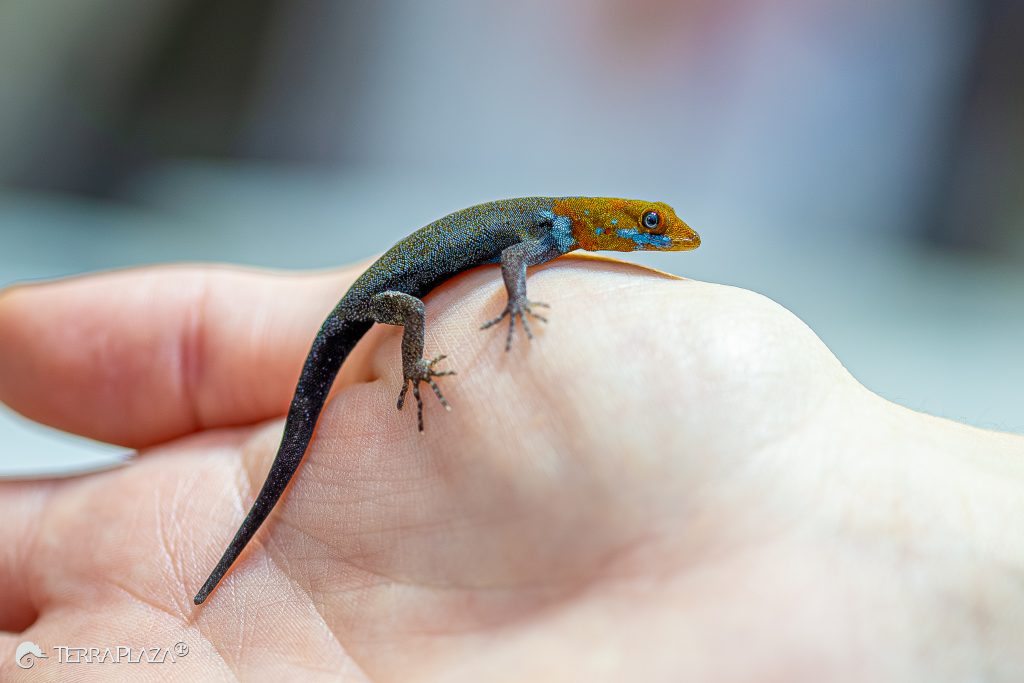
The species displays pronounced sexual dimorphism. Males are easily recognised by their striking yellowish-orange heads, bluish markings and greyish bodies. Females, by contrast, have much more subdued brownish colouration.
There is also a documented zoo example of this species being housed with poison dart frogs. According to Plzeň Zoo’s 2023 annual report, Gonatodes albogularis geckos were housed with Dendrobates tinctorius‘azureus’ poison dart frogs in the zoo’s Akva Tera exhibition.
However, this example does not mean that the species are automatically compatible in every enclosure. Both the geckos and the poison dart frogs are active during the day. Therefore, a well-structured habitat, sufficient hiding places and separate feeding opportunities are particularly important.
Due to the territorial behaviour of male geckos, keeping several adult males together is not recommended. In addition, a mixed-species terrarium must provide suitable temperature, humidity and lighting conditions for both species.
Gonatodes albogularis may therefore be an interesting option for experienced keepers. Nevertheless, successful cohabitation requires careful planning, ongoing observation and the ability to separate the animals when necessary.
What about other small gecko species?
Several other small gecko species are known in the terrarium hobby. Under suitable conditions, some may also be candidates for mixed-species enclosures with poison dart frogs.
One example is the gold dust day gecko (Phelsuma laticauda). Documented breeding experiences also describe this species being kept with poison dart frogs.
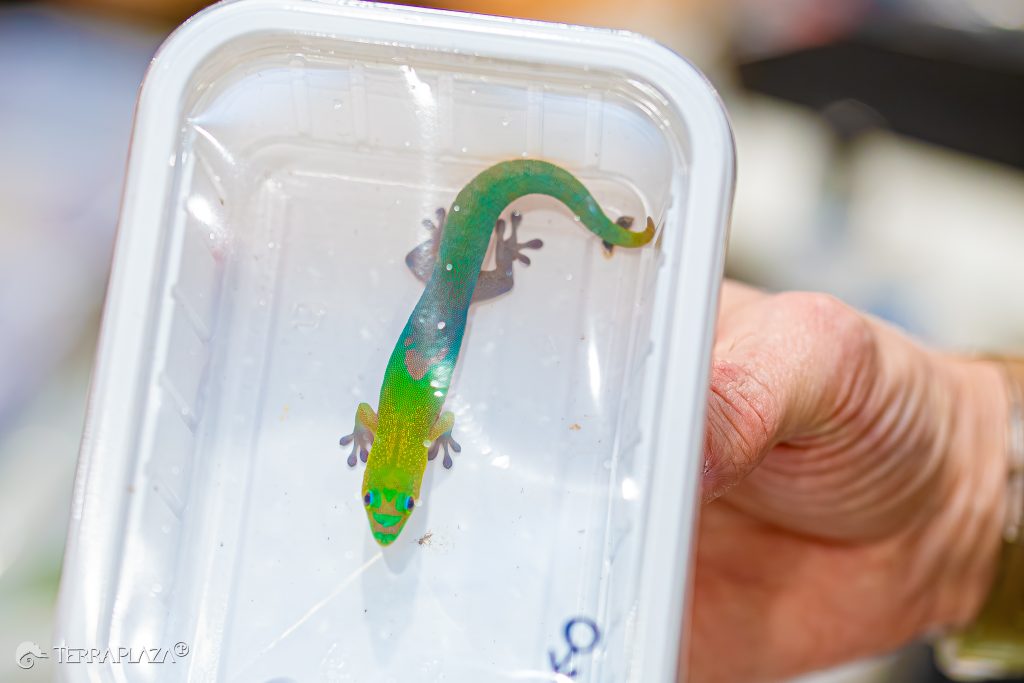
According to a report by the specialist organisation IG Phelsuma, individuals of this species have been successfully housed with Dendrobates tinctorius and Phyllobates vittatus.
However, the gold dust day gecko is active during the day. It also requires appropriate UVB lighting and a warmer basking area. Consequently, keeping it with poison dart frogs demands particularly careful planning.
Other small geckos, including certain Lygodactylus and Sphaerodactylus species, may also attract the interest of terrarium keepers. However, small body size and tropical origins alone do not guarantee that two species will make suitable companions.
Different animals may compete for food, require different environmental conditions or pose a risk to each other’s eggs and newly hatched young.
Although successful species combinations have been reported in the terrarium hobby, individual experiences do not guarantee long-term, problem-free cohabitation. Therefore, keepers must consider the specific requirements and behaviour of each gecko and poison dart frog species. They should also evaluate the available evidence and practical experience with the proposed combination.
Which poison dart frogs might be suitable?
The suitability of a mixed-species terrarium depends just as much on the poison dart frog species as it does on the gecko. For example, Dendrobates auratus and Dendrobates tinctorius are two poison dart frog species mentioned in reports of successful cohabitation with small geckos. These frogs often move near the ground, so they may encounter climbing geckos less frequently. However, this does not guarantee compatibility.
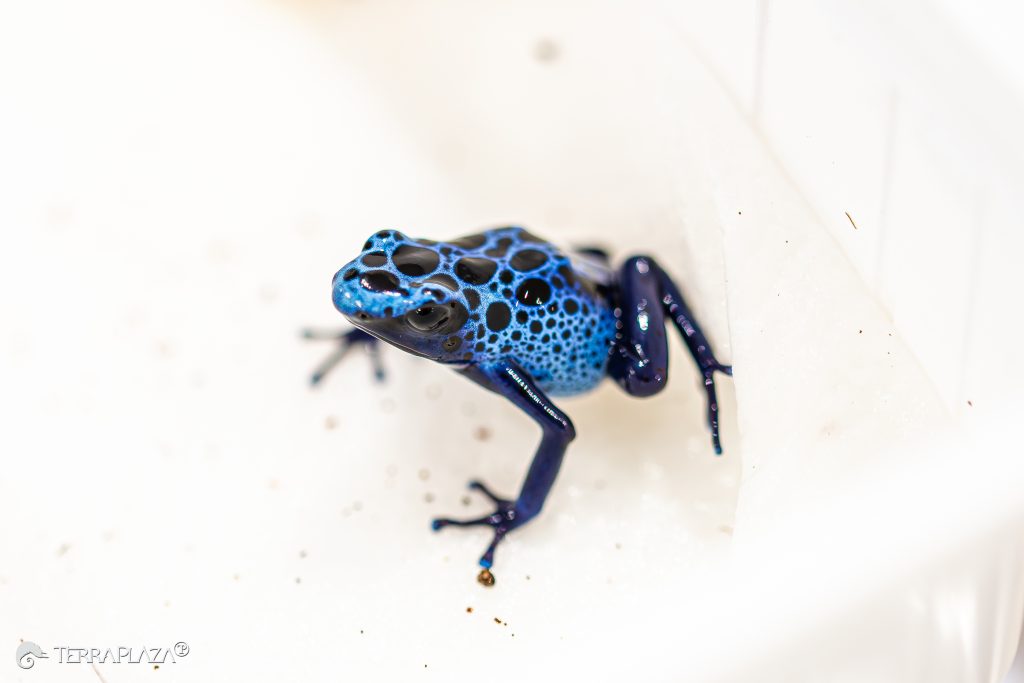
Larger frogs may pose a risk to newly hatched geckos. Meanwhile, very small poison dart frogs, such as certain Ranitomeya species, may be more vulnerable in a mixed-species enclosure. Furthermore, not all poison dart frogs live close to the ground. Several species actively use the upper parts of the vegetation. Therefore, choosing compatible species involves more than simply placing one animal in the lower section and another in the upper section of the terrarium.
Keeping geckos with poison dart frogs: What should you consider?
The most important requirement when creating a mixed-species terrarium is that the needs of both species must be met without compromise.
Suitable size and spatial arrangement: A shared terrarium should be larger than an enclosure designed for either species alone. Dense vegetation, roots, branches and pieces of cork bark can help create separate living areas.
Temperature and humidity: Suitable environmental conditions must be maintained for both species simultaneously. In particular, a gecko’s warmer basking area must not put the frogs at risk.
Appropriate feeding: Both geckos and poison dart frogs may eat small live prey, such as fruit flies. However, geckos may also require other food sources. Therefore, relying solely on the frogs’ food is not sufficient.
Health and disease prevention: Every newly acquired animal should undergo a separate quarantine period, with appropriate health examinations when necessary. Amphibians are particularly sensitive to certain infectious diseases. Consequently, the health of all animals entering a mixed-species enclosure must be taken seriously.
Animal behaviour: Constant hiding, chasing, injuries or refusal to eat may all be warning signs.
If cohabitation does not work properly, the animals must be separated. Therefore, a suitable spare terrarium should be available before the first gecko is introduced.
Small inhabitants, remarkable cohabitation
Keeping poison dart frogs and small geckos together offers an unusual opportunity to create a diverse, natural-looking tropical terrarium. However, successful cohabitation depends on choosing suitable species and carefully designing their shared environment. In addition, the animals’ behaviour must be monitored continuously. What makes a truly successful mixed-species terrarium special is not the number of species it contains. Instead, it is the ability to provide a safe and suitable environment for every inhabitant.
