




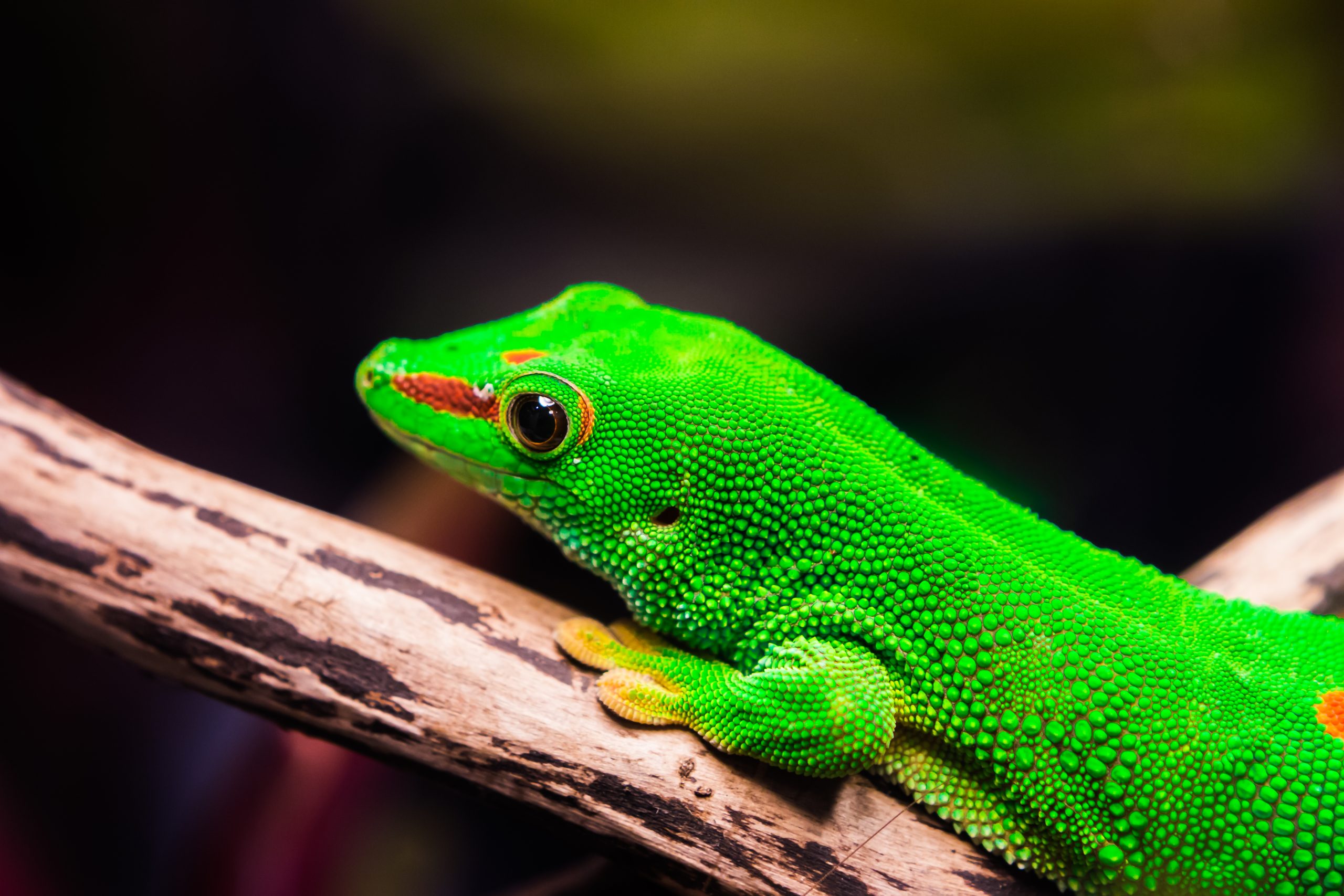
The giant Madagascar day gecko (Phelsuma grandis), thanks to its vivid coloration and size, is one of the most striking ornamental reptiles in terrariums. Its popularity, however, fluctuates over time: based on my experience, it sometimes almost completely disappears from the offerings at herpetological exhibitions, then after a few years becomes sought‑after again.
Despite its spectacular appearance, it is important to know that this species is not suited for cuddling or regular handling. Due to its quick movements and sensitive skin, it is primarily an animal to be observed. In the terrarium, however, it is an exceptionally eye‑catching inhabitant with interesting behaviour. It is active during the day, regularly basks, hunts, and explores its environment. With a biotope terrarium, it can become a true highlight of the home.
Name and taxonomic classification
The currently accepted scientific name of the species is Phelsuma grandis. In older literature and terrarium‑keeping publications it is often found under the name Phelsuma madagascariensis grandis, as it was previously treated as a subspecies of the Madagascar day gecko. Today it is recognized as a distinct species.
Members of the genus Phelsuma belong to the family Gekkonidae. Unlike most commonly known geckos, they are diurnal, which means their eyes, coloration, and behaviour differ from those of their nocturnal relatives. The term “grandis” in the species name is of Latin origin, meaning large or impressive, which aptly refers to the animal’s outstanding size among day geckos.
Origin and natural habitat
The giant Madagascar day gecko’s original distribution range is located in the northern and northwestern regions of Madagascar. Warm tropical and subtropical environments provide its habitat, where it primarily lives on trees, shrubs, and other vertical vegetation surfaces. Forests and forest edges also host the species, and it is capable of adapting to human‑modified environments as well. Gardens, orchards, plantations, and even areas near buildings may all offer suitable conditions for its presence.
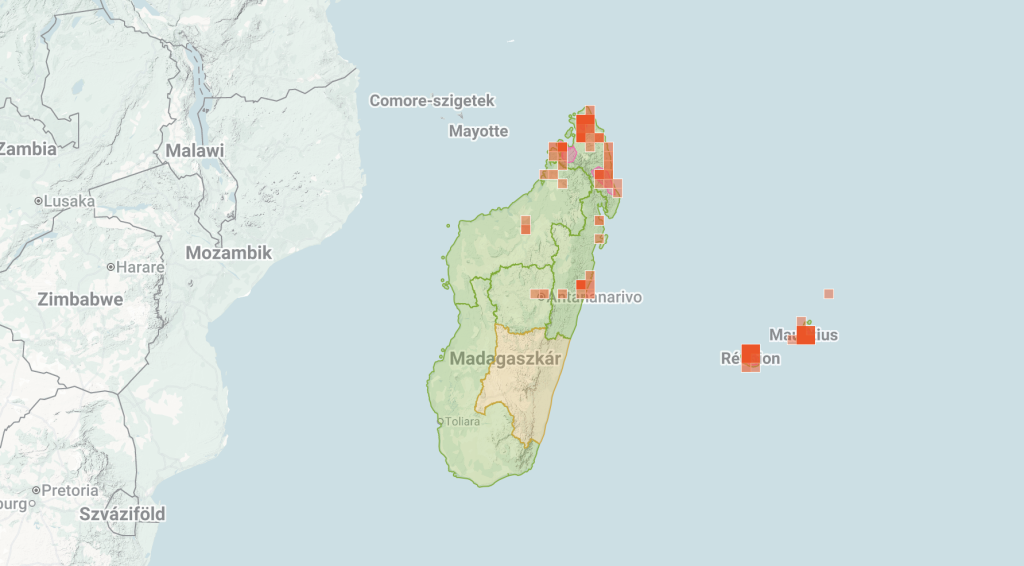
Outside Madagascar, the species has reached several other warm‑climate regions, partly through the pet trade. Established introduced populations have formed in places such as Mauritius and certain parts of Florida.
Appearance
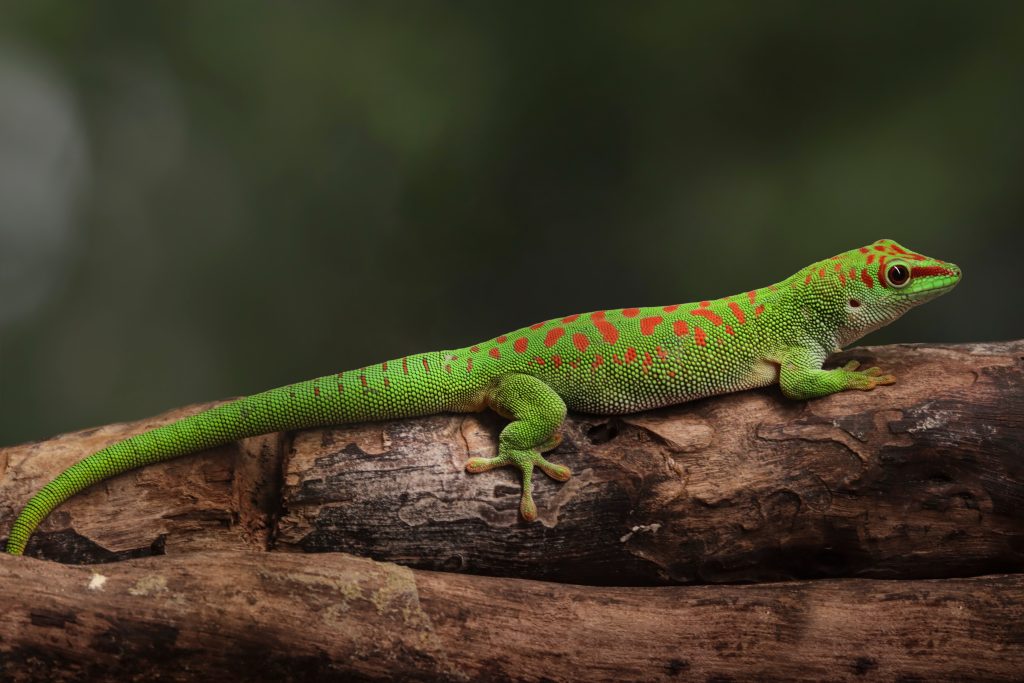
Phelsuma grandis is one of the largest representatives of the day geckos. Adult individuals typically reach a total length of around 23–28 centimetres, a significant portion of which is the tail. Males generally have larger heads, a more robust body structure, and a sturdier build than females.
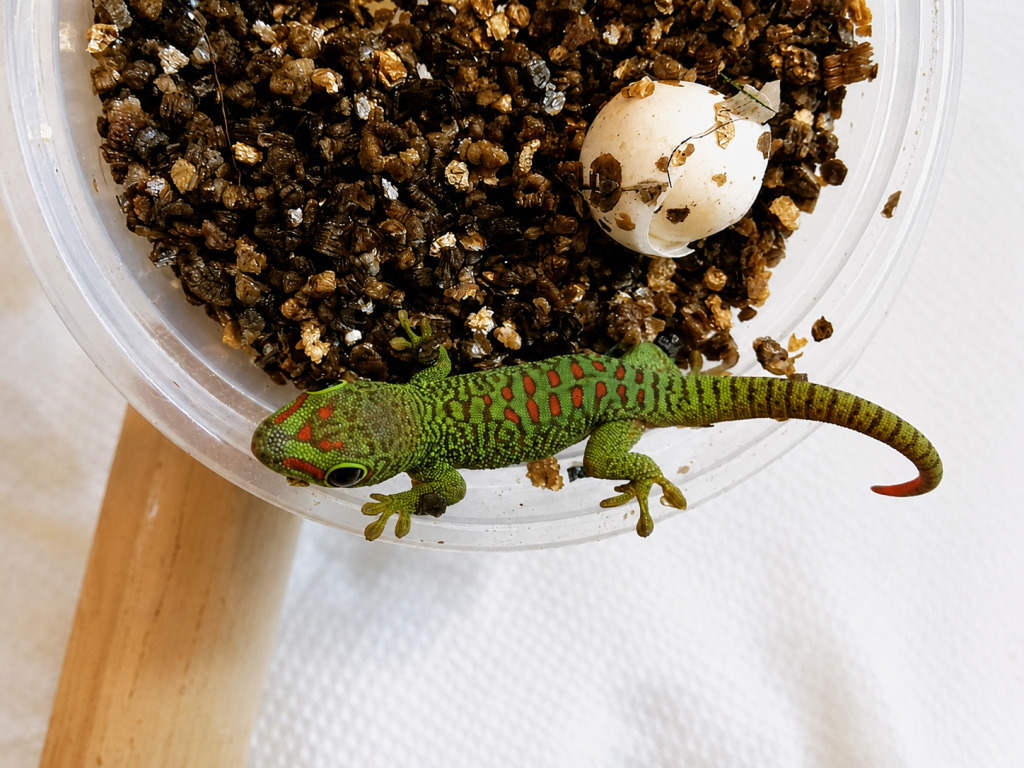
Its base colour is a vivid grass‑green. A clearly visible red stripe usually runs from the nostril toward the eye. Various red spots, dots, or transverse markings may appear on the back. The pattern can vary greatly between individuals: some animals display rich red markings, while others show only a few dorsal spots. The underside is light, cream‑coloured or yellowish. Their coloration may darken under stress, lower temperatures, illness, or during conflicts. Juveniles often have more pronounced patterns than adults, and as they grow, some of the red markings may fade.
Specialized feet and sensitive skin
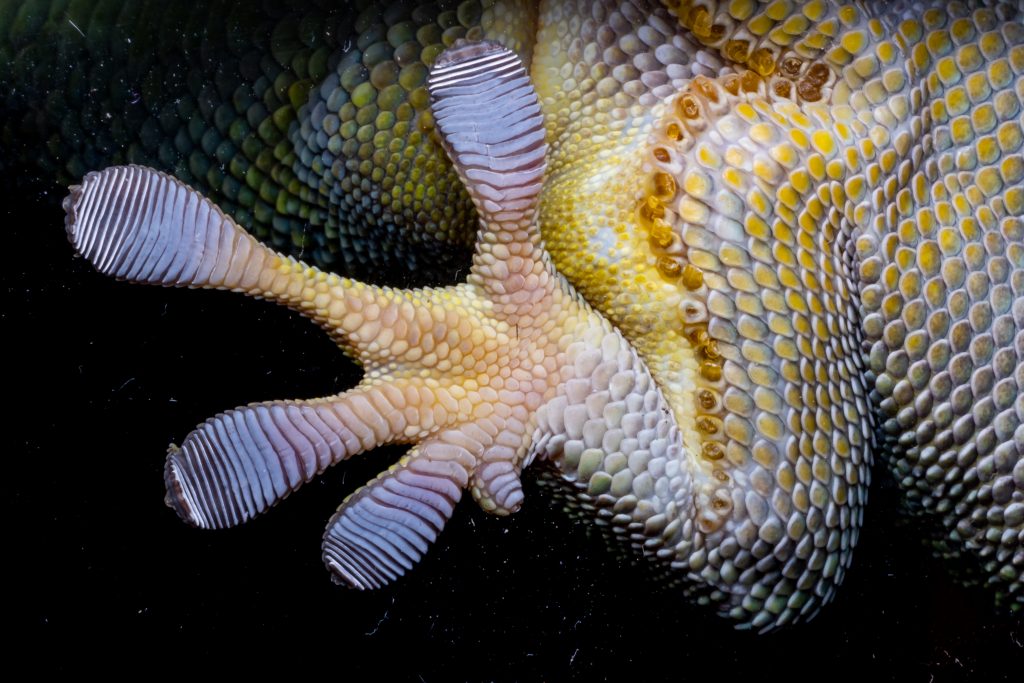
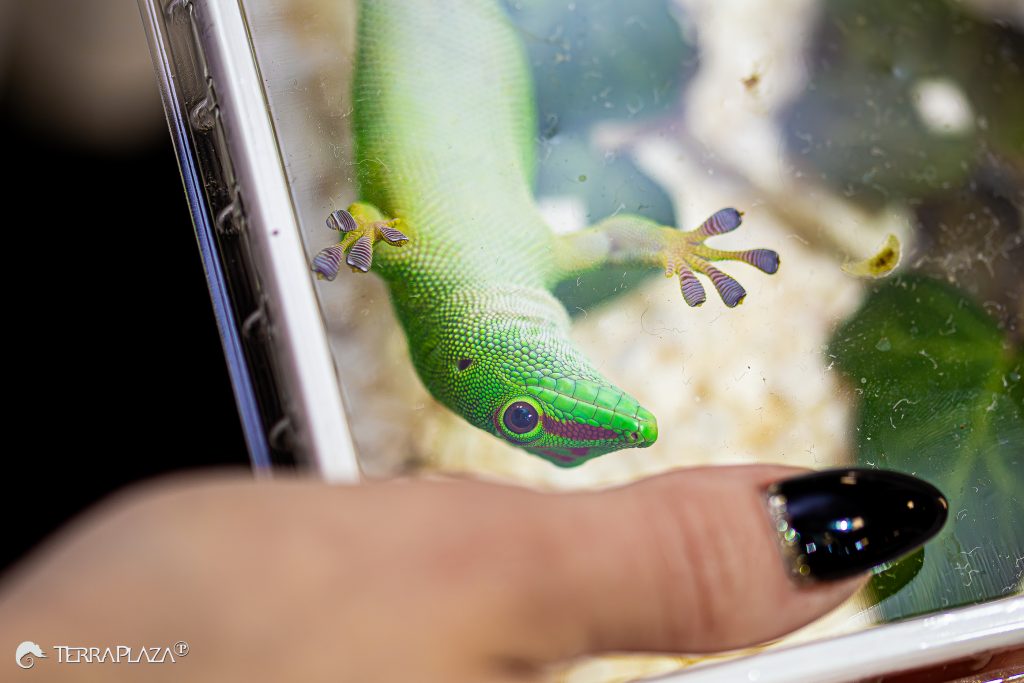
Day geckos have lamellae on their toes that are covered with microscopic adhesive structures. These allow the animals to move on almost vertical surfaces, and even on smooth ones.
The skin of Phelsuma grandis is particularly sensitive. When strongly grasped or when friction occurs during escape, parts of the skin may detach. This is a natural defensive mechanism that allows the animal to break free from a predator’s grip, but in captivity it can result in painful injury and a risk of infection. For this reason, day geckos must never be grabbed by their skin or tail. If moving the animal is absolutely necessary, it is safer to guide it into a small container. Regular handling should be avoided.
Lifestyle and behaviour
The species is diurnal and primarily arboreal, meaning it lives mainly on trees. In nature and in terrarium conditions alike, it prefers vertical branches, bamboo poles, thick plant stems, or leaves.
It often begins its morning with basking. After reaching the appropriate body temperature, it becomes more active, searches for food, patrols its territory, and occasionally returns to warmer resting spots. Its movements may sometimes appear slow and deliberate, but in case of danger it is extremely fast.
Males are territorial and defend their area firmly against other males. For this reason, two sexually mature males must never be kept together in the same terrarium. Conflicts can lead to chasing, biting, injuries to limbs or the tail, and in extreme cases the death of one of the animals.
Keeping a male and female together is not automatically problem‑free either. The male’s continuous courtship and mating attempts can exhaust the female, especially if she does not have enough space and hiding places. Based on my experience, keeping multiple females together can distribute the male’s mating activity, but this does not always provide a real solution and requires increased attention. Therefore, the animals must be observed regularly, and in cases of aggression, weight loss, persistent hiding, or injury, they must be separated.
Nutrition
The natural diet of Phelsuma grandis is diverse. It consumes various insects, spiders, and other small invertebrates, but also nectar, pollen, plant sap, and soft, sweet fruits. Occasionally it may prey on small vertebrates, and even very young geckos.
In terrarium conditions, the diet can be based on appropriately sized, good‑quality feeder insects and complete foods formulated specifically for frugivorous or day geckos. Crickets, locusts, roaches, flies and fly larvae, as well as wax moth larvae as an occasional treat, can be offered, along with suitably composed gecko diets. Insects may also be offered with feeding tongs, which can help build trust with the gecko.
Variety is more important than relying heavily on a single type of feeder. Before feeding, feeder insects should be properly nourished, and supplemented with calcium or vitamin powder as needed. Excessive supplementation, however, can cause problems just as deficiency can, so the dosage of the product, the strength of UVB lighting, and the animal’s age must be considered together.
Fruit alone cannot be regarded as a complete food. A diet consisting solely of banana, honey, or baby food can lead to nutritional deficiencies and obesity in the long term.
Terrarium setup
Since this is an arboreal species, the height of the terrarium is of particular importance. An adult animal requires a spacious, vertically oriented enclosure. Modern husbandry recommendations suggest a terrarium of around 60 × 80 × 60 centimetres, or an equivalent adequately tall space, for a single adult specimen. A larger terrarium, however, always provides more opportunities for movement, natural behaviour, and the creation of appropriate temperature zones.
When furnishing the enclosure, it is advisable to place branches, bamboo poles, and cork elements of various thicknesses and angles. Climbing surfaces should lead to the basking area, the vicinity of the UVB lamp, as well as to shaded, cooler zones.
Live plants serve not only as decoration. They increase the animal’s sense of security, provide hiding places, and help maintain humidity. Large‑leaved, sturdy plants may be used, but care must be taken to ensure they are not toxic, chemically treated, or easily breakable.
The terrarium must be well ventilated, yet capable of retaining the required humidity for certain periods. A constantly wet, poorly ventilated environment can be just as harmful as prolonged dryness.
Temperature, lighting, and humidity
The goal in the terrarium is not to create a single, uniform temperature everywhere, but to establish both vertical and horizontal thermal gradients. The basking area located in the upper section should be warmer, while the lower and shaded parts of the terrarium should provide cooler retreat options.
As a general guideline, daytime ambient temperatures may range approximately between 24–28 °C, while the basking spot should be warmer, around 30–32 °C. At night, a certain degree of cooling is natural and desirable. Exact values must always be adjusted based on the animals’ behaviour, the size of the terrarium, ventilation, and the actual readings of measuring instruments.
UVB lighting is an important part of day‑gecko husbandry. It supports the formation of vitamin D₃, thereby ensuring proper calcium utilization and the maintenance of healthy bone structure. When selecting a UVB lamp, one must consider the distance between the lamp and the basking surface, any mesh on the top of the terrarium, and the extent to which vegetation and furnishings create shade. This supports not only the animals’ activity and natural behaviour but may also help them maintain their vivid coloration.
Humidity can fluctuate throughout the day. After regular misting it temporarily increases, then the terrarium partially dries out. Husbandry recommendations mention a variable humidity of roughly 40–75 percent, emphasizing proper ventilation and the importance of daily fluctuation. During misting, the animals often lick the water droplets that form on the leaves and glass. Fresh drinking water must also be provided.
Cleaning and daily care
Keeping the terrarium of Phelsuma grandis clean requires particular attention, as the animal is fast and can easily escape when the door is open. During daily maintenance, feces, leftover food, and decaying plant material must be removed.
Water and food dishes must be cleaned regularly, and fruit‑based or puréed foods should not be left in the warm terrarium for long periods. Dead or hidden feeder insects may disturb or injure the gecko.
Complete disinfection is only necessary in justified cases. In a well‑functioning planted or bioactive terrarium, it is generally better to focus on regular partial cleaning, checking ventilation, and addressing problematic areas.
Reproduction
Under suitable conditions, the giant Madagascar day gecko can be bred relatively successfully in captivity. Courtship behaviour precedes mating, consisting of head and body movements, tail vibrations, vocalizations, and the male approaching the female.
The female usually lays two eggs that adhere to each other. She may place the eggs in cavities, inside bamboo, under bark, among plants, or in other protected locations. Multiple clutches during a single breeding season are common, which places significant strain on the female’s body. For this reason, proper calcium supply, UVB lighting, and nutrition are especially important.
The incubation period varies depending on temperature and may be approximately two and a half months. Juveniles should be raised separately from adults, as larger individuals may treat them as prey.
Health issues
The most common problems resulting from improper husbandry may include:
- metabolic bone disease
- calcium deficiency
- dehydration
- obesity
- shedding problems
- injuries
- skin detachment
- tail loss
- internal or external parasites
- egg retention in females
Warning signs may include persistent loss of appetite, weight loss, uncoordinated movement, trembling, deformation of the jaw or limbs, sunken eyes, prolonged dark coloration, swelling, discharge, or unusually long periods of hiding.
In case of suspected illness or injury, a veterinarian experienced in treating exotic animals and reptiles must be consulted. Reptiles are capable of hiding symptoms for a long time, so by the time the problem becomes visibly apparent, the condition may already be advanced.
Conservation and trade considerations
Although Phelsuma grandis is a species regularly bred in terrarium keeping, it is important to ensure legal and documented origin when purchasing one. Whenever possible, choose a healthy, captive‑bred animal from a reliable breeder.
Responsible animal keeping also means never releasing the gecko into the wild. An unwanted or no‑longer‑keepable animal must be provided with a new, suitable owner, breeder, or an organization specializing in the rescue of exotic animals.
Summary
Phelsuma grandis is undoubtedly one of the most striking geckos in terrarium keeping. Its impressive size, vivid green base colour, and red patterning make it immediately eye‑catching in a well‑arranged planted terrarium. Thanks to its diurnal activity, its behaviour is easy to observe, making it not only beautiful but also a particularly interesting terrarium animal.
However, keeping it requires more than an attractive terrarium. It needs adequate space, strong lighting, UVB radiation, a thermal gradient, variable humidity, a varied diet, and a calm environment. Due to its sensitive skin and quick movements, it is meant for observation rather than handling.
Perhaps this is what gives it its special appeal. Phelsuma grandis does not seek human proximity, yet it continuously captures attention.
