


Close Menu
TerraPlaza magazin
  • Reptiles
    • Lizards
      • Geckos
      • Chameleons
      • Skinks
      • Agamids
      • Monitors
  • Amphibians
  • Arthropods
  • Fun facts
  • English
    • English
    • Magyar

Subscribe to Updates

Get the latest creative news from FooBar about art, design and business.

What's Hot

Why do chameleons change color?

2026.11.24.

Red-eyed crocodile skink diet and nutrition

2026.11.24.

Role of Springtails in bioactive terrariums

2026.11.24.
Facebook X (Twitter) Instagram
TerraPlaza magazin
  • Reptiles
    1. Lizards
    2. Geckos
    3. Chameleons
    4. Skinks
    5. Agamids
    6. Monitors
    7. View All

    Why do chameleons change color?

    2026.11.24.

    Small geckos with poison dart frogs: Which species can share a terrarium?

    2026.11.17.

    Hidden in plain sight: A new gecko species discovered in Borneo

    2026.11.06.

    Asian Water Dragon (Physignathus cocincinus): Life between water and trees

    2026.11.06.

    Small geckos with poison dart frogs: Which species can share a terrarium?

    2026.11.17.

    Hidden in plain sight: A new gecko species discovered in Borneo

    2026.11.06.

    The giant Madagascar day gecko (Phelsuma grandis)

    2026.07.26.

    Why do chameleons change color?

    2026.11.24.

    Veiled chameleon in the terrarium: how to create a suitable environment for it

    2026.08.25.

    Fire skink: The secretive lizard of the West African forests

    2026.06.17.

    Crocodile skinks as companion animals

    2026.01.07.

    Asian Water Dragon (Physignathus cocincinus): Life between water and trees

    2026.11.06.

    Earless monitor lizard – A mysterious rarity of the reptile world

    2026.07.09.

    Why do chameleons change color?

    2026.11.24.

    Small geckos with poison dart frogs: Which species can share a terrarium?

    2026.11.17.

    Hidden in plain sight: A new gecko species discovered in Borneo

    2026.11.06.

    Asian Water Dragon (Physignathus cocincinus): Life between water and trees

    2026.11.06.
  • Amphibians

    Small geckos with poison dart frogs: Which species can share a terrarium?

    2026.11.17.

    Built for the night: When life begins after dark

    2026.11.06.

    Pacman frogs: enormous mouths and lightning‑fast strikes

    2026.09.14.

    Axolotl: The Creature That Never Grows Up – Regeneration, Myths and Survival

    2026.05.04.
  • Arthropods

    Tarantula invasion in Austria? What’s really behind hundreds of spider sightings?

    2026.11.17.

    Phidippus regius ‘Bahamas’ – A tiny hunter with remarkable abilities

    2026.11.06.

    Disguised as flowers, leaves, or twigs: the many faces of praying mantises

    2026.08.18.

    Habitats and ecological adaptations of arthropods

    2026.08.10.

    Are Springtails the Most Common Terrarium Animals?

    2021.01.12.
  • Fun facts

    Red-eyed crocodile skink diet and nutrition

    2026.11.24.

    Role of Springtails in bioactive terrariums

    2026.11.24.

    Varanus glauerti distribution in Australia

    2026.11.24.

    Vampire crab: Geographic distribution

    2026.11.24.

    Yucatan Spiny-Tailed Iguana Habitat

    2026.11.24.
  • English
    • English
    • Magyar
Facebook Instagram YouTube
TerraPlaza magazin
Home»Fun facts
Fun facts

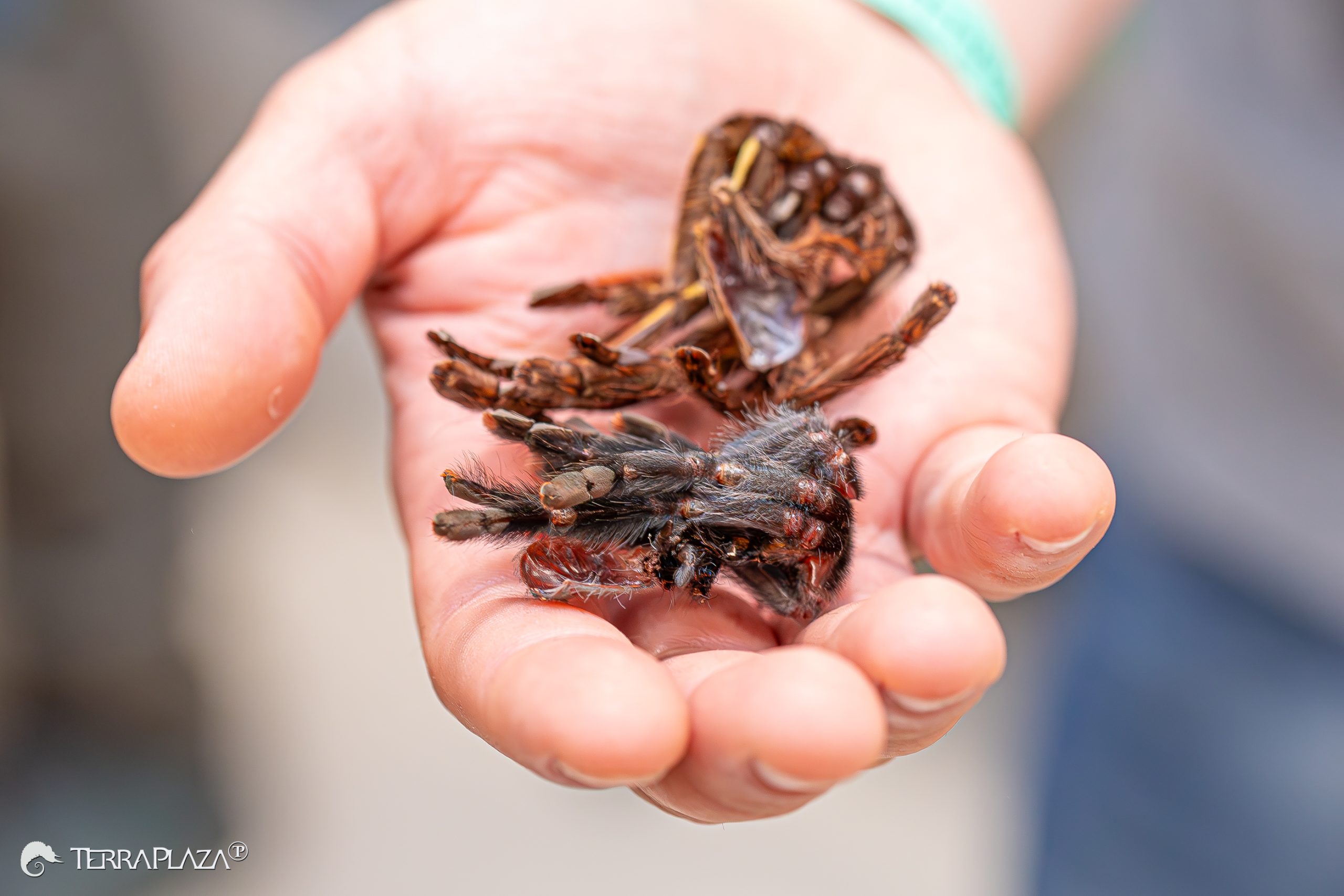
Spider shedding: Their most vulnerable moment

Farkas M. VivienBy Farkas M. Vivien2026.10.14.No Comments1 Min Read
Pókok vedlése
Share
Facebook Twitter LinkedIn Pinterest Email

Spider shedding is one of the most important processes in growth. Because spiders have an external skeleton, they must shed their old exoskeleton from time to time in order to grow larger.

After shedding, the new exoskeleton is still soft and vulnerable. During this period, the spider is especially sensitive to disturbance and needs a calm, stress-free environment.

Shedding frequency varies by species and age. Young spiders usually shed more often, while older individuals shed less frequently. In many tarantulas, mature males no longer shed after reaching adulthood.

In captivity, it is important not to disturb or feed the animal during shedding. Peace and quiet are essential for a successful shed.

animal facts Arthropods exoskeleton shedding spider spider care spider shedding tarantula TerraPlaza TerraPlaza Magazine terrarium animals
Share. Facebook Email
Previous ArticlePhasma gigas: A giant stick insect with a twig-like appearance
Next Article Box turtle habitat: Forests, meadows and wet areas
Farkas M. Vivien
Farkas M. Vivien

Related Posts

Red-eyed crocodile skink diet and nutrition

2026.11.24.

Role of Springtails in bioactive terrariums

2026.11.24.

Varanus glauerti distribution in Australia

2026.11.24.

Vampire crab: Geographic distribution

2026.11.24.

Comments are closed.


TerraPlaza Expo
picks
Ezt már olvastad?
Reptiles

Why do chameleons change color?

By Farkas M. Vivien2026.11.24.

Chameleons are renowned for their remarkable ability to change color, but this phenomenon involves much more than camouflage. Scientific research reveals the complex biological mechanisms behind color change, including its role in communication, thermoregulation, and the microscopic structures found within chameleon skin.

Red-eyed crocodile skink diet and nutrition

2026.11.24.

Role of Springtails in bioactive terrariums

2026.11.24.

Varanus glauerti distribution in Australia

2026.11.24.
Rólunk

Természetszeretet és felelős állattartás naprakész információkkal – terrarisztika és akvarisztika szakportál. Hogy kedvenceidnek minél boldogabb élete legyen.

Email: info@terraplaza.hu
Tel: +36 20 4757271

 
    TerraPlaza magazin
    Facebook Instagram YouTube Discord
    Copyright © 2026 TerraPlaza ®

    Type above and press Enter to search. Press Esc to cancel.

    A jobb felhasználói élmény érdekében az oldalon cookie-kat használunk. Oldalunk használatával, Ön elfogadja a cookie-k használatát.