


Close Menu
TerraPlaza magazin
  • Reptiles
    • Lizards
      • Geckos
      • Chameleons
      • Skinks
      • Agamids
      • Monitors
  • Amphibians
  • Arthropods
  • Fun facts
  • English
    • English
    • Magyar

Subscribe to Updates

Get the latest creative news from FooBar about art, design and business.

What's Hot

Tarantula invasion in Austria? What’s really behind hundreds of spider sightings?

2026.11.17.

Orchid mantis: A remarkable praying mantis from Southeast Asia

2026.11.11.

Varanus cumingi: A water-associated monitor from the Philippines

2026.11.11.
Facebook X (Twitter) Instagram
TerraPlaza magazin
  • Reptiles
    1. Lizards
    2. Geckos
    3. Chameleons
    4. Skinks
    5. Agamids
    6. Monitors
    7. View All

    Hidden in plain sight: A new gecko species discovered in Borneo

    2026.11.06.

    Asian Water Dragon (Physignathus cocincinus): Life between water and trees

    2026.11.06.

    Treetop acrobats: The extraordinary world of anole lizards

    2026.11.06.

    Veiled chameleon in the terrarium: how to create a suitable environment for it

    2026.08.25.

    Hidden in plain sight: A new gecko species discovered in Borneo

    2026.11.06.

    The giant Madagascar day gecko (Phelsuma grandis)

    2026.07.26.

    Veiled chameleon in the terrarium: how to create a suitable environment for it

    2026.08.25.

    Fire skink: The secretive lizard of the West African forests

    2026.06.17.

    Crocodile skinks as companion animals

    2026.01.07.

    Asian Water Dragon (Physignathus cocincinus): Life between water and trees

    2026.11.06.

    Earless monitor lizard – A mysterious rarity of the reptile world

    2026.07.09.

    Hidden in plain sight: A new gecko species discovered in Borneo

    2026.11.06.

    Asian Water Dragon (Physignathus cocincinus): Life between water and trees

    2026.11.06.

    Built for the night: When life begins after dark

    2026.11.06.

    Treetop acrobats: The extraordinary world of anole lizards

    2026.11.06.
  • Amphibians

    Built for the night: When life begins after dark

    2026.11.06.

    Pacman frogs: enormous mouths and lightning‑fast strikes

    2026.09.14.

    Axolotl: The Creature That Never Grows Up – Regeneration, Myths and Survival

    2026.05.04.
  • Arthropods

    Tarantula invasion in Austria? What’s really behind hundreds of spider sightings?

    2026.11.17.

    Phidippus regius ‘Bahamas’ – A tiny hunter with remarkable abilities

    2026.11.06.

    Disguised as flowers, leaves, or twigs: the many faces of praying mantises

    2026.08.18.

    Habitats and ecological adaptations of arthropods

    2026.08.10.

    Are Springtails the Most Common Terrarium Animals?

    2021.01.12.
  • Fun facts

    Orchid mantis: A remarkable praying mantis from Southeast Asia

    2026.11.11.

    Varanus cumingi: A water-associated monitor from the Philippines

    2026.11.11.

    Butterfly pupa transformation: What happens inside?

    2026.11.11.

    Viper gecko: Distinctive tail and snake-like appearance

    2026.11.11.

    Angelfish tank mates: Which fish are good companions?

    2026.11.11.
  • English
    • English
    • Magyar
Facebook Instagram YouTube
TerraPlaza magazin
Home»Fun facts
Fun facts

Scorpion Anatomy: Claws, Stinger and a Unique Sensory Organ

Farkas M. VivienBy Farkas M. Vivien2026.10.15.No Comments1 Min Read
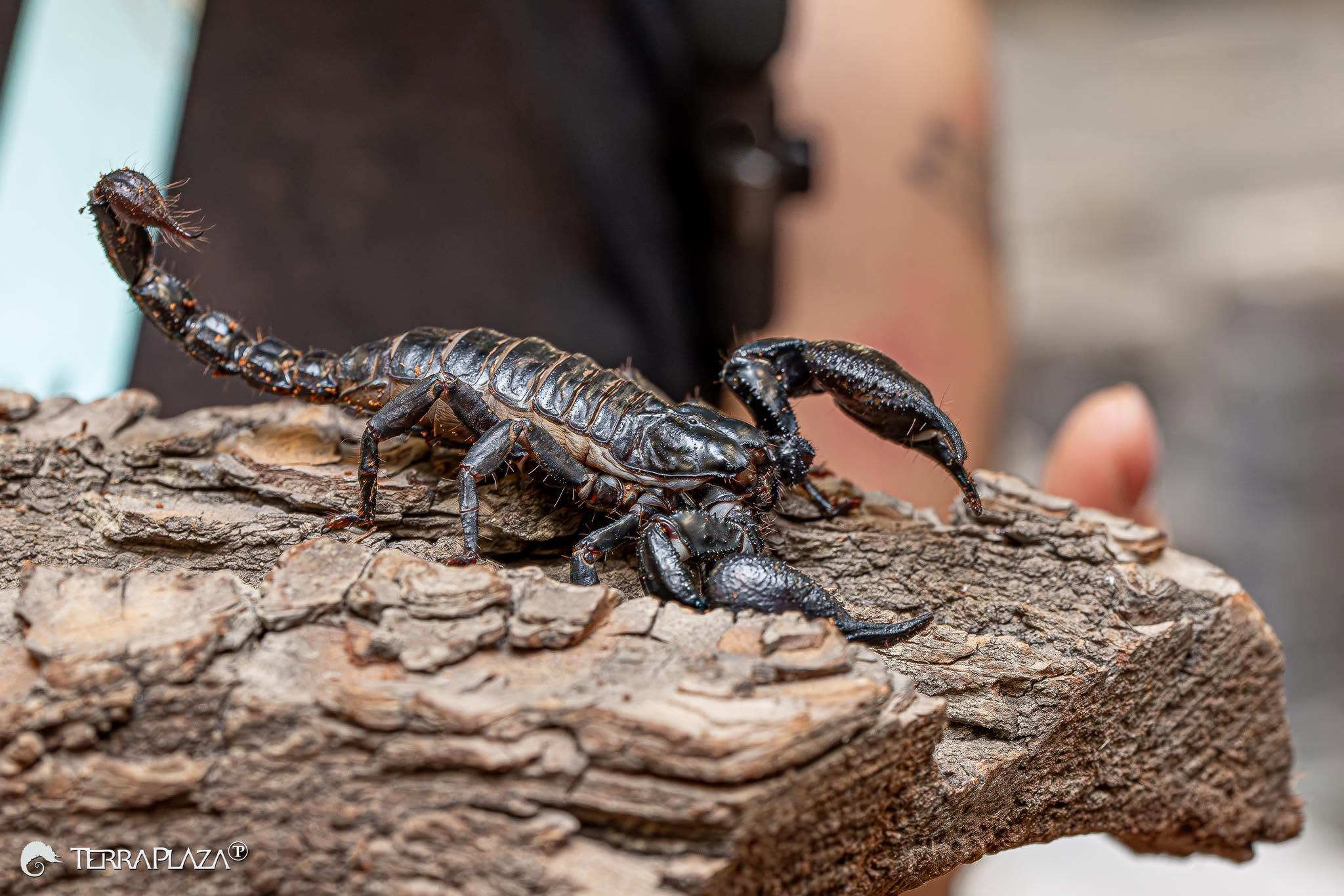
Scorpion anatomy showing pincers, walking legs, segmented tail and venomous stinger
Share
Facebook Twitter LinkedIn Pinterest Email

Scorpion anatomy reveals many fascinating details. Scorpions (Scorpiones) have short chelicerae and large pedipalps that end in powerful pincers.

Their front body section is unsegmented, while the abdomen is divided into two regions. The mesosoma consists of seven segments, while the tail-like metasoma has five. At its tip is the telson, which contains the venom gland and ends in a sharp stinger.

One of their most fascinating features is the pectines, a pair of comb-like sensory organs located on the underside of the second segment of the mesosoma. These specialized organs detect both chemical and mechanical (physical) signals from the ground. They play an important role in helping scorpions explore their surroundings.

Scorpion anatomy showing pincers segmented tail and venomous stinger TerraPlaza walking legs
Share. Facebook Email
Previous ArticleSnake Species: More Than 4,200 Around the World
Next Article Cristarmadillidium muricatum: A Unique Spiny Exoskeleton
Farkas M. Vivien
Farkas M. Vivien

Related Posts

Orchid mantis: A remarkable praying mantis from Southeast Asia

2026.11.11.

Varanus cumingi: A water-associated monitor from the Philippines

2026.11.11.

Butterfly pupa transformation: What happens inside?

2026.11.11.

Viper gecko: Distinctive tail and snake-like appearance

2026.11.11.

Comments are closed.


TerraPlaza Expo
picks
Ezt már olvastad?
Arthropods

Tarantula invasion in Austria? What’s really behind hundreds of spider sightings?

By Farkas M. Vivien2026.11.17.

More than 200 tarantula sightings in Austria have raised concerns. Discover why these native wolf spiders are appearing more frequently, what scientists have found and whether they pose a threat to humans.

Orchid mantis: A remarkable praying mantis from Southeast Asia

2026.11.11.

Varanus cumingi: A water-associated monitor from the Philippines

2026.11.11.

Butterfly pupa transformation: What happens inside?

2026.11.11.
Rólunk

Természetszeretet és felelős állattartás naprakész információkkal – terrarisztika és akvarisztika szakportál. Hogy kedvenceidnek minél boldogabb élete legyen.

Email: info@terraplaza.hu
Tel: +36 20 4757271

 
    TerraPlaza magazin
    Facebook Instagram YouTube Discord
    Copyright © 2026 TerraPlaza ®

    Type above and press Enter to search. Press Esc to cancel.

    A jobb felhasználói élmény érdekében az oldalon cookie-kat használunk. Oldalunk használatával, Ön elfogadja a cookie-k használatát.