




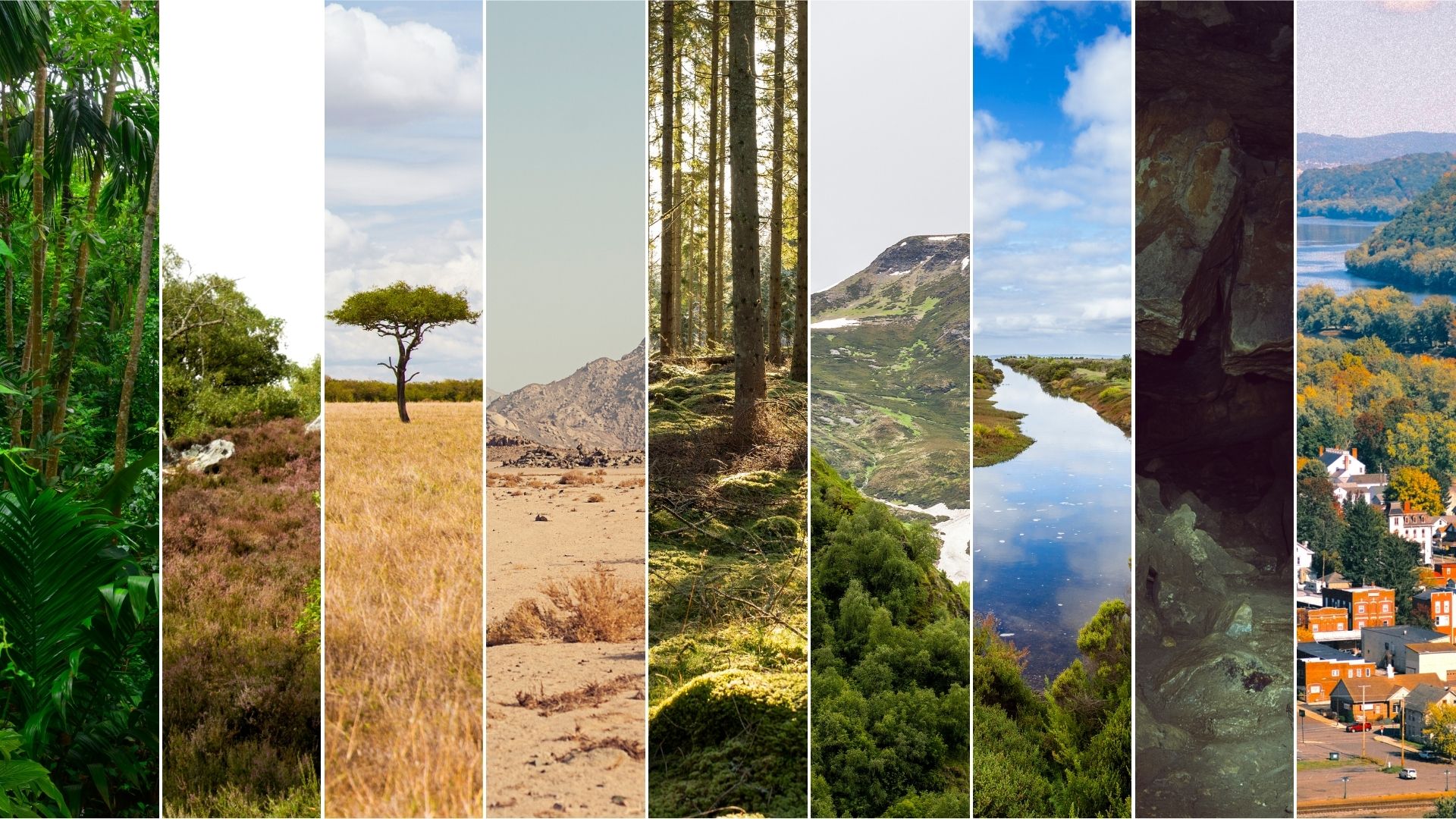
Arthropods are the most species-rich group in the animal kingdom and occur in almost every terrestrial, freshwater, and marine habitat. Moreover, their remarkable diversity reflects a wide range of adaptations in body structure, behavior, and lifestyle. As a result, arthropods can cope with very different environmental conditions. Accordingly, survival in a humid tropical rainforest, an arid desert, a montane habitat, or a riparian zone requires very different strategies.
It is important to emphasize that describing a species’ natural habitat is not the same as providing a terrarium care guide. In captivity, the goal is not to recreate the entire habitat, but rather to reproduce its most important microclimatic and structural features, such as temperature, humidity, substrate, ventilation, and suitable shelters.
This article provides a brief overview of several common habitat types and of the ecological and behavioral adaptations that allow arthropods to survive in these environments. However, this brief overview can only capture part of a much more complex subject. Therefore, neither the habitats nor the full range of adaptations are covered comprehensively here. Instead, I focus on a selection of characteristic relationships illustrated through examples. In addition, several of the species discussed are also familiar from the exotic pet hobby, making it easier to connect the characteristics of their natural habitats with the behaviors and requirements observed in captivity.
Tropical rainforests and moist forests
Tropical rainforests are among the terrestrial ecosystems with the greatest biological diversity on Earth. Year‑round high temperatures, substantial rainfall, and high humidity provide favourable conditions for arthropods.
In addition, rainforests have a vertically stratified structure. In general, four main layers can be distinguished: the ground layer, the leaf-litter layer, the shrub layer, and the canopy. Accordingly, each layer has its own microclimatic conditions, food sources, and hiding places.
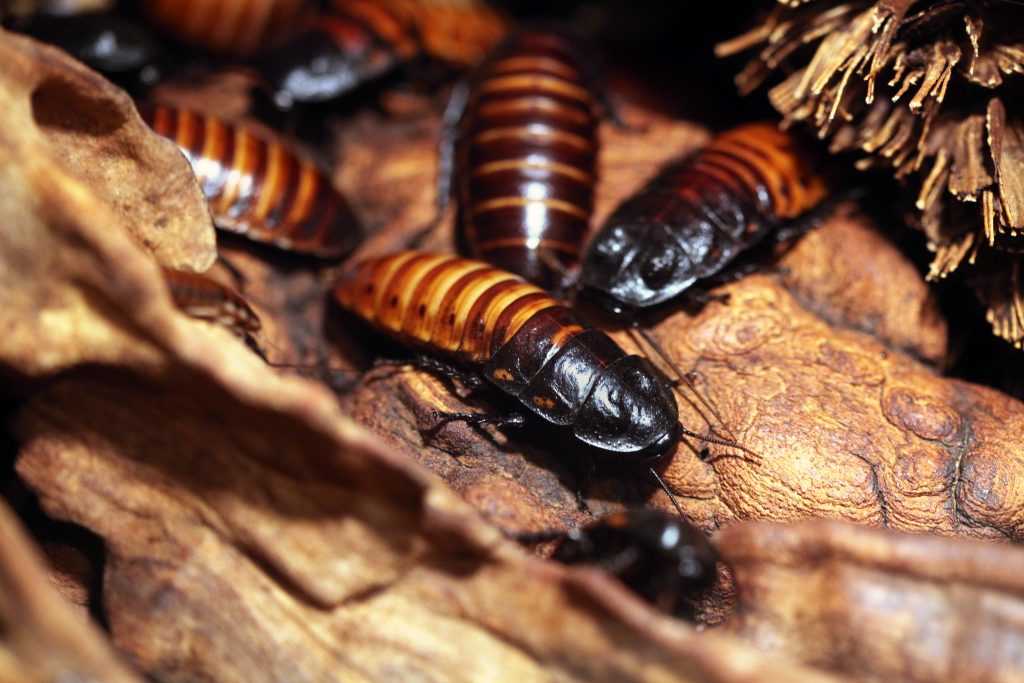
On the ground and in the leaf litter, ants, centipedes, millipedes, woodlice, and various beetles are commonly found. Many of these species play a role in processing dead plant material and in nutrient cycling. The African giant millipede (Archispirostreptus gigas), for example, lives in the leaf litter and the upper soil layers, where it feeds on decaying plant matter. The Madagascar hissing cockroach (Gromphadorhina portentosa) typically shelters close to the ground, among pieces of bark and plant debris.
In the canopy, a wide variety of herbivorous insects, leaf beetles, butterflies, cicadas, stick insects, and predatory arthropods can be found. Resemblance to plant parts and camouflage are particularly common in tropical forests.The spiny leaf insect (Extatosoma tiaratum), for example, has a body shape that resembles leaves, twigs, and other plant structures. Because of this, predators have more difficulty detecting it.
Tropical and subtropical shrublands
By contrast, tropical and subtropical shrublands generally have lower, more open vegetation than rainforests. Nevertheless, their structurally diverse plant cover offers numerous hiding and feeding opportunities for arthropods. Rainfall often varies seasonally, so the species living here must adapt to both wetter and drier periods.
Cubaris murina, a species also kept as a hobby animal, seeks shelter in the moist, shaded microhabitats of the soil and in the leaf litter. Its presence illustrates well that even in more open, seasonally dry shrublands, humid microhabitats can form. These microhabitats, in turn, allow terrestrial isopods to persist.
Among the arthropods living on vegetation, both herbivores and ambush predators occur. Camouflage may serve not only as protection against predators but also as a means of approaching prey unnoticed. The African mantis (Sphodromantis lineola) waits motionless for its prey on the branches of shrubs and small trees. Its green or brown coloration makes it less conspicuous in the vegetation. Meanwhile, its spined raptorial forelegs enable the rapid grasping of prey.
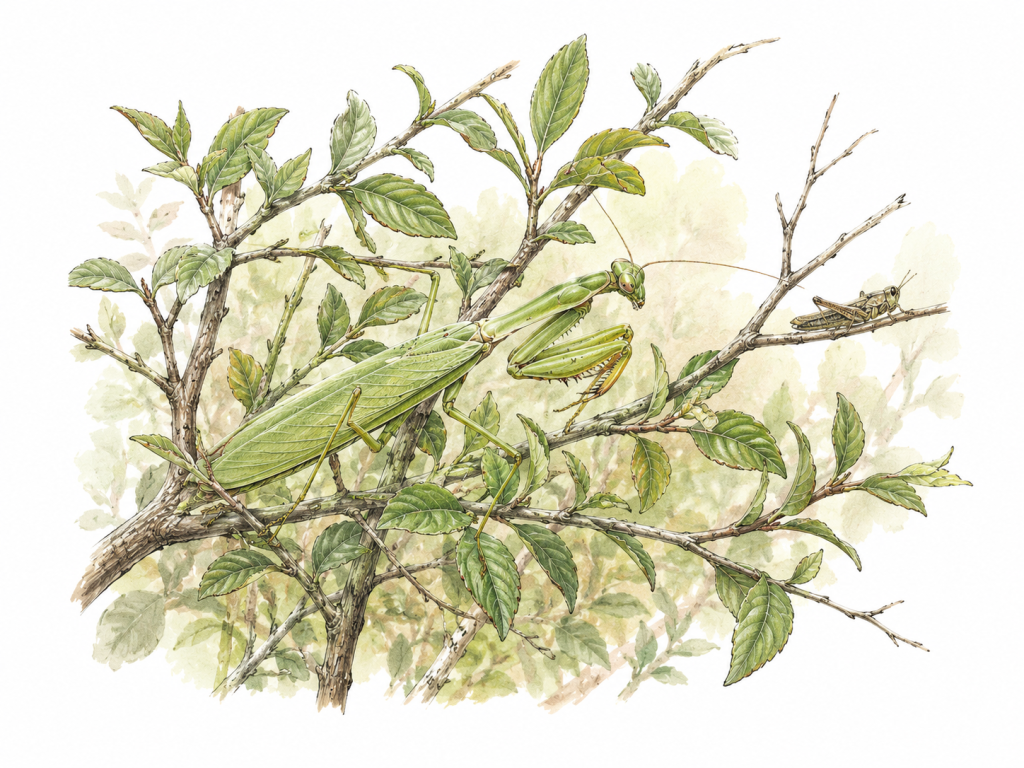
Illustration: Farkas M. Vivien
Savannas and grasslands
Savannas and other grassland habitats are characterized by open vegetation and the dominance of grasses. In addition, the alternation of rainy and dry seasons strongly shapes their ecological conditions. In many such areas, regularly recurring fires and grazing by large herbivores influence the structure of the biological communities. Additionally, the periodic drying of the soil also plays a significant role.
The life cycles of arthropods living here often follow rainfall patterns and the seasonal changes of vegetation. Some species survive the dry period as eggs, larvae, or in a dormant state, then accelerate their development, activity, and reproduction with the onset of rains.
Grasslands host large numbers of grasshoppers, crickets, ants, termites, beetles, spiders, and mantises. Termites are particularly significant from an ecological perspective. Their tunnels loosen and rearrange the soil, they process plant debris, and their mounds can create unique habitat conditions. Inside some mounds, temperature and humidity are more stable than in the surrounding environment.
Termite mounds can provide important shelter not only for the colony but also for other animals. Their cracks and cavities may be used by various geckos, skinks, and snakes as cooler, protected hiding places. Their elevated surfaces can serve as basking and lookout sites for certain reptiles, such as the frilled lizard (Chlamydosaurus kingii). In this way, they offer a vantage point from which these animals can observe their surroundings.
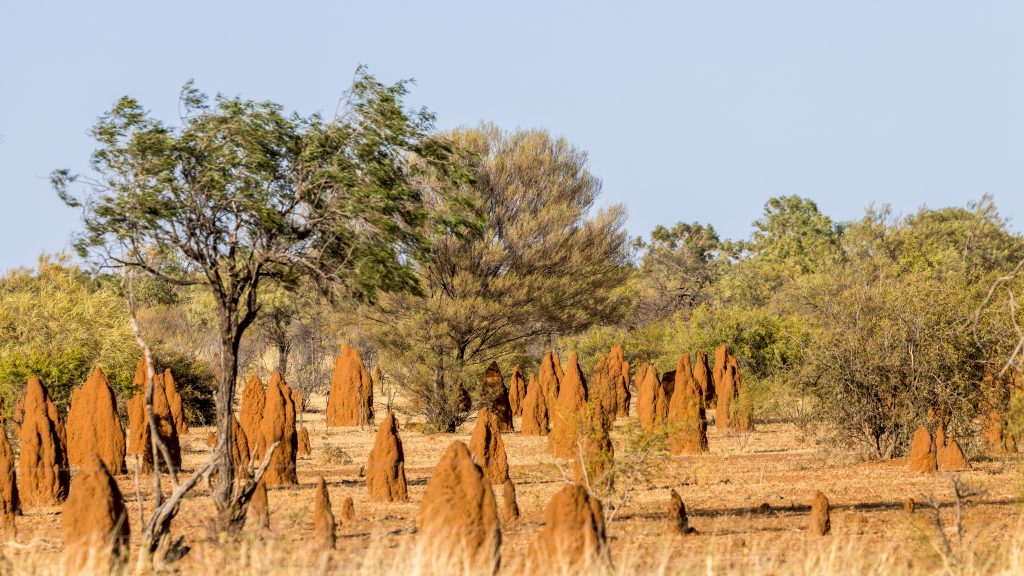
Photo: serge.stock.adobe.com
Deserts and semi‑deserts
In deserts and semi‑deserts, low precipitation and sparse vegetation define the living conditions. Furthermore, the significant difference between daytime and nighttime temperatures also shapes how species can survive there. The surface soil can heat up to extreme levels during the day and cool rapidly at night. Consequently, the species living here are exposed to considerable daily temperature fluctuations.
For this reason, arthropods living in these environments must minimize water loss. The water-repellent layer of their exoskeleton can limit evaporation, and their excretion may involve minimal water loss. In addition, many species are nocturnal or crepuscular, hiding during the day in burrows, under stones, or in deeper soil layers.
The microclimate inside burrows can differ greatly from the surface environment. Temperature fluctuations are smaller, humidity may be higher, and animals can find protection from predators. For this reason, the needs of species from arid habitats cannot be assessed solely based on the temperature and humidity of the surface air; the microclimate of their natural hiding places must also be taken into account.
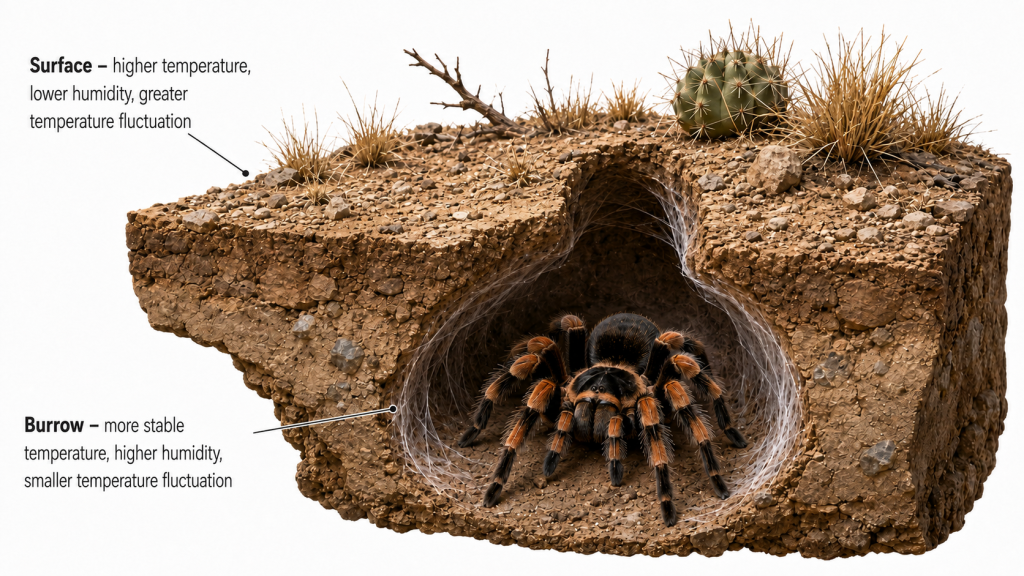
Illustration: Farkas M. Vivien
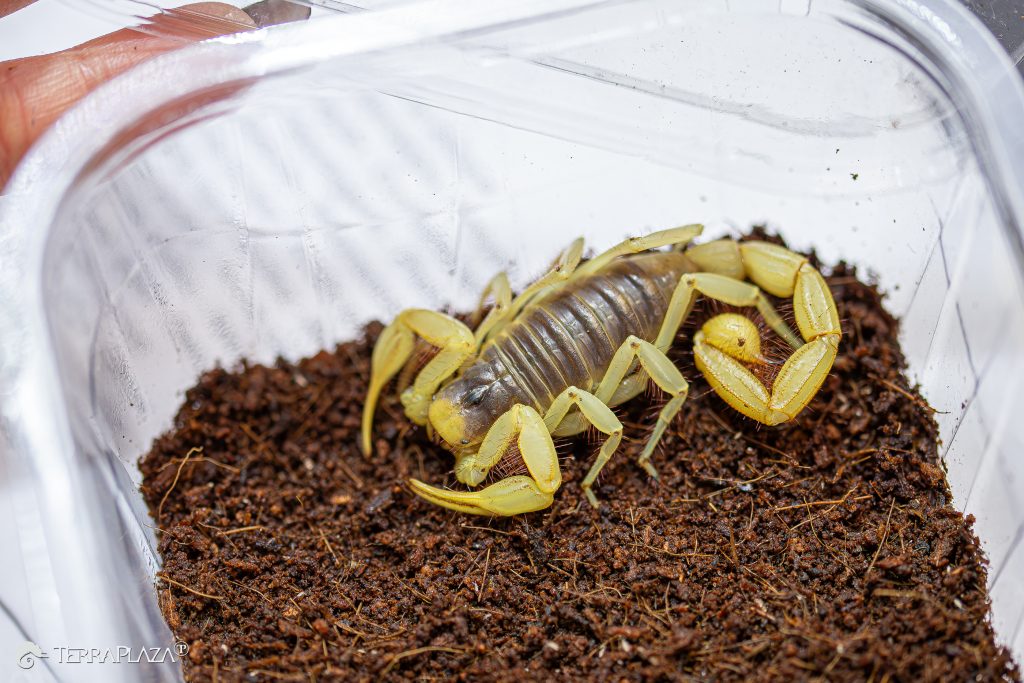
The Arizona giant hairy scorpion (Hadrurus arizonensis), well known among scorpion keepers, inhabits the sandy regions of the Mojave and Sonoran Deserts. It digs deep burrows that provide protection from surface heat and dehydration during the day, and at night it leaves its shelter to search for food.
Temperate forests
In temperate forests, the alternation of seasons strongly influences the activity, development, and reproduction of arthropods. During spring and summer, higher temperatures and more abundant food support active lifestyles. In contrast, in autumn and winter many species enter a dormant state.
Arthropods may overwinter as eggs, larvae, pupae, or adults. The temporary, hormonally regulated suspension of development is known as diapause. Its onset is often triggered by changes in day length and temperature before unfavourable conditions begin.
In the forest leaf litter, springtails, mites, woodlice, millipedes, and insect larvae are common. By fragmenting fallen leaves and decaying wood, they facilitate the decomposing activity of fungi and bacteria. Dead wood also provides food, shelter, or breeding sites for numerous beetles, ants, and other arthropods.
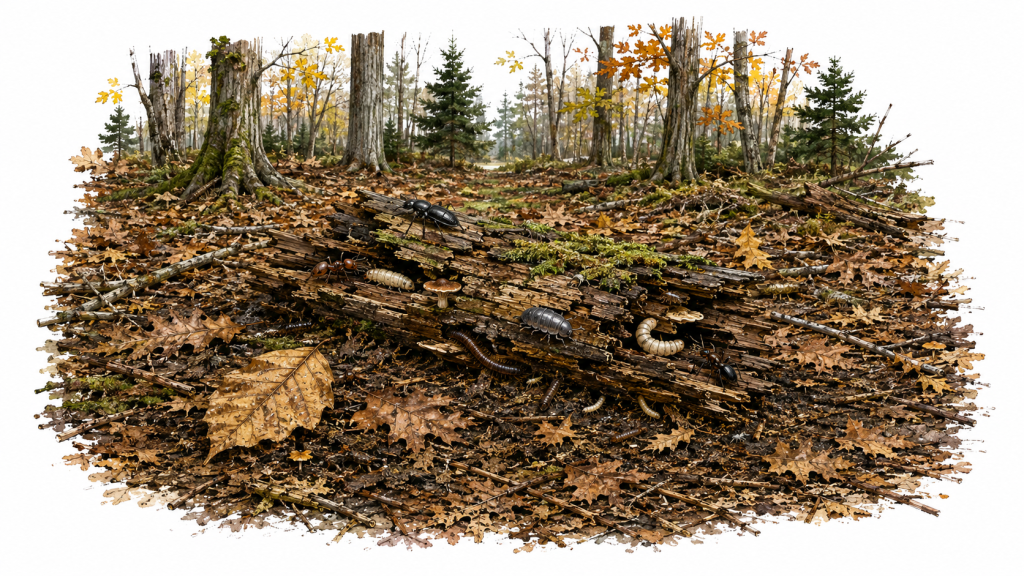
The common woodlouse (Oniscus asellus) inhabits moist temperate habitats, primarily seeking shelter under stones, leaf litter, and decaying wood. It feeds on dead plant material and thus contributes to the decomposition of organic matter. Its occurrence is strongly influenced by the moist microclimate of the ground layer and decaying wood.
Mountain and high‑altitude habitats
In mountain habitats, increasing elevation generally leads to decreasing temperatures. At the same time, UV radiation, wind exposure, and daily temperature fluctuations may intensify. The structure of vegetation also changes gradually. Forests may give way to shrublands, alpine meadows, and, at higher elevations, sparsely vegetated or rocky areas.
Arthropods living here often must adapt to short growth and reproductive periods, as well as rapidly changing weather conditions. Many species seek shelter under stones, in soil burrows, or among cushion‑forming plants. In these places, temperature and humidity are more stable than on exposed surfaces.
For example, the Chinese moon moth (Actias dubernardi) occurs in the cool, humid montane pine forests of southern China. Its caterpillars develop on coniferous trees. Therefore, its life cycle reflects adaptations to the lower temperatures and seasonal changes typical of mountain environments.
Aquatic habitats
Aquatic habitats include rivers, streams, lakes, marshes, temporary water bodies, and shoreline zones. Oxygen content, water flow rate, temperature, and chemical composition all influence the distribution of arthropods.
The larvae of many insect groups develop in water, while the adults live a terrestrial or aerial lifestyle. This includes dragonflies, mayflies, stoneflies, caddisflies, and most mosquito species. Aquatic larvae may obtain oxygen through gills, breathing tubes, or directly through their body surface.
Species living on the water surface can also exploit surface tension. The common water strider (Gerris lacustris) has water‑repellent hairs on its legs that prevent wetting and allow movement across the water surface. Other aquatic arthropods adapt to currents and predators by clinging to stones, burrowing into sediment, or hiding among vegetation.
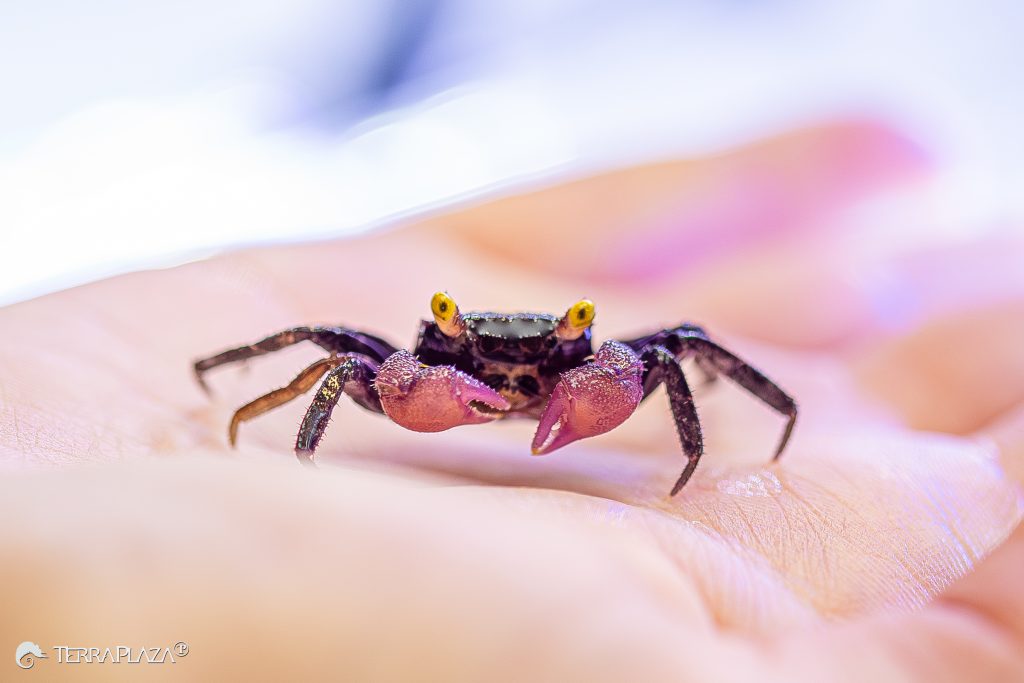
For example, the vampire crab (Geosesarma dennerle) has a semi-terrestrial lifestyle. It inhabits moist forest floors, shallow waters, and other riparian microhabitats. Therefore, the ecology of the vampire crab clearly shows that aquatic and terrestrial habitats are not always separated by a sharp boundary.
Caves and subterranean habitats
In caves and the deeper layers of the soil, constant darkness, relatively stable temperatures, and often high humidity prevail. Food availability is generally limited, so species living in these habitats may have slower metabolisms. In addition, some are capable of surviving extended periods of food scarcity.
Among arthropods that live exclusively in caves, reduced eyes and pigmentation are common, along with elongated antennae and other sensory structures. These adaptations aid orientation in permanent darkness.
Species associated with caves also include those that do not live exclusively underground. The East African tailless whip scorpion (Damon diadema) may find shelter in caves, rock crevices, and other dark, humid hiding places. Its flattened body helps it move through narrow gaps. Meanwhile, its long, whip‑like first pair of legs detects tactile and chemical cues under low‑light conditions.
Human‑modified habitats
Cities, gardens, agricultural areas, and buildings form human‑created or heavily altered habitats to which certain arthropods have successfully adapted. In settlements, average temperatures are often higher and diverse food sources are available. Buildings, in turn, can provide sheltered refuges throughout the year.
Some woodlice have also adapted successfully to human‑modified environments. The rough woodlouse (Porcellio scaber) can find suitably moist, protected microhabitats in gardens, parks, basements, and under stones, walls, or decaying wood. It feeds on dead plant material and may therefore be part of the decomposer communities of urban green spaces.
Among species associated with human environments – the so‑called synanthropic species – cockroaches, ants, spiders, silverfish, and woodlice all occur. Their spread may be facilitated by international trade and transport, allowing some species to appear far beyond their original distribution range.
The escape or deliberate release of exotic arthropods kept in captivity can pose a serious ecological risk. A Hungarian example is the marbled crayfish (Procambarus virginalis), which reproduces by parthenogenesis, meaning that a single female can establish a new population. Originally kept as an aquarium pet, the species has become established in several natural waters in Hungary, where its feeding habits, burrowing activity, and the transmission of pathogens may threaten native wildlife. For this reason, animals kept in captivity must never be released into natural waters or any other outdoor habitats under any circumstances.
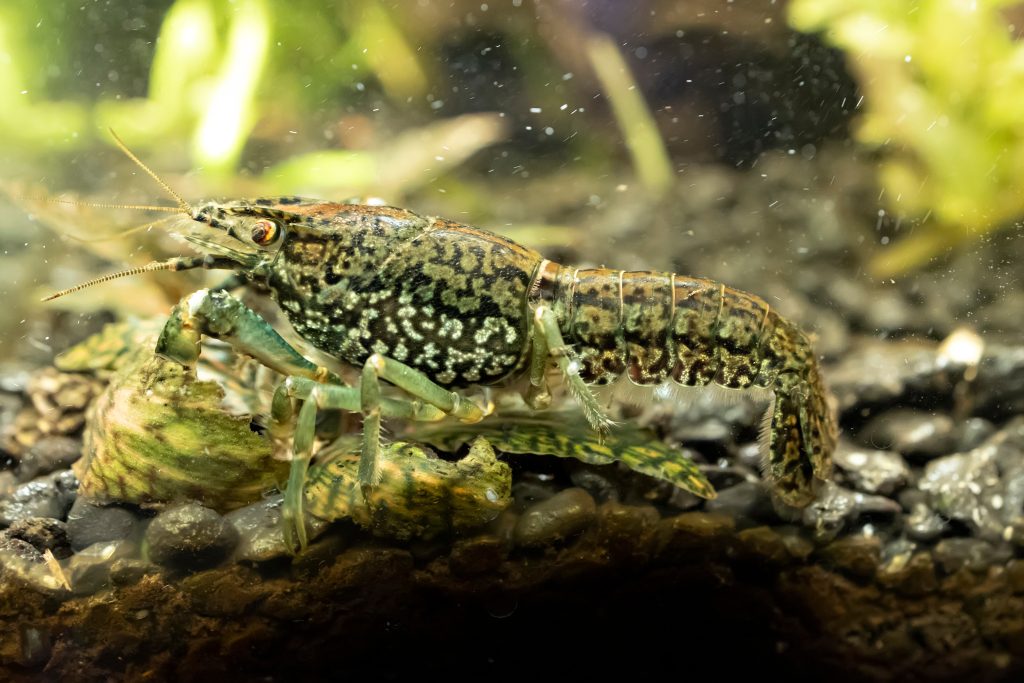
Photo: Евгения Глинская
Habitat transformation and the ecological importance of arthropods
Despite their high species richness, many arthropod populations respond sensitively to habitat alteration. Deforestation, the drainage of wetlands, the expansion of agricultural areas, the use of pesticides, light pollution, and climate change can all influence their distribution and abundance.
Species that depend on a single host plant, a particular soil type, or a highly specific microhabitat are especially vulnerable. Their conservation therefore requires protecting not only the species themselves, but also habitat features such as the leaf-litter layer, decaying wood, tree cavities, riparian vegetation, and other small-scale habitat elements.
Arthropods play indispensable roles in pollination, organic matter decomposition, soil formation, and the maintenance of food webs. Protecting their habitats thus contributes to preserving the functionality, resilience, and long‑term stability of ecosystems.
