




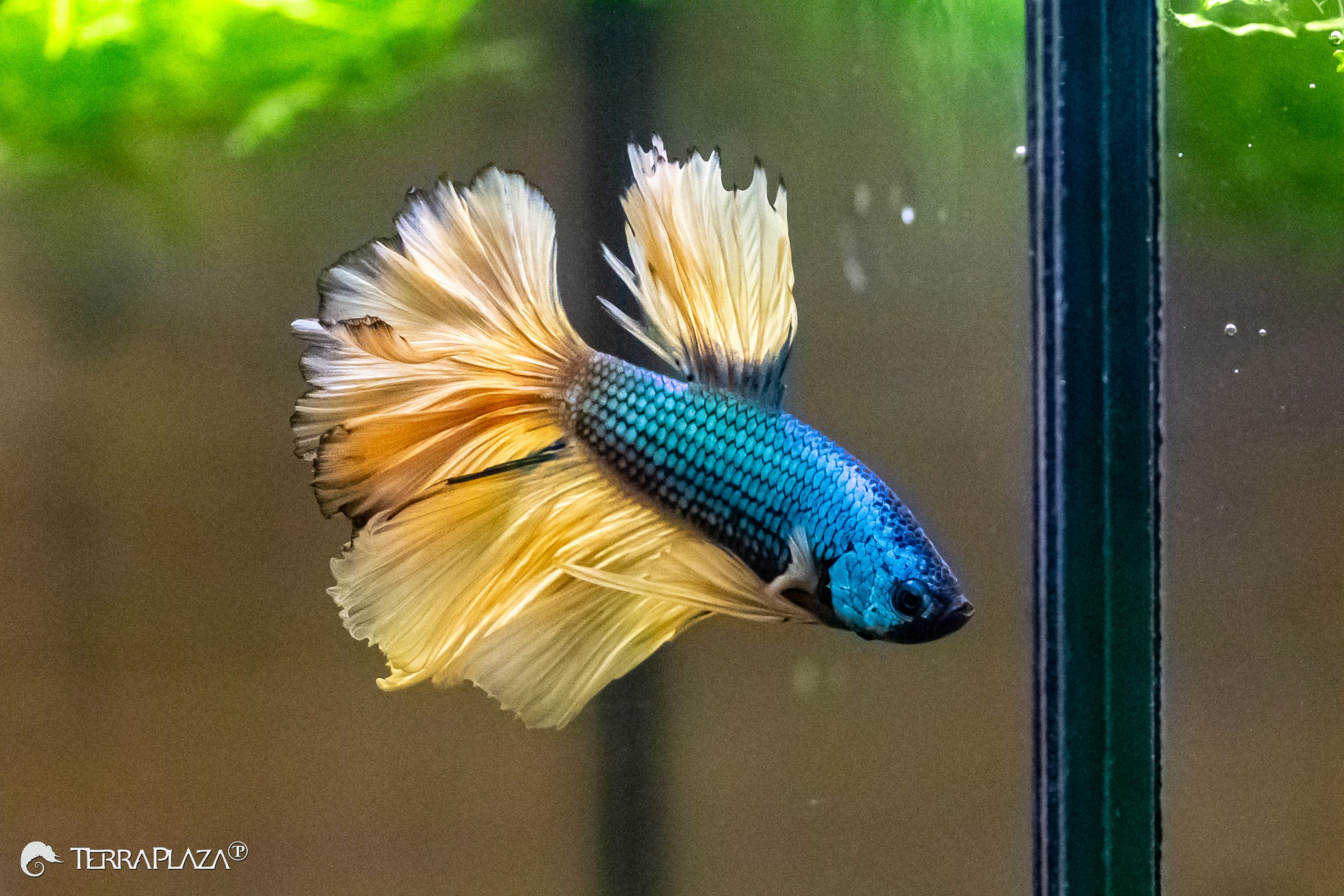
Vivid colours, striking fins, and a surprisingly assertive temperament characterize the Siamese fighting fish (Betta splendens). It has become one of the world’s most recognizable ornamental fish for good reason. Behind its eye‑catching appearance, however, lies unique behaviour and a set of adaptations that provide significant advantages in its natural habitat.
The natural habitat of the Siamese fighting fish
Betta splendens inhabits the freshwater environments of Southeast Asia. Its native range primarily in central Thailand and the lower Mekong basin. The name “Siamese” refers to Thailand’s former name, Siam.
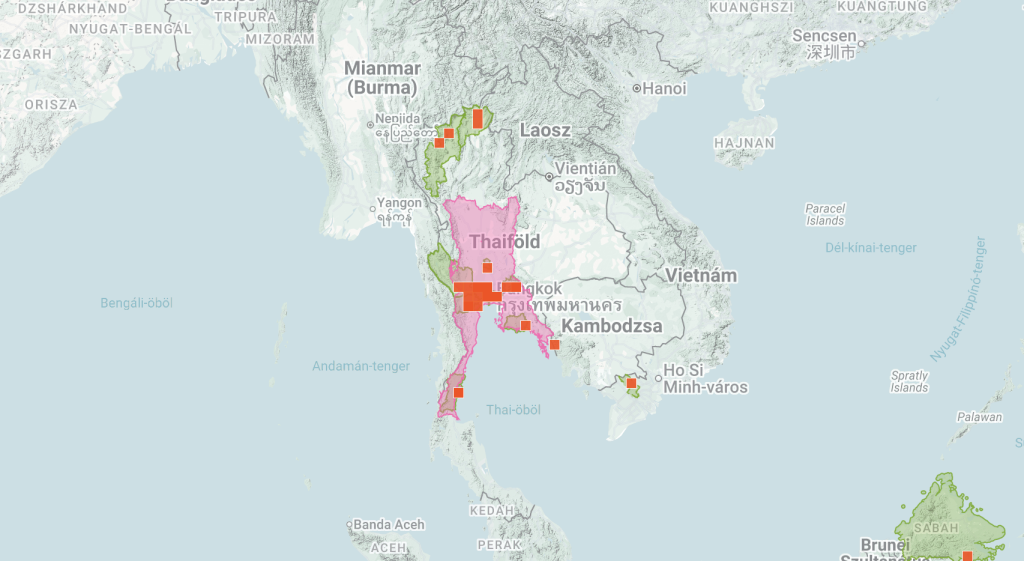
Source: iNaturalist – Betta splendens
Its natural habitats include shallow, slow‑moving or still waters, flooded areas, canals, and rice paddies. These waters are often characterized by dense vegetation, calm surfaces, and weak currents, and their conditions can change significantly with the seasons.
In shallow, plant‑choked waters, oxygen levels can at times be low – a challenge to which the species has adapted in a remarkable way. The Siamese fighting fish does not rely solely on its gills for oxygen: it regularly swims to the surface to take in atmospheric air. This is made possible by a specialized respiratory organ known as the labyrinth organ.
Located above the gills, this richly vascularized, folded structure provides a large surface area for gas exchange. It enables the fish to absorb oxygen directly from the air. This adaptation is particularly advantageous in warm, shallow, and periodically oxygen‑poor waters.
The characteristics of its natural environment also influence the species’ behaviour. Dense vegetation provides cover and visual boundaries. The calm water surface is important not only for breathing but also for building bubble nests.
Why “fighting fish”?
The Siamese fighting fish derives its name from the strongly territorial behaviour of the males. When two males encounter one another, they display striking threat postures to assess and intimidate their opponent. They flare their fins, spread their opercular covers, and their colours may intensify. If neither backs down, the rivalry can escalate into a genuine fight, during which they may inflict serious injuries on each other. For this reason, two adult males must never be kept together in the same aquarium.
More than just an ornamental fish in Thailand
The Siamese fighting fish has long been a part of Thai culture. Its cultural significance is well illustrated by the fact that in 2019 it was declared Thailand’s national aquatic animal.
Originally, the fish were bred primarily for their fighting abilities, but over time the focus shifted increasingly toward striking colours and elaborate fin shapes.
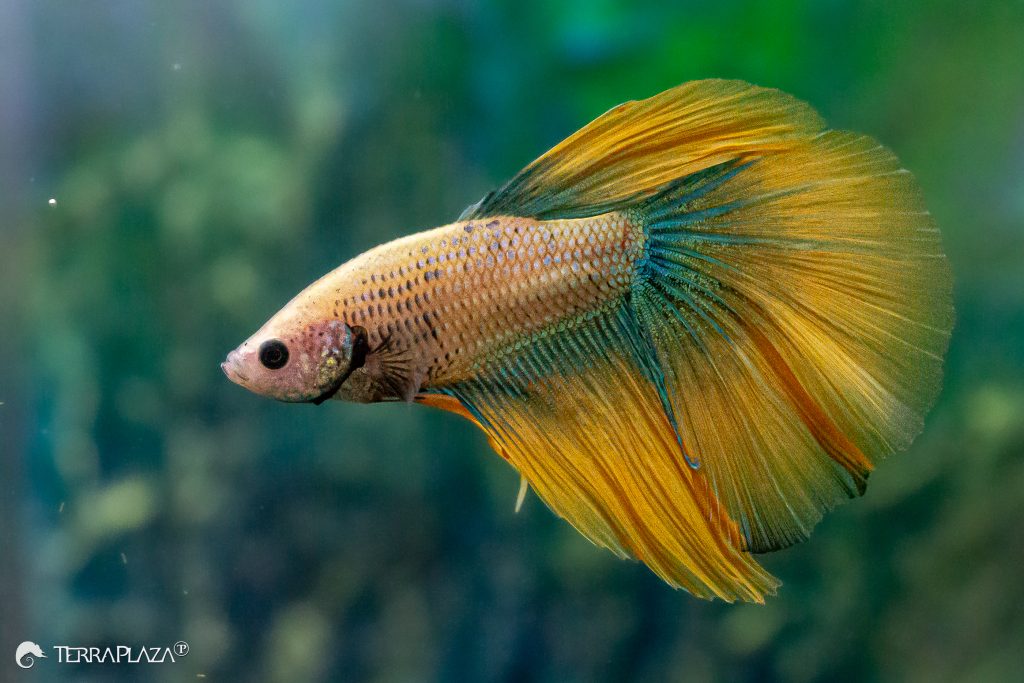
Today, betta breeding is also a significant economic sector: Thai breeders produce countless colour and fin variations that reach many countries around the world.
In breeding facilities, young fish can initially be raised together, but once the males become territorial, they are separated and kept individually. In commercial Thai breeding operations, they are therefore often housed in rows of small containers or bottles until they are sold. However, this is a breeding and temporary holding method, and it does not mean that a tiny, undecorated container is suitable as a permanent home for an adult betta.
From the wild form to the colourful cultivated varieties
The appearance of the wild Siamese fighting fish is far more subdued than that of the aquarium varieties known today. The natural form typically has shorter fins and less conspicuous coloration, whereas selective breeding has produced individuals with exceptionally vivid colours and elaborate fin shapes.
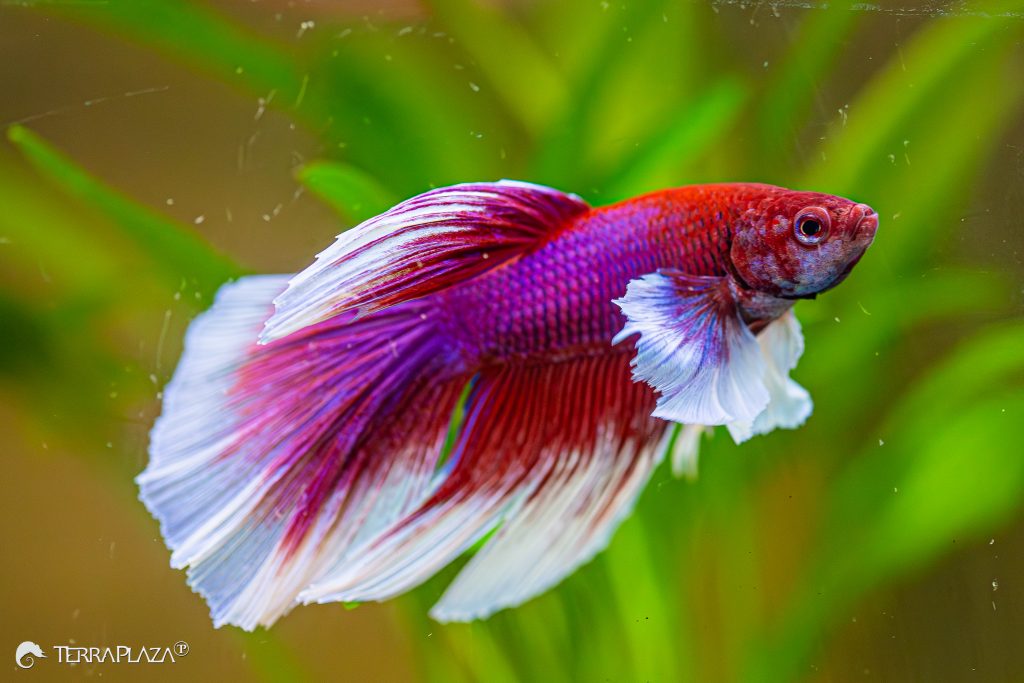
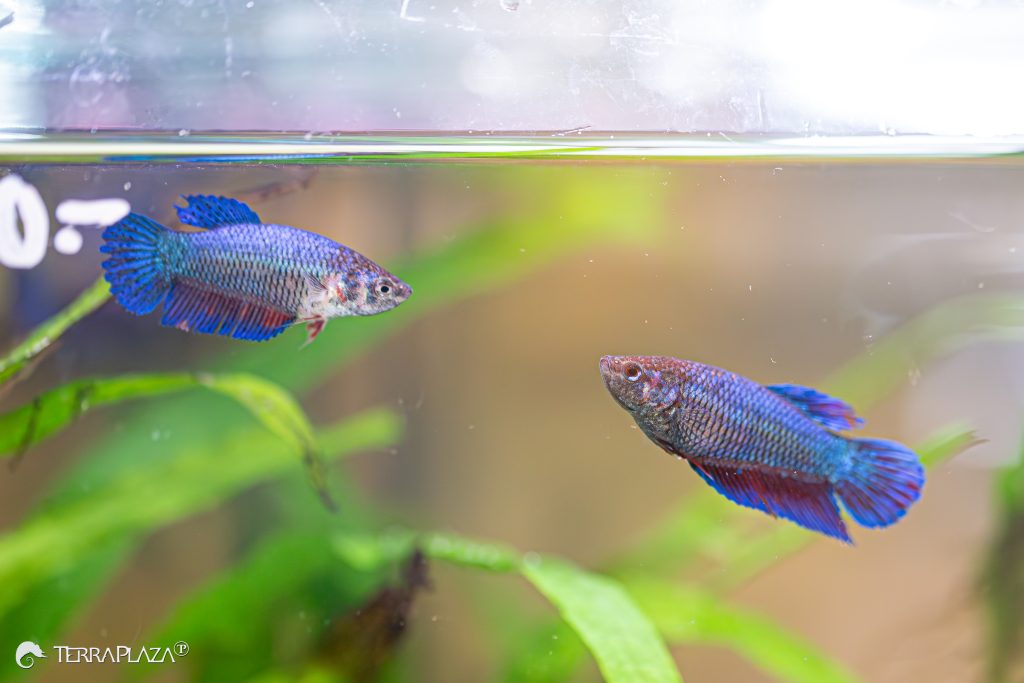
Over the long history of selective breeding, the appearance of Betta splendens has changed dramatically. Today, one may encounter red, blue, green, white, black, marbled, or even multicoloured individuals. Fin shapes also show great diversity: from long, veil‑like fins to broad, spreading tail fins and crown‑edged varieties, a wide range of forms is known. Males are particularly striking, while females are generally smaller and possess shorter fins.
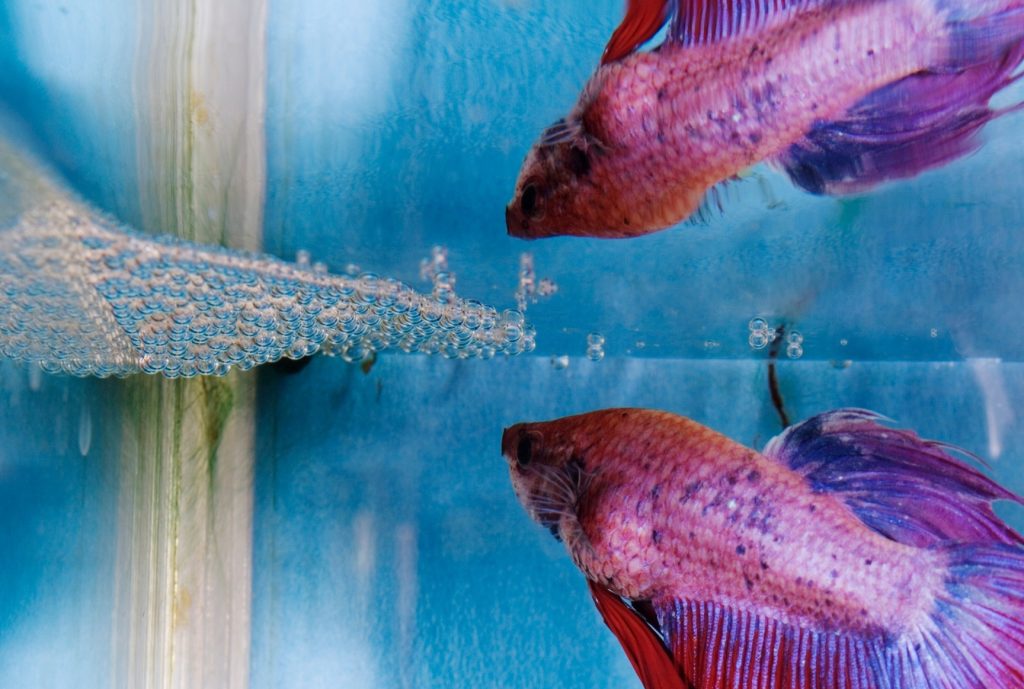
Bubble nest at the water surface
The reproduction of the Siamese fighting fish is equally remarkable. The male builds a bubble nest at the water surface from tiny air bubbles, often constructing it near floating plants or leaves. During courtship, he flares his fins in an impressive display and attempts to lure the female toward the nest. During spawning, the male wraps his body around the female as she releases the eggs, which he then fertilizes.
The sinking eggs are collected by the male and placed into the bubble nest. From this point on, he takes full responsibility for guarding the nest: he tends the eggs and returns any fallen eggs or newly hatched larvae back among the bubbles.
The male’s care continues until the fry become capable of swimming independently.
Source: Canva
A predatory species
In its natural habitat, it primarily feeds on small aquatic invertebrates, insects and their larvae, as well as small crustaceans. It often searches for food near the water surface, where it can easily capture insects that fall into the water.
In the aquarium, its diet should be based on high‑quality, protein‑rich foods of mainly animal origin. This can be supplemented with a varied selection of suitable live and frozen foods. Examples include brine shrimp, daphnia, mosquito larvae, or other appropriately sized prey items.
The Siamese fighting fish has a hearty appetite, so overfeeding is something to watch out for. It is better to offer smaller portions and only as much as it can consume within a short time.
Small fish, large space requirements – and the fishbowl is not an option!
A common misconception is that a Siamese fighting fish only needs a nearly empty 5‑litre aquarium, since it lives in shallow waters in nature. However, shallow water does not mean a tiny living space: in its natural environment, the fish can move across much larger areas among dense vegetation.
The bowl is not only an outdated form of keeping fish – in Hungary, keeping any vertebrate animal in a spherical aquarium is prohibited by law. Regulations also state that an adult vertebrate may not be kept in a space smaller than 30 litres.¹
Even so, it is entirely possible to create a warm, calm‑water, plant‑rich, decorative aquarium suitable for a Siamese fighting fish. It is important that the water surface remains easily accessible, as bettas regularly swim up to breathe atmospheric air. They do not tolerate strong currents, so they require filtration that maintains good water quality without subjecting them to continuous strong flow. A properly sized sponge filter can be an excellent choice.
Under appropriate conditions, a Siamese fighting fish typically lives 3–5 years. Its lifespan is strongly influenced by water quality, proper temperature, balanced nutrition, and how well the aquarium provides a calm, low‑stress environment.
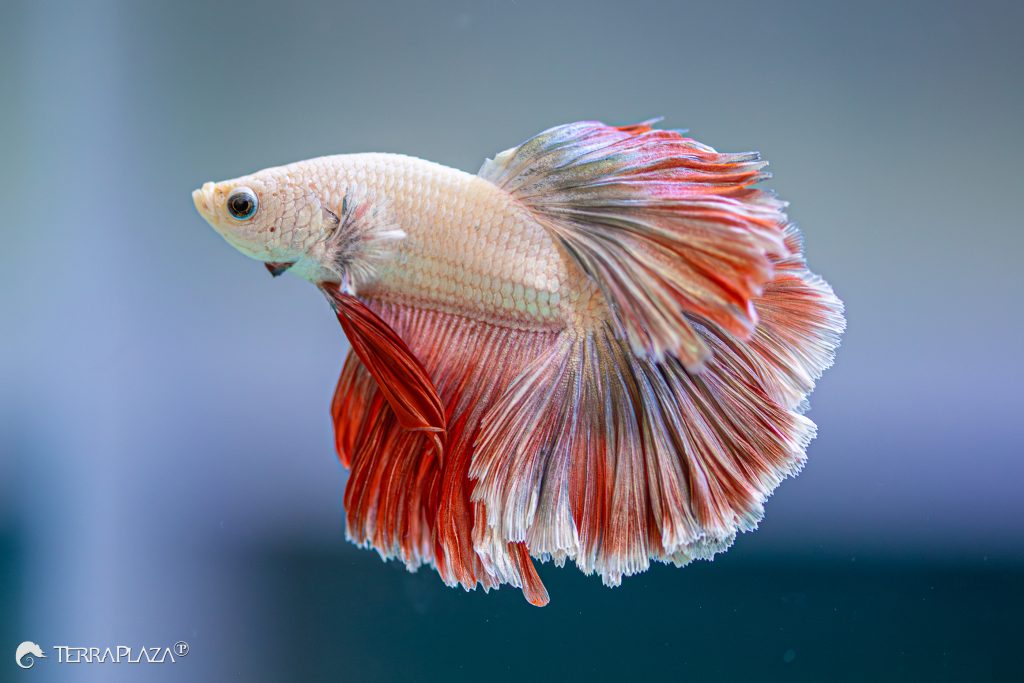
Behind the striking colours of the Siamese fighting fish lies surprisingly complex behaviour and remarkable adaptations. In a suitable environment, it can be not only a vibrant inhabitant of the aquarium, but observing its behaviour can also be a genuinely engaging experience.
¹ Government Decree 41/2010 (II. 26.) on the keeping and trade of companion animals, Section 14 (5) c) and d). The regulation prohibits keeping vertebrate animals in spherical aquariums and keeping adult vertebrates in spaces with a volume of less than 30 litres.
